Key Findings
🌎 EU Enlargement — 2025

EU Enlargement Polling: Ukraine Candidacy, Western Balkans & Frozen Talks

The EU has 9 official candidate countries — but only a handful are making real progress. Ukraine's candidacy is transforming the enlargement debate while the Balkans remain stuck and Turkey is frozen.

9
Candidate Countries
58%
EU support Ukraine accession
27→36
Members if all join
EU Enlargement

Current EU Candidate Countries (2025)

CountryCandidate SinceNegotiationsRealistic TimelineMain Obstacle
UkraineJune 2022Opened June 20242030s earliestOngoing war, reform requirements, size
MoldovaJune 2022Opened June 20242028-2030Transnistria frozen conflict, Russian influence
Montenegro2010Active (most advanced)2026-2028Rule of law reforms, organized crime
Albania2014Opened 20222027-2030Judicial reform, corruption
North Macedonia2005Opened 20222028-2030Bulgaria bilateral dispute, identity politics
Serbia2012Active (stalled)UncertainKosovo relations, rule of law, pro-Russia stance
Bosnia & Herzegovina2022Not yet opened2030s+Dysfunctional governance, Dodik secessionism
Georgia2023SuspendedSuspendedDemocratic backsliding under Georgian Dream
Turkey1999Frozen since 2018Indefinitely frozenRule of law, press freedom, Cyprus dispute
Eu Enlargement

Public Opinion on Enlargement — By Candidate

CandidateEU-Wide Support for MembershipTrend
Ukraine58-62%Rising (war solidarity)
Moldova52%Rising
Montenegro57%Stable
Albania49%Stable
North Macedonia51%Stable
Serbia47%Declining (pro-Russia concern)
Bosnia & Herzegovina44%Declining
Turkey24%Long-term decline

Sources: Eurobarometer Standard Survey, autumn 2024. EU-27 weighted averages.

The Enlargement Context

EU enlargement — the process by which countries outside the EU join through the accession process — has been the bloc's most powerful geopolitical tool since the 1990s. The so-called "big bang" enlargement of 2004-2007, which brought in 12 Central and Eastern European countries, transformed both the EU and those countries in ways almost universally regarded as positive: faster economic growth, stronger democratic institutions, higher living standards. But the experience of the Western Balkans — where accession has been dangled since the early 2000s without result — has exposed the limits of enlargement as a policy tool when the EU is internally divided or when candidate countries fail to implement required reforms.

Ukraine's candidacy, granted in June 2022 in the immediate aftermath of Russia's full-scale invasion, represents the most politically charged enlargement decision in EU history. Ukraine is by far the largest country ever to enter the EU accession process: pre-war population of 44 million, enormous agricultural sector, a war-devastated economy requiring an estimated €400 billion in reconstruction, and a front-line conflict with Russia that shows no sign of resolution. Its membership would transform EU institutions — requiring treaty changes, reform of voting weights, and a fundamental restructuring of the Common Agricultural Policy to accommodate Ukrainian farmers. Negotiations opened in June 2024, but even the EU Commission's most optimistic internal scenarios place Ukrainian accession in the early 2030s at the earliest.

The Western Balkans remain the EU's most frustrating enlargement story. Montenegro is the most advanced candidate after 15 years of negotiations, but even it has not closed all 33 required negotiating chapters. Serbia's accession has effectively stalled over its refusal to impose sanctions on Russia following the 2022 invasion and its ongoing refusal to recognize Kosovo's independence. Bosnia and Herzegovina is beset by a dysfunctional political system deliberately designed to prevent effective governance — Republika Srpska leader Milorad Dodik has openly threatened secession and been sanctioned by the US. Georgia's candidacy was effectively suspended in 2024 after the Georgian Dream government (widely seen as Moscow-aligned) violently suppressed pro-EU protests following a disputed election.

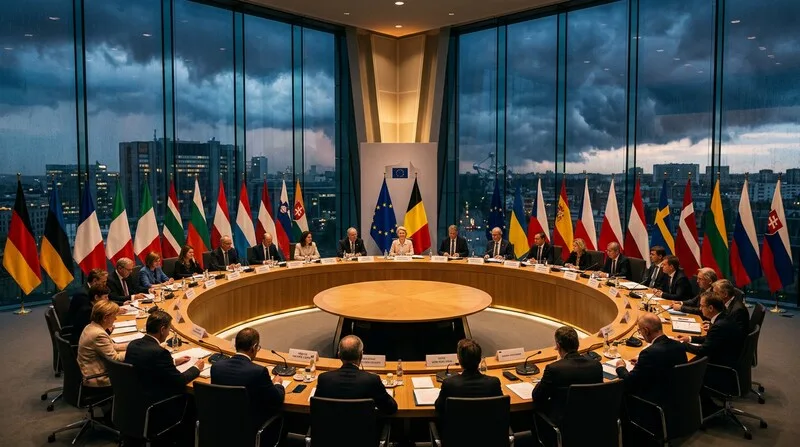
The Enlargement Debate: Arguments For and Against

Arguments For
  • Geopolitical: brings neighbors into EU rule-of-law orbit, reduces Russian influence
  • Economic: larger single market, new growth areas, labor mobility
  • Security: aligns neighbors with NATO-compatible structures
  • Credibility: broken promises have already undermined EU soft power
Arguments Against / Concerns
  • Institutional: EU needs treaty reform before adding more members
  • Financial: new members will be net recipients of EU funds for decades
  • Migration: labor market anxiety in existing member states
  • Standards: premature accession risks importing corruption and weak rule of law

Frequently Asked Questions

Will Ukraine join the EU?

Ukraine became an EU candidate in June 2022 and opened accession negotiations in June 2024. Full membership is a long-term process — most analysts estimate 10-15 years. Ukraine's size, ongoing war, and reconstruction costs (~€400B) make it the most complex enlargement candidate in EU history.

Which countries are currently EU candidates?

Nine countries: Ukraine, Moldova, Albania, North Macedonia, Montenegro, Serbia, Bosnia & Herzegovina (candidate since 2022), Georgia (suspended due to democratic backsliding), and Turkey (frozen since 2018). Montenegro is the most advanced after 15 years of negotiations.

Do EU citizens support enlargement?

Majority support exists for most candidates — especially Ukraine (58-62%), where war solidarity is strong. Western Balkans candidates get 44-57% support. Turkey membership is opposed by a majority (~60%) in most EU states. Support is highest in Central/Eastern Europe, lower in wealthier Western EU states.

Related Analysis
EU Economy → EU Ukraine Support → EU Overview → All Polling Data — Trackers, Crosstabs & State Polls →

Explore More