- A Temporary Restraining Order can be issued within hours of an executive order — one federal judge can block enforcement nationwide while litigation continues
- Dozens of court injunctions were issued against Trump second-term executive actions by April 2026; courts repeatedly limited DOGE access and blocked immigration actions
- The "shadow docket" — emergency Supreme Court rulings issued without full briefing or oral argument — has become a key battleground for executive power disputes
- The administration has challenged nationwide injunctions (arguing no single district court should block policy everywhere), but the Supreme Court has not issued a definitive ruling
The Injunction Process: Step by Step
When the president signs an executive order, opponents — states, advocacy groups, affected individuals, or companies — can immediately file a lawsuit in federal district court. They typically seek an emergency Temporary Restraining Order (TRO), which can be granted by a single judge, sometimes within 24-48 hours, based on written submissions alone.
TRO to preliminary injunction: A TRO lasts only 14 days under the Federal Rules of Civil Procedure unless extended. The court then schedules a hearing for a preliminary injunction, which requires fuller briefing and argument but can block an executive action for the entire duration of the litigation — often years. Courts must weigh four factors: likelihood of success on the merits, irreparable harm, balance of equities, and public interest.
Nationwide injunctions: A controversial tool — a single district court judge can issue an injunction that blocks enforcement of an executive order across the entire country, not just in their district. The Trump administration has vigorously fought nationwide injunctions, arguing they exceed district courts' authority. The Supreme Court has expressed skepticism about them but has not issued a definitive ruling prohibiting their use.
Appeal and the shadow docket: Any injunction can be appealed to the circuit court, and emergency applications can go directly to the Supreme Court. The "shadow docket" — emergency SCOTUS rulings issued without full briefing or oral argument — has become a major venue for contested executive order battles. These rulings sometimes produce 5-4 decisions with no written opinions, making it difficult to understand the Court's reasoning.
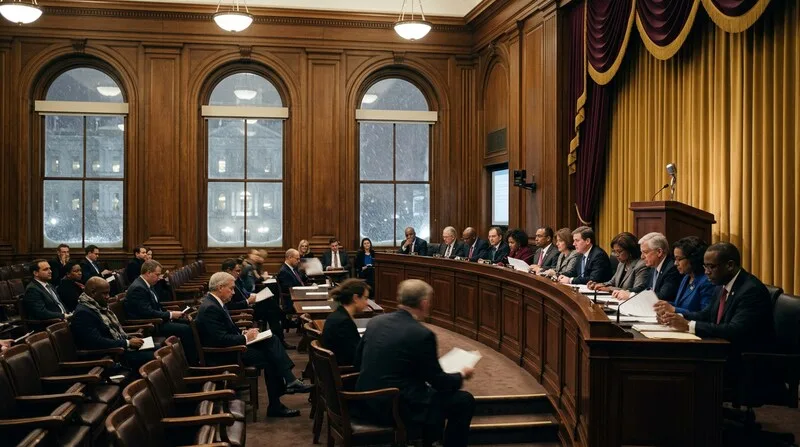
Notable Court Actions Against Trump Second-Term Executive Orders
| Executive Action | Court Response | Status (April 2026) |
|---|---|---|
| Birthright citizenship EO | Multiple district courts issued nationwide injunctions within days | Blocked; SCOTUS heard arguments on scope of nationwide injunctions |
| Federal spending freeze | DC district court blocked OMB memo ordering spending freeze | Memo rescinded; related funding disputes continued in courts |
| DOGE system access (Treasury) | District courts restricted DOGE staff access to payment systems | Injunctions partially upheld; some access restored pending appeal |
| Tariff executive orders | Court of International Trade challenged tariff legal authority | Ongoing; IEEPA authority for tariffs litigated across circuits |
| Federal workforce terminations | Courts ordered reinstatement of some fired federal workers | Mixed results; due process rights of employees central issue |
The 2026 Electoral Dimension
The Trump administration and Republican allies have framed court blocks as unelected judges overriding democratic mandates. This messaging activates a base that sees federal courts — particularly district courts in blue-leaning jurisdictions — as political opponents. Calls for court-stripping legislation or limiting district court injunction power have grown among Republican lawmakers heading into 2026.
Democrats have used court victories as organizing tools — evidence that the administration's agenda is not just unpopular but unlawful. Court injunctions blocking DOGE cuts and funding freezes have been promoted as relief for constituents. The risk for Democrats is that over-reliance on court wins can substitute for electoral strategy — courts can and do reverse themselves at the Supreme Court level.
The 6-3 conservative Supreme Court has been a mixed outcome for the administration: it has granted broader executive removal power but sustained some lower court injunctions. Neither party fully trusts the current Court. Whether the Court's 2026 term — which will hear several major separation-of-powers cases — produces rulings that reshape the constitutional landscape before the November elections is the central unpredictable factor.
Frequently Asked Questions
What happens if the president ignores a court order?
Ignoring a federal court order is contempt of court. For executive branch officials, a court can hold agency heads in contempt, impose fines, and in extreme cases order imprisonment. No president has openly defied a final federal court order in modern history, though there have been cases of slow compliance and creative interpretation. The administration has on several occasions interpreted court orders narrowly, leading to follow-up hearings about compliance. The constitutional crisis scenario — a president openly refusing to comply — has not materialized as of April 2026.
Can Congress strip courts of the power to hear certain cases?
Article III gives Congress power to set the appellate jurisdiction of the Supreme Court, and broad jurisdiction of lower federal courts. Congress could in theory pass legislation limiting federal courts' ability to hear challenges to specific executive orders. Such legislation has been proposed but not passed. Most constitutional scholars believe court-stripping raises its own constitutional problems, and any such legislation would itself face immediate legal challenges — a circular dynamic that makes this tool less usable than it appears.
What is "forum shopping" in executive order litigation?
Plaintiffs challenging executive orders can often choose which federal district to file in, and they typically choose jurisdictions with judges sympathetic to their arguments. Challenges to Trump policies have concentrated in the Northern District of California and the District of Columbia — both with judges appointed by Democratic presidents. The administration has complained about this practice. Congress has debated legislation to require challenges to national policies be filed in the DC Circuit, which would concentrate these cases in a single, arguably more predictable venue.