- Generic ballot: Democrats lead D+6.7 — historically predicts 25–35 Democratic seat gains in the House
- 4 Senate toss-ups: Wisconsin (Johnson R), Pennsylvania (McCormick R), Georgia (Ossoff D), Maine (Collins R)
- Democrats need just +5 House seats (from 213 to 218+) with 32 competitive Republican seats on the map
- Trump approval: 39% overall — below thresholds historically linked to wave losses for the president's party
- Path to Senate majority: win 2+ of GA/WI/ME + hold all Lean D seats
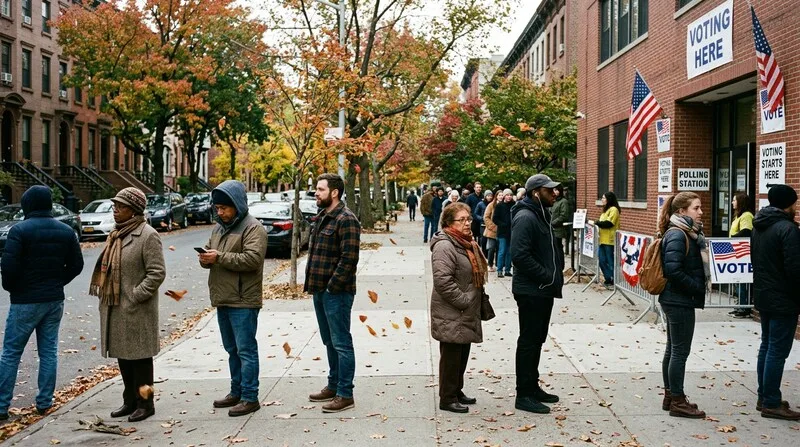
Top Battleground States — Current Poll Snapshot
The six most competitive states in the 2026 midterms. Senate race ratings and latest available polling averages. See also: Swing States 2026.
Senate Race Ratings 2026
Republicans defend 22 Senate seats in 2026; Democrats defend 13. Democrats need a net gain of 4 seats to reach a 51-seat majority.
| State / Race | Incumbent | Party | Pres. Margin | Rating |
|---|---|---|---|---|
| Wisconsin | Ron Johnson | R | D+2 | Toss-up |
| Pennsylvania | Dave McCormick | R | D+1.5 | Toss-up |
| Georgia | Jon Ossoff | D | R+2.1 | Toss-up |
| Maine | Susan Collins | R | D+7 | Toss-up |
| North Carolina | Thom Tillis | R | R+3.3 | Lean R |
| Ohio | Bernie Moreno | R | R+11.8 | Lean R |
| New Hampshire | Maggie Hassan | D | D+2 | Lean D |
| Michigan | Elissa Slotkin | D | D+0.7 | Lean D |
| Montana | Tim Sheehy | R | R+21 | Safe R |
| Texas | John Cornyn | R | R+14 | Safe R |
| Florida | Ashley Moody | R | R+13 | Safe R |
| Colorado | John Hickenlooper | D | D+5.5 | Likely D |
| Virginia | Mark Warner | D | D+6.3 | Likely D |
| Minnesota | Tina Smith | D | D+2.8 | Lean D |
Key House Battlegrounds
Republicans hold a 5-seat majority. Democrats need just 5 net seats to flip control. With D+6 generic ballot, historical models project 25-35 Democratic pickups.
| District | Incumbent | 2024 Pres. Margin | 2022 Margin | Rating |
|---|---|---|---|---|
| NY-22 | Brandon Williams (R) | D+4 | R+0.4 | Toss-up |
| NY-17 | Mike Lawler (R) | D+6 | R+0.6 | Toss-up |
| AZ-6 | Juan Ciscomani (R) | R+1 | R+0.7 | Toss-up |
| CA-27 | Mike Garcia (R) | D+3 | R+0.8 | Toss-up |
| PA-7 | Open (R) | R+2 | R+2.1 | Lean R |
| NJ-7 | Tom Kean Jr. (R) | R+3 | R+0.8 | Lean R |
| CO-8 | Gabe Evans (R) | R+0.5 | R+0.5 | Toss-up |
| ME-2 | Jared Golden (D) | R+12 | D+0.4 | Lean D |
| IL-17 | Eric Sorensen (D) | R+2 | D+1.8 | Toss-up |
| IA-3 | Zach Nunn (R) | R+7 | R+2 | Lean R |
| WI-1 | Bryan Steil (R) | R+4 | R+13 | Lean R |
| OH-9 | Open (R-leaning) | R+7 | D+4 | Toss-up |
The Path to a Democratic Majority
Minimum Path: Net +5
Democrats need only 5 net seats. If NY-22, NY-17, AZ-6, CA-27, and CO-8 all flip (all toss-ups), Democrats win the majority without winning any other race.
Base Case: Net +20-30
With D+6 generic ballot sustained through November, historical models project 25-35 Democratic gains — a stable House majority of 235-245 seats.
Wave Scenario: Net +35-45
If Trump approval falls to 39-40% and a recession materializes, a 2018-style wave is possible. D+8.6 in 2018 produced D+41 gains, flipping every toss-up and lean district.
Generic Ballot History
| Year | Generic Ballot | House Result | Senate Result | Context |
|---|---|---|---|---|
| 2006 | D+7.9 | D+31 | D+6 | Iraq War, Katrina, Bush approval 37% |
| 2010 | R+7.8 | R+63 | R+6 | ACA backlash, Tea Party, Obama 44% |
| 2014 | R+2.4 | R+13 | R+9 | ACA rollout fail, low D turnout, Obama 42% |
| 2018 | D+8.6 | D+41 | R+2 | Healthcare, suburban women, Trump 41% |
| 2022 | R+2.8 | R+9 | D+1 | Inflation, Dobbs mobilized D, R wave failed |
| 2026 (current) | D+6.7 | D+25-35 projected | D+2-4 projected | Tariffs, Medicaid cuts, Trump 39% |
Frequently Asked Questions
What is a battleground state?
A battleground state — also called a swing state or purple state — is one where neither major party holds a reliable structural advantage. These states are decided by thin margins across multiple election cycles. In 2026, the core battlegrounds hosting competitive races are Pennsylvania, Wisconsin, Georgia, Michigan, Arizona, Nevada, and Maine.
Which states are competitive in 2026?
The six most competitive states in 2026 are Pennsylvania (3 toss-up House districts), Wisconsin (Senate toss-up: Ron Johnson R), Georgia (Senate toss-up: Jon Ossoff D), Maine (Senate toss-up: Susan Collins R), Arizona (Senate toss-up: Ruben Gallego D), and Michigan (Senate lean D: open seat). The D+6 generic ballot also puts competitive House districts in Nevada, Colorado, New York, California, and Illinois. See our Swing States 2026 tracker for full state-level polling.
How does a D+6 generic ballot translate to seats?
Historically, a D+6 generic congressional ballot is associated with 25-35 opposition party House gains. In 2006, D+7.9 produced D+31. In 2018, D+8.6 produced D+41. A D+6 result in 2026 would likely deliver a Democratic House majority of 235-245 seats. On the Senate side, this environment historically yields 2-4 Democratic pickups. See the full Generic Ballot Tracker.
Why are Pennsylvania and Wisconsin the top battlegrounds?
Pennsylvania and Wisconsin are top battlegrounds because they combine structural electoral volatility with high-stakes 2026 contests. Pennsylvania hosts three genuinely competitive House districts (PA-1, PA-7, PA-8). Wisconsin hosts Ron Johnson's Senate re-election in a state Harris carried by just 0.2 points. Both states have flipped between parties in recent cycles and host the core tension in American politics: educated suburban voters trending Democratic set against non-college rural voters trending Republican.
Can Democrats win the Senate majority in 2026?
Democrats currently hold 47 Senate seats and need a net gain of 4. The path requires holding all five Lean D seats (NH, MI, NV, NM, MN) and winning at least four toss-ups: WI, PA, GA, ME. In a D+6 environment, a realistic scenario produces Democrats winning WI, ME, and one of GA or PA, resulting in a 50-50 or 51-49 Senate. Georgia is the highest-risk seat — Ossoff defending in a state Trump won by 2.1 points.