
- Democrats need a net gain of just +5 House seats to retake the majority in 2026 — a historically modest target given that the opposition party gains an average of 26 seats in midterms.
- The Generic Ballot shows Democrats ahead by D+6 — a margin consistent with 20–35 seat gains in the House if sustained through November.
- Abortion rights ballot measures outperformed Democratic candidates in Arizona, Missouri, Montana and Nevada in 2024 — the party's clearest evidence that its issue positions remain popular even when the party label does not.
- Hakeem Jeffries, the first Black legislator to lead a major party in either chamber, is building a coalition targeting suburban college-educated voters alienated by Trump's declining approval and tariff-driven cost increases.
Polling Snapshot — 2026
Party History
Origins (1828–1860): The Democratic Party emerged from Andrew Jackson's populist movement as a party of the common working man, farmers and Southern interests. In its early decades it was the party of states' rights and, problematically, the defender of slavery. This internal contradiction ultimately split the party on the eve of the Civil War.
Reconstruction and Gilded Age (1860–1932): After losing to Abraham Lincoln's new Republican Party in 1860, Democrats spent decades largely out of power federally. Grover Cleveland won two non-consecutive terms (1884–1892), and Woodrow Wilson led the country through World War I, creating the Federal Reserve and establishing the progressive income tax.
The New Deal Coalition (1932–1968): Franklin D. Roosevelt's landslide 1932 victory reshaped American politics. FDR built a broad coalition of labor unions, urban ethnic communities, African Americans in northern cities and Southern white conservatives. His New Deal created Social Security, federal banking regulation, unemployment insurance and massive public works programs. This coalition produced Democratic dominance for a generation, including Harry Truman, John F. Kennedy and Lyndon Johnson's Great Society.
Civil Rights and Realignment (1964–1990s): Johnson's Civil Rights Act of 1964 and Voting Rights Act of 1965 completed the ideological realignment that had been building for decades. The Solid South, once reliably Democratic, gradually shifted to the Republicans over the following 30 years as white conservative voters responded to the party's embrace of racial equality and liberal social values.
Clinton to Obama (1993–2017): Bill Clinton's "Third Way" strategy moved the party toward the political center, embracing free trade (NAFTA), welfare reform and fiscal discipline. Barack Obama's 2008 election was historic — the first African American president — and his administration passed the Affordable Care Act, the Dodd-Frank financial reform and the stimulus package that ended the Great Recession.
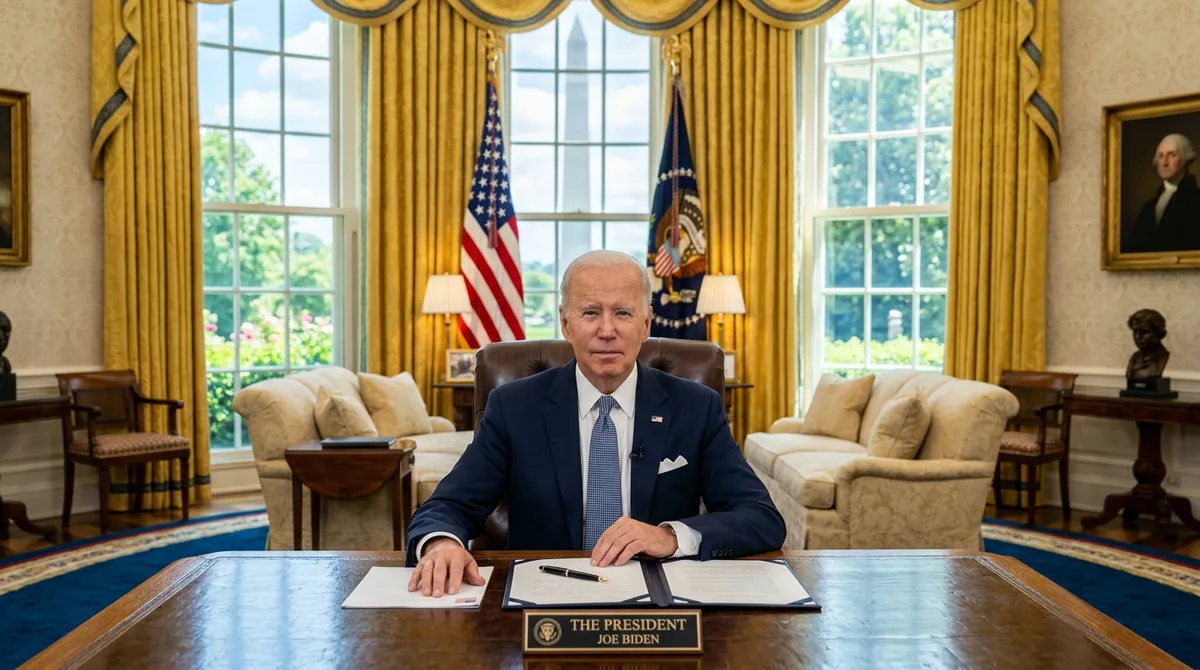
Biden era and 2024 (2021–present): Joe Biden won the presidency in 2020, passing major legislation on infrastructure, semiconductors (CHIPS Act) and climate (Inflation Reduction Act). He withdrew from the 2024 race in July 2024, passing the mantle to Kamala Harris, who lost narrowly to Donald Trump in a race defined by inflation, immigration and Biden's late withdrawal.
Current Platform
Economy & Labor
Higher minimum wage ($15+ federal), union rights and card-check organizing, tax increases on corporations and income above $400,000, student loan relief, affordable housing investment and opposition to regressive tariffs that raise consumer prices.
Healthcare
Defending and expanding the Affordable Care Act, capping insulin costs, Medicare drug price negotiation (achieved in IRA), a public health insurance option, reproductive rights and opposition to abortion bans following Dobbs v. Jackson.
Climate & Energy
Rejoining and strengthening climate commitments, defending IRA clean energy investments against Republican repeal, electric vehicle incentives, clean electricity grid, environmental justice in frontline communities.
Immigration
Pathway to citizenship for undocumented long-term residents and DACA recipients, expanded legal immigration and asylum procedures, opposition to mass deportations, reformed border management rather than a physical wall.
Democracy & Voting
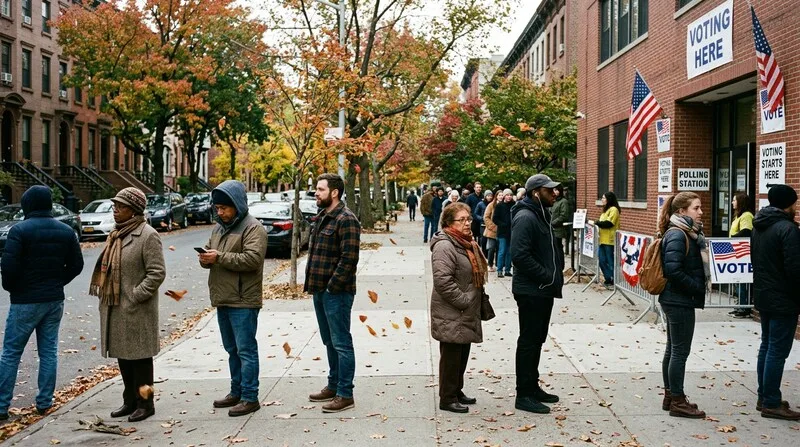
Expanding early and mail-in voting, automatic voter registration, restoring the Voting Rights Act, ethics reform, limits on dark money in politics, protection of the peaceful transfer of power and democratic norms.
Foreign Policy
Strong support for NATO and transatlantic alliances, continued aid to Ukraine against Russian aggression, multilateral diplomacy, opposition to unilateral tariff wars, support for international institutions and rules-based order.
2024 Election Results & Current Standing
The 2024 election was a significant setback. Kamala Harris lost the presidential race to Donald Trump, receiving approximately 48.4% of the popular vote to Trump's 49.8% — a popular vote loss after winning it in 2020. Democrats lost Senate seats in key states, falling to 47 seats (including two independents who caucus with the party). In the House, they hold 213 seats — just 5 short of the majority threshold of 218.
Analysts identified several contributing factors: persistent voter discontent over inflation (despite falling from its 2022 peak), Biden's late withdrawal and questions about transition management, immigration concerns that the party struggled to address credibly, and Trump's improved performance among working-class and Latino voters in key swing states.
The silver lining: ballot measures protecting abortion rights passed in several states including Arizona, Missouri, Montana and Nevada — suggesting that Democratic positions remain popular on specific issues even when the party label does not. This "issue polling vs. party polling gap" is central to the 2026 strategy.
Key Figures
Hakeem Jeffries
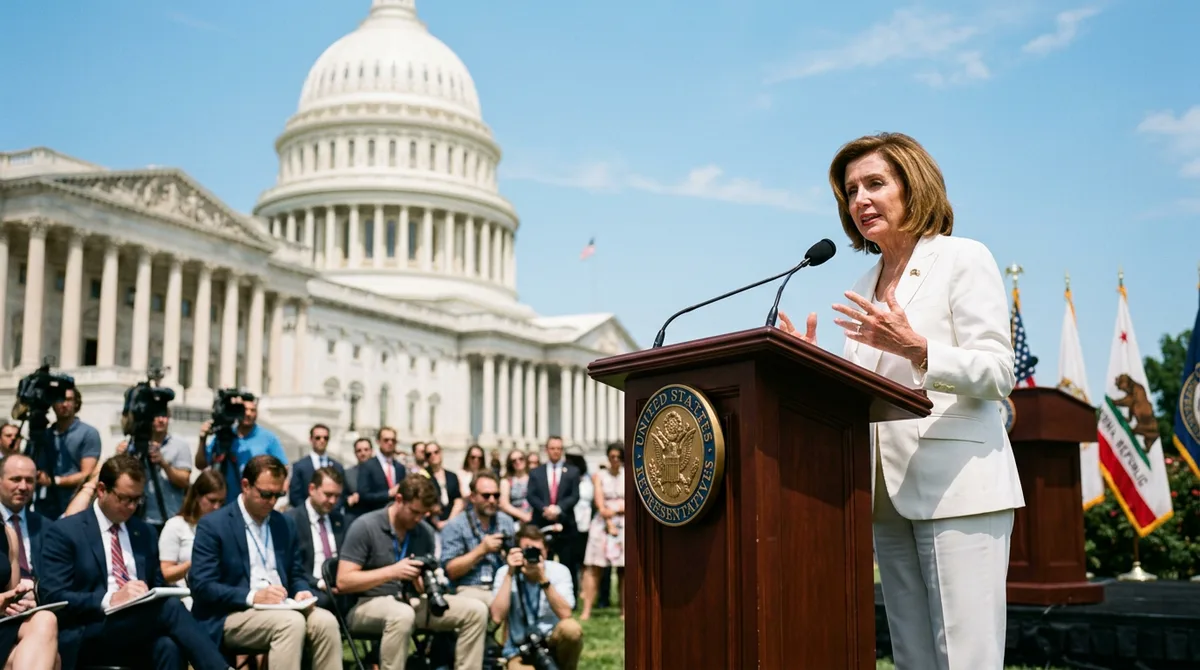
Representative from Brooklyn, NY, elected Minority Leader in 2022 — the first Black legislator to lead a major party in either chamber of Congress. Jeffries is widely seen as the future of the party, combining progressive values with pragmatic coalition-building.
Chuck Schumer
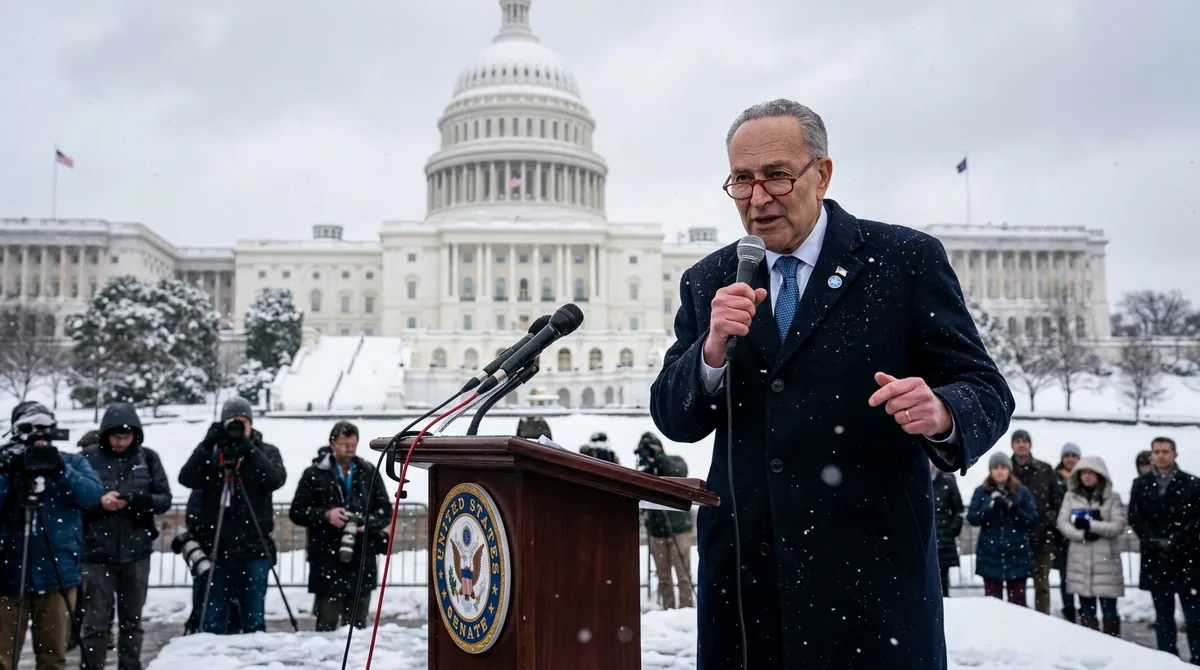
New York senator who served as Senate Majority Leader from 2021–2025. Schumer shepherded the Inflation Reduction Act, CHIPS Act and Bipartisan Infrastructure Law through a 50-50 Senate. Now leading opposition to Republican policy in the minority.
Kamala Harris
The first woman, first Black and first South Asian Vice President, Harris became the Democratic presidential nominee after Biden's withdrawal. Despite energizing the base and raising historic sums, she lost the general election. Her future role in the party remains a subject of active debate.


2026 Democratic Strategy
Abortion rights as the defining issue: Following the Dobbs v. Jackson decision that overturned Roe v. Wade, abortion rights have become the Democratic Party's most potent ballot measure and persuasion tool. In the 2022 and 2024 cycles, abortion-related ballot measures passed in deeply red states including Kentucky, Montana and Missouri — outperforming Democratic candidates significantly. For 2026, party strategists are building a coordinated campaign around the threat of a national abortion ban, framing Republican Senate candidates as the decisive votes. The issue is particularly powerful in suburban districts with high concentrations of college-educated women, who have shifted dramatically toward Democrats in the post-Dobbs environment.
Economic contrast on tariffs and cost of living: Democrats are positioning themselves as the party protecting household budgets from what they call "the Trump tariff tax." With broad tariffs raising prices on imported goods — from electronics to groceries — the party is targeting working-class and suburban voters who supported Trump in 2024 but are now feeling the pinch. The messaging centers on a clear contrast: Republicans voted for policies that raised costs while opposing minimum wage increases and drug price controls. Democrats connect tariff inflation to their own proposals on price gouging legislation, pharmaceutical caps and housing investment, seeking to recover the working-class voters who drifted rightward in 2024.
Rebuilding the suburban coalition: The Democratic path to a House majority runs almost entirely through suburban districts in Pennsylvania, Michigan, Georgia, Arizona and Nevada — areas where college-educated voters, particularly women, shifted toward Democrats in 2018 and 2020 before Republicans partially recovered them in 2022 and 2024. Party operatives are recruiting candidates with local name recognition and centrist economic profiles rather than national brand identity. The strategy combines early candidate recruitment, a robust small-dollar fundraising operation and a coordinated opposition research effort targeting Republican incumbents in seats won by fewer than 5 points. Full 2026 midterm tracker →
Key Issues for Democrats
2026 Midterm Strategy
Democrats enter the 2026 midterm cycle as the party out of power — historically the favorable position in midterm elections. The president's party has lost House seats in 37 of the past 40 midterm elections. With Republicans holding only a 9-seat House majority (222 vs. 213), Democrats need a net gain of just 5 seats to retake the majority.
House target list: Democrats are focused on approximately 30 competitive districts in suburban areas where Trump's 2024 margin was less than 5 points. Key targets include districts in Pennsylvania's Philadelphia suburbs, Atlanta's northern suburbs, Arizona's Maricopa County and Michigan's Detroit suburbs.
Senate: The 2026 Senate map is unfavorable for Democrats — they must defend more seats than Republicans. Key defensive battles include Georgia (Jon Ossoff), New Hampshire (Jeanne Shaheen retiring), and Michigan. Democrats have limited offensive targets but see opportunities in states where Republican incumbents are vulnerable.
Messaging themes: Party strategists are focusing on protecting healthcare (particularly Medicaid and ACA subsidies under threat from budget reconciliation), opposing what they frame as "DOGE chaos" and executive overreach, economic relief (opposing tariffs as a hidden tax on consumers), and reproductive rights where ballot measures continue to outperform party candidates.
Frequently Asked Questions
What do Democrats stand for?
The Democratic Party stands for expanded healthcare access including the Affordable Care Act, action on climate change, higher taxes on corporations and high earners, immigration reform with a path to citizenship, and protecting voting rights. On economic policy, Democrats support union rights, a higher minimum wage and robust social safety nets. On social issues they support reproductive rights, LGBTQ+ equality and oppose abortion bans. Foreign policy-wise, Democrats champion multilateral alliances and NATO solidarity.
Who leads the Democratic Party?
House Minority Leader Hakeem Jeffries (NY) is the highest-ranking Democrat in Congress — the first Black legislator to lead a major party in either chamber. Senate Minority Leader Chuck Schumer (NY) leads Democrats in the upper chamber. No single person holds formal party leadership nationally, but former VP Kamala Harris, governors Gretchen Whitmer and Josh Shapiro, and Representatives like Alexandria Ocasio-Cortez are among the most prominent national voices.
How are Democratic polls tracking in 2026?
Democrats are polling strongly entering the 2026 midterms. The Generic Ballot shows Democrats ahead by approximately D+6 — a margin historically consistent with 20–35 House seat gains if sustained. Party favorability sits around 40%, while party identification shows roughly 31% of Americans self-identifying as Democrats. The opposition-party advantage in midterms, combined with Trump's approval below 50%, puts Democrats in a competitive position to retake the House.
How many seats do Democrats need to win the House in 2026?
Democrats currently hold 213 seats. The majority threshold is 218. They need a net gain of 5 seats to retake the House — a relatively modest target by historical midterm standards, where the opposition party typically gains 20–40 seats. Democrats are targeting roughly 30 competitive suburban districts in Pennsylvania, Michigan, Georgia, Arizona and Nevada. Check the Senate 2026 tracker for the upper chamber picture.
When was the Democratic Party founded?
The Democratic Party was founded in 1828, making it the oldest continuously operating political party in the world. It emerged from Andrew Jackson's movement to reform the Democratic-Republican Party of Jefferson and Madison. The party's symbol, the donkey, originated from an 1828 political cartoon; cartoonist Thomas Nast popularized both the donkey and the Republican elephant in the 1870s. Compare with the Republican Party, founded in 1854.