
- Current maps drawn after 2020 census stay in effect through all five elections from 2022 to 2030 — a single redistricting cycle shapes a decade of congressional outcomes
- Rucho v. Common Cause (2019): federal courts cannot strike down partisan gerrymanders — only state courts under state constitutions can intervene
- ~21 states use independent or bipartisan commissions; the rest let the controlling state legislature draw its own maps, creating direct conflicts of interest
- 2020 census shifted seats: Texas (+2) and Florida (+1) gained; New York (-1) and Illinois (-1) lost — Sunbelt growth rewarded Republicans, who controlled more post-census legislatures
How Redistricting Works
The US Constitution requires a census every ten years, and after each census, congressional apportionment is recalculated. States that grew faster than average gain seats; states that shrank or grew slower lose them. Then every state — whether it gained, lost, or kept the same number of seats — must redraw its district boundaries to reflect the new population data.
Who draws the maps: In most states, the state legislature draws both congressional and state legislative maps, subject to the governor's signature or veto. This creates obvious incentives: the party controlling the legislature after the census can draw maps that entrench its advantage for the next decade. In roughly 21 states, independent or bipartisan commissions have taken over some or all of that process following voter-approved reforms.
Legal requirements: Districts must be roughly equal in population (one person, one vote). They cannot be drawn to dilute the votes of racial minorities under the Voting Rights Act. Beyond those floors, state laws vary — some require compactness, contiguity, or preservation of communities of interest. Partisan intent is largely unreviewable in federal court since the Rucho decision.
Packing and cracking: The two classic gerrymandering tools work in opposite directions. Packing concentrates the opposing party's voters into a few "sacrifice" districts they win overwhelmingly — wasting votes on margins above 50%. Cracking splits the opposing party's voters across multiple districts so they fall just short of a majority in each. Combined, these techniques can translate a near-even voter distribution into a 60-40 seat split for the map-drawing party.
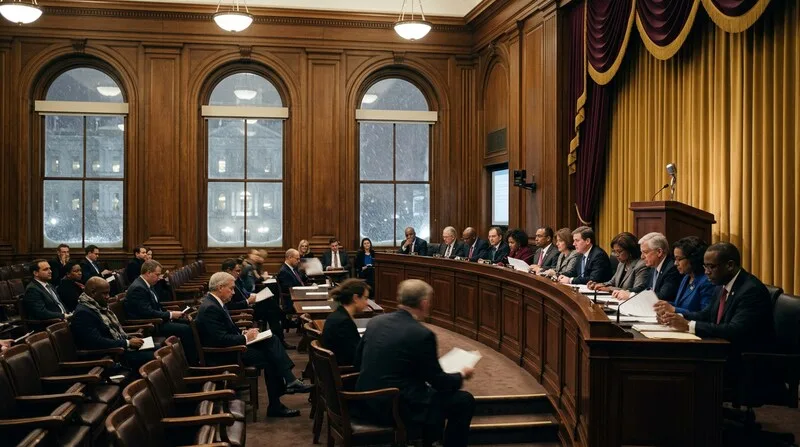
Major Redistricting Cycles and Court Cases
| Year / Case | What Happened | Impact |
|---|---|---|
| 1962 — Baker v. Carr | Supreme Court rules malapportioned districts are justiciable | Opens federal courts to redistricting challenges; leads to "one person, one vote" |
| 1965 — Voting Rights Act | Congress bans racial dilution in district maps | States with history of discrimination required federal preclearance (weakened by Shelby County 2013) |
| 2010 — Republican wave | GOP sweeps state legislatures in census year | REDMAP project; Rs draw favorable maps in PA, OH, MI, NC — hold House despite losing popular vote 2012 |
| 2019 — Rucho v. Common Cause | SCOTUS rules partisan gerrymandering is a "political question" | Federal courts can no longer strike down partisan maps; state courts remain an avenue |
| 2021–22 — Post-2020 maps | Mixed control; courts strike down NC, OH, AL maps | Several aggressive gerrymanders invalidated; Alabama forced to draw second majority-Black district |
Why It Matters for 2026 and Beyond
The maps drawn after the 2020 census will remain in effect through the 2030 elections. Court challenges have reshaped some districts — Alabama's addition of a second majority-Black seat being the most notable — but the basic partisan terrain is set until the next census.
Voter-approved independent commissions now control redistricting in California, Arizona, Michigan, Colorado, and several other states. These reforms, passed after the 2010 REDMAP cycle, reduce the most extreme partisan manipulation — though no commission is entirely immune from political influence.
Control of state legislatures in 2030 — the census year — will determine who draws the maps for the rest of the decade. The 2026 state-level elections are therefore a preview of which party controls the redistricting process after 2030. Both parties are investing heavily in state legislative races accordingly.
Frequently Asked Questions
What is redistricting and when does it happen?
Redistricting is the redrawing of congressional and state legislative district lines. It occurs after each decennial census — after the 2020 census, new maps took effect for the 2022 elections. The next redistricting cycle begins after the 2030 census.
Can partisan gerrymandering be challenged in court?
Not in federal court. In Rucho v. Common Cause (2019), the Supreme Court ruled that partisan gerrymandering is a political question beyond the reach of federal courts. However, state courts can still strike down partisan maps under state constitutions, and racial gerrymandering remains challengeable under the Voting Rights Act.
What is the difference between packing and cracking?
Packing puts as many opposition voters as possible into a few districts (so they win big but win few seats). Cracking splits opposition voters across many districts (so they lose narrowly in each). Both techniques waste opposition votes — the first by running up the score in sacrificed districts, the second by falling just short in many districts.