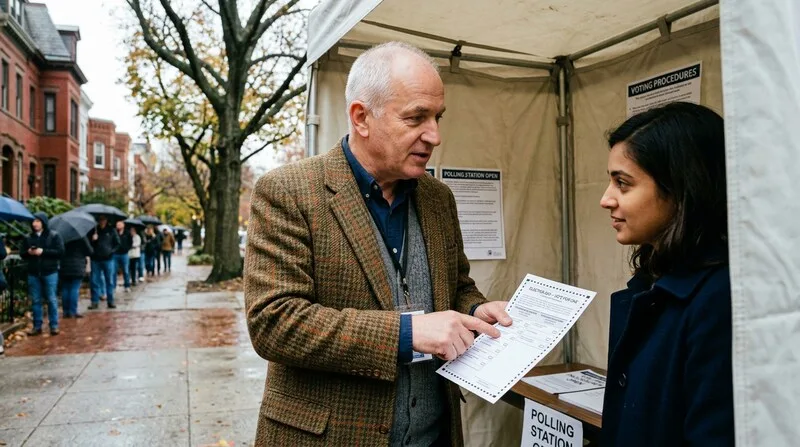
- 34 Class II seats are on the 2026 ballot; Democrats won many of them in the 2020 Biden wave and now must defend them in a less favorable environment
- 6-year staggered terms mean no single election — even a historic wave — can change more than ~1/3 of the Senate; the system was designed for stability over responsiveness
- Democrats defend 23 vs Republicans 11 Class II seats in 2026 — a structural disadvantage that makes flipping the chamber difficult even in a strong Democratic year
- Of 34 seats on the ballot, only ~5-7 are genuinely competitive; the remaining 27-29 are safe seats in states where the outcome is predetermined by partisan geography
The Three Classes: A Staggered Design
Every US state has two senators. The Constitution divides the 100 senators into three classes of roughly equal size, each elected in a different cycle:
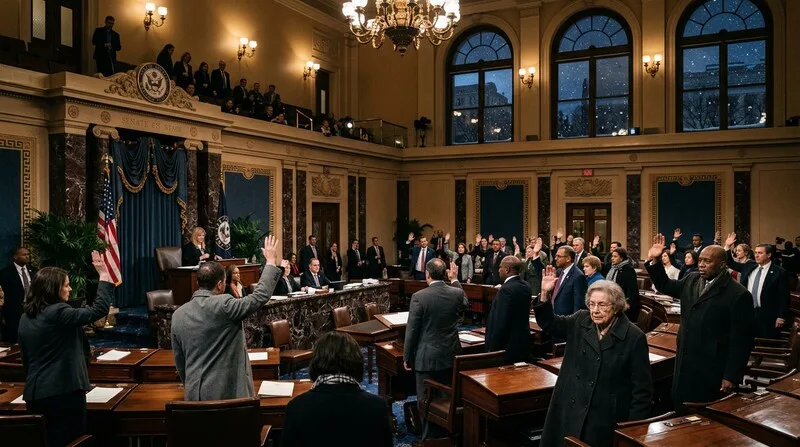
Class 2 in 2026: The Full Map
| State | Incumbent | Party | Competitiveness |
|---|---|---|---|
| Georgia | Jon Ossoff | D | Toss-up. Won by 1.2% in 2020 runoff. Trump won GA in 2024. |
| Michigan | Gary Peters | D | Lean Dem. Peters won by 1.5% in 2020. Harris carried MI narrowly in 2024. |
| Minnesota | Tina Smith | D | Likely Dem. Harris carried MN by 3+ points in 2024. |
| New Hampshire | Jeanne Shaheen | D | Competitive. Shaheen retiring; open seat likely in play. |
| Virginia | Mark Warner | D | Lean Dem. Warner won by only 0.4% in 2020 but VA has shifted blue. |
| Maine | Susan Collins | R | Lean R. Collins is a popular moderate incumbent; likely but not guaranteed to win. |
| Montana | Steve Daines | R | Safe R. Trump won MT by 20+ points. |
| Iowa | Joni Ernst | R | Likely R. Iowa has shifted significantly Republican in recent cycles. |
| Louisiana | Bill Cassidy | R | Safe R. Deep red state. |
| Colorado | John Hickenlooper | D | Lean Dem. CO has trended Democratic but remains competitive statewide. |
| Oregon | Jeff Merkley | D | Likely Dem. Merkley is a strong incumbent in a blue state. |
Showing key competitive and notable seats. Full Class 2 includes 33 seats in all states. Special election seat (varies by vacancy) may also be on the ballot.
Structural Advantages the Class System Creates
The staggered class system creates several structural dynamics that shape Senate politics far beyond which seats happen to be up in a given year:
Continuity protects against waves. Even in a 2010-scale landslide, the winning party can gain at most about one-third of Senate seats. In 2010, Republicans gained 6 Senate seats — a significant shift — but the chamber's composition could not change radically because 66 senators were not on the ballot. This built-in stabilizer is why the Senate tends to be more ideologically moderate and less reactive to short-term political trends than the House.
Map quality varies enormously by cycle. Because each class of senators was elected under different political conditions, the defense burden is not evenly distributed. In 2026, Democrats are defending 23 seats because they rode the 2020 Biden wave to win several competitive states. Those same competitive states now trend more Republican, making the map structurally difficult. In 2028, the class last elected in the 2022 Democratic-leaning environment will be on the ballot, with a more favorable composition for Democrats.
Safe incumbents provide a floor. At any given moment, roughly 60-70 of 100 senators are in the "safe" portion of their term with no immediate electoral pressure. This insulation allows senators to take politically risky positions without the constant campaign-mode calculations that define House politics.
Historical Context: How the System Was Designed
Article I, Section 3 of the Constitution established the staggered term structure in 1787. The Founders designed it deliberately as a counterweight to the House of Representatives, which was conceived as the more democratically reactive chamber subject to popular passions. The Senate — originally elected by state legislatures rather than directly by voters (until the 17th Amendment in 1913) — was intended to be a deliberative body of experienced statesmen insulated from momentary public opinion.
After the first Senate was established in 1789, its members drew lots to determine which senators would serve 2-year, 4-year, and 6-year initial terms, establishing the three-class rotation. The design has remained structurally unchanged through the 23rd, 24th, and 25th Amendments that altered other aspects of Senate composition.
The practical result today: a new president entering office with a wave election can rarely count on a Senate majority that matches the scale of their victory. Obama won decisively in 2008 and carried 60 Senate seats — but that required an unusually favorable Class 2 map in that cycle (many Republican seats from the 2002 Bush wave) and near-perfect execution. Such alignment is structurally rare.
Frequently Asked Questions
Why are only 1/3 of Senate seats up every 2 years?
The Constitution established staggered 6-year terms in 1787 to ensure continuity of the Senate as a governing body and to provide a deliberative counterweight to the more reactive House. Senators are divided into three classes — each class faces voters in a different 2-year cycle, so the Senate is never fully remade in a single election.
Which Senate seats are up in 2026?
Class 2 — 33 seats plus one special election = 34 total. Democrats are defending 23 seats, Republicans 11. Key competitive contests: Georgia (Ossoff, D), New Hampshire (open, D), Michigan (Peters, D), Virginia (Warner, D), Maine (Collins, R). The map structurally favors Republicans, but a Democratic wave environment could put additional Republican seats in play.
Why does the Senate class system give structural advantages?
It limits how much any single election can change the chamber's composition — a natural brake on wave elections. It also means the map quality varies dramatically cycle to cycle based on which party won those seats 6 years earlier. The 2026 map favors Republicans because Democrats won many of those seats in 2020's Biden-favorable environment. The 2028 map will favor Democrats because those seats were last won in 2022.