
Wave Elections: What Causes Political Tsunamis?
In wave elections, the political tide moves so strongly in one direction that seats considered safe become competitive and competitive seats become landslides. Unpx;margin:0 0 8px;"> In wave elections, the political tide moves so strongly in one direction that seats considered safe become competitive and competitive seats become landslides. Understanding what causes waves — and how to spot one forming — is central to reading the 2026 environment.
- Wave elections occur when a broad national mood — economic anxiety, policy backlash, or presidential unpopularity — overrides local incumbency advantages and flips many seats at once
- Modern waves: 2006 (D +31 House seats, Iraq War), 2010 (R +63, ACA backlash), 2018 (D +41, Trump opposition), 2022 (non-wave despite predictions)
- Presidential approval below 45% is the clearest single predictor of a wave against the president's party in midterms; Trump is currently at ~44.8% (April 2026)
- Waves flip "safe" seats — districts that would normally be uncontested suddenly become competitive when the national environment shifts 5-8 points
What Makes a Wave Election
Wave elections are defined by their scope — they move results across all categories of seats, not just the competitive ones. In a normal election, safe seats stay safe and competitive seats split roughly even. In a wave, the competitive seats all go in one direction, and some "safe" seats unexpectedly become contested. What produces this phenomenon?
Presidential approval: The single best predictor of wave conditions is the president's approval rating. When a president's approval falls significantly below 50% — especially below 45% — the midterm typically produces significant opposition gains. When a president's approval is near or above 50%, the wave conditions simply are not there. This is because approval ratings capture both the intensity of opposition enthusiasm and the degree to which the election becomes a national referendum.
The nationalization of congressional races: Wave elections require congressional races to be nationalized — voters casting ballots based on the president and national issues rather than their local representative. In normal midterms, incumbency provides a significant advantage. In waves, even popular incumbents lose because the partisan tide is too strong. The 2018 wave saw a Republican in a +15 Trump district lose because suburban voters were voting against Trump, not for his local challenger.
A galvanizing issue: Most wave elections feature a single dominant issue that crystallizes opposition. The 2010 wave was about healthcare (ACA backlash). The 2018 wave was about Trump himself and healthcare. The 2006 wave was about Iraq. The 2022 near-wave was driven by the Dobbs abortion decision. The issue needs to be emotionally mobilizing, not just intellectually concerning.
Special election signals: Wave elections typically show up in special elections held before the main election. If one party is consistently overperforming their presidential baseline in special elections by 10+ points, that signals a wave environment. In 2017-18, Democrats overperformed in dozens of special elections before the 2018 wave. Similar patterns are emerging in 2025-26 special elections.
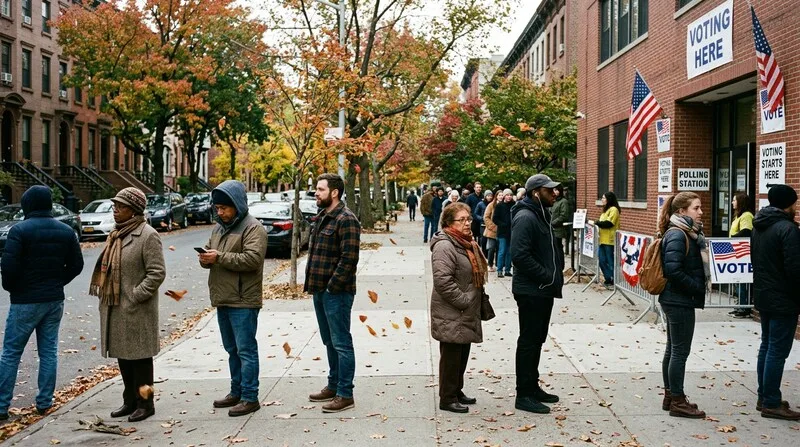
Modern Wave Elections
| Year | Wave Direction | House Gain | Key Driver |
|---|---|---|---|
| 2018 | Democratic | +40 | Anti-Trump; suburban revolt; healthcare; Trump 41% approval |
| 2010 | Republican | +63 | Tea Party; ACA backlash; Obama 45% approval; economic anxiety |
| 2006 | Democratic | +30 | Iraq War; Katrina; Bush 37% approval; Abramoff scandal |
| 1994 | Republican | +54 | Contract with America; Clinton 46% approval; healthcare reform failure |
| 1974 | Democratic | +49 | Watergate; Nixon resignation; Ford 49% approval after pardon |
Is 2026 a Wave Environment?
Trump\'s approval is consistently below 50%, Democrats are overperforming in special elections by 10-15 points, the generic ballot favors Democrats, and Democratic enthusiasm metrics are high. DOGE-driven service disruptions and tariff-related economic anxiety provide galvanizing issues. These are the preconditions for a wave, though not a guarantee of one.
Gerrymandering has reduced the number of truly competitive House seats. Republicans need to lose only 5 seats to lose their majority — the wave doesn't need to be large, but it does need to be real and targeted in the right places. The Senate majority actually limits Democratic wave upside: with Republicans defending only 11 seats vs. Democrats defending 23, a wave that flips the House may not change Senate control.
Wave conditions can fade. Economic improvement, a successful foreign policy moment, or a galvanizing Republican issue could shift the environment between now and November 2026. The 2022 "red wave" failed to materialize partly because conditions shifted in Democrats' favor late. The reverse can happen — early wave indicators don't always hold through election day.
Frequently Asked Questions
What is the difference between a wave and a regular good year?
A good year for a party means competitive seats break in their favor. A wave means that the competitive seats AND some previously safe seats become competitive. In 2010, Republicans didn't just win toss-ups — they won seats rated as Lean Democrat and some Safe Democrat seats fell. The distinguishing feature is whether the national environment is strong enough to overcome incumbency and local factors in seats that wouldn't normally be in play.
How do special elections predict wave elections?
Special elections are held outside the normal cycle to fill vacant seats. Because they are lower-turnout and less nationalized, they can reveal shifts in the partisan composition of the electorate — which voters are motivated to show up. When a party consistently overperforms their presidential baseline by 10+ points in multiple special elections across different states, it signals a broad national enthusiasm advantage that typically carries into the general election.
Can a wave be predicted from polling?
Polling can identify wave conditions — presidential approval, generic ballot, enthusiasm gaps — but cannot precisely predict the scale of a wave. Waves are sometimes larger than expected (2010: Rs gained 63 when most models predicted 40-50) and sometimes smaller (2022: expected red wave; only R+9 materialized). The best signals are a sustained presidential approval below 45%, generic ballot advantage of 5+, and consistent special election overperformance.