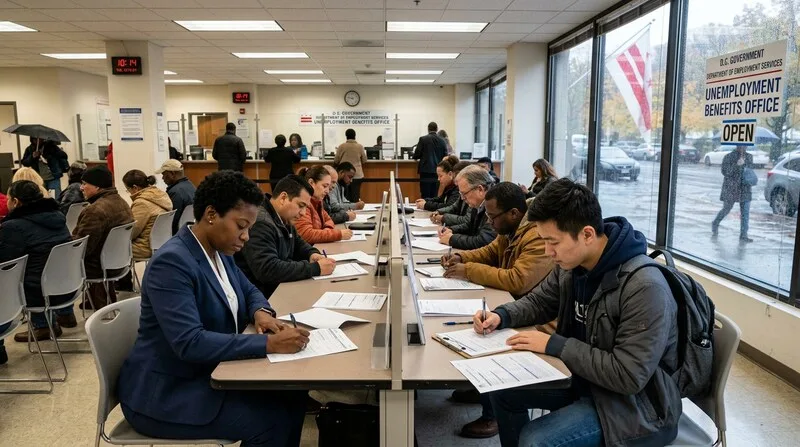
- Trust in American democratic institutions is at historic lows — only 26% express confidence in Congress (Gallup 2025); 37% in the presidency; 44% in the Supreme Court.
- 62% of Americans believe democracy is under threat — but they disagree fundamentally on the source of that threat, which maps almost perfectly onto partisan identification.
- The January 6th Capitol attack remains a defining event for many voters — 56% describe it as an 'insurrection' while 32% call it 'legitimate political protest,' a split that maps almost entirely onto partisan lines.
- Election administration has become highly politicized — secretaries of state, election commissioners, and local election boards now face unprecedented political pressure, threats, and turnover.
Partisan Breakdown: Institutional Trust
| Question | Democrat | Independent | Republican | National |
|---|---|---|---|---|
| Democracy is under threat | 87% | 65% | 34% | 63% |
| Approve of Supreme Court | 24% | 38% | 63% | 40% |
| Jan. 6 was a serious threat | 95% | 68% | 31% | 67% |
| Disapprove of DOGE cuts | 84% | 59% | 22% | 57% |
| Trust in federal courts overall | 41% | 35% | 52% | 42% |
| Trust in Congress | 14% | 10% | 19% | 14% |
Sources: NBC/WSJ March 2026, Gallup 2026, AP-NORC 2026, Quinnipiac 2026. Partisan figures represent those who identify with or lean toward each party.

Supreme Court: From Dobbs to DOGE
The Supreme Court's public standing has not recovered from the June 2022 Dobbs decision overturning Roe v. Wade. Before Dobbs, the Court maintained approval ratings in the mid-to-upper 50s across most polling. Post-Dobbs, approval dropped into the low 40s nationally — and has remained there through 2025 and into 2026.
Two overlapping ethics controversies accelerated the decline. Justice Clarence Thomas did not disclose over a decade of luxury travel, real estate transactions, and private school tuition paid by Texas Republican mega-donor Harlan Crow — gifts potentially worth over $1 million. Justice Samuel Alito faced scrutiny for flying an inverted American flag (associated with the Stop the Steal movement) and an Appeal to Heaven flag (a Christian nationalist symbol) at his properties while cases related to January 6 were pending before the Court.
Gallup's "confidence in the Supreme Court" measure — a stricter test than approval — fell to 25% in 2023, the lowest level ever recorded in the survey's history. By 2026, the figure had recovered modestly to around 30%, but remained well below the 40-50% range of prior decades.
DOGE: The Institutional Backlash
What DOGE Did
Within 60 days of formation, DOGE staff accessed Treasury payment systems, Social Security Administration databases, and multiple agency IT systems. Mass layoffs were ordered at USAID (effectively dismantled), the Consumer Financial Protection Bureau, the Department of Education, the FAA, and dozens of other agencies. Multiple federal courts issued injunctions blocking specific actions — in some cases, the administration argued it was not bound by judicial orders, triggering a constitutional crisis over separation of powers.
Public Reaction
Initial polling showed a near-even split on DOGE — a slim majority of Americans supported "cutting government waste," which DOGE's framing emphasized. Within three months, as specific cuts became visible (VA staff, air traffic controllers, food safety inspectors, Social Security phone lines), opposition hardened. By March 2026, 57% disapproved of DOGE's federal workforce cuts — with the sharpest movement among seniors and rural voters who depend on federal services, groups that had previously leaned Republican.
The Conflict of Interest Problem
Elon Musk simultaneously led DOGE and operated SpaceX (a major NASA and Defense Department contractor), Starlink (used by US military and federal agencies), Tesla (subject to NHTSA safety regulation), and X (formerly Twitter, subject to FTC oversight). Critics argued this was the most significant government conflict of interest in modern American history. Ethics lawyers noted that standard recusal requirements applied to federal employees were not being enforced — a point that polled poorly even with some Republican voters.
January 6: The Resonance That Won't Fade
Source: AP-NORC Poll, January 2026 (5th anniversary tracking). Despite partisan divergence, the 67% national figure has remained remarkably stable since 2021.
Trump's pardons of January 6 participants — issued on his first day back in office — split the public sharply. 61% opposed the pardons (Quinnipiac, February 2025), including 34% of Republicans. For Democrats and swing-district independents, the pardons served as a constant reminder of what they perceive as democratic backsliding. For the Republican base, the pardons were long-overdue justice.
The political significance of January 6 for 2026 lies primarily in its turnout activation effect. The issue does not persuade many persuadable voters — it operates more as a base mobilization tool for Democrats, particularly college-educated suburban voters who swung toward Democrats in 2018, 2020, and 2022 specifically over democratic norm concerns.
Analysis: What Low Institutional Trust Means for 2026
When institutional trust collapses, voters historically punish the party holding power. 63% saying democracy is under threat creates a structural headwind for Republicans in suburban swing districts where voters are college-educated and more attentive to norm violations. Democrats ran on democracy in 2018 (+40 House seats) and 2022 (outperformed forecasts). The same coalition — suburban women, college-educated independents, young voters — is activated by these concerns.
Republicans argue that institutional distrust predates Trump and reflects a broader anti-establishment sentiment that helped elect Trump twice. Voters who believe "the system is rigged" are not necessarily voting Democratic. Furthermore, the Republican base trusts different institutions — military, police, churches — which still show higher Republican approval. The argument that DOGE is "draining the swamp" resonates with the 35-40% of voters who already distrusted federal bureaucracy.
The key electoral variable is whether democracy concerns combined with economic anxiety (tariffs, inflation, DOGE service cuts) move enough independent voters to produce a wave. Historical precedent: the 1974 Watergate midterms, driven by institutional crisis, produced a 49-seat Democratic gain. 2026 is unlikely to match that scale — but if institutional concerns layer onto an economic downturn, the combination could produce a 20-35 seat Democratic pickup, which would flip the House.
Frequently Asked Questions
Why do so many Americans say democracy is under threat?
Polling shows 63% of Americans believe democracy is under threat, though the concern is sharply partisan. Democrats and independents cite January 6, DOGE's dismantling of agencies without congressional authorization, executive actions against independent inspectors general, and Justice Department politicization. Republicans who share this concern typically reference different threats: perceived weaponization of the legal system against political opponents and open-border immigration undermining rule of law. The overlap in the number masks deep divergence in what the threat is perceived to be.
How much do Americans trust the Supreme Court?
Supreme Court approval sits around 40% nationally — a near-historic low following the 2022 Dobbs decision and ethics controversies involving Justices Thomas and Alito. Gallup's "confidence in the Supreme Court" measure fell to 25% in 2023, the lowest ever recorded. The gap is starkly partisan: 63% of Republicans approve versus only 24% of Democrats. Among independents, 38% approve — the swing voter trust deficit that matters most for 2026.
What is DOGE and why is it controversial?
DOGE (Department of Government Efficiency) is a presidential advisory body led by Elon Musk, created by executive order in January 2025. It has no statutory authority but has exercised sweeping informal power: accessing sensitive federal databases, recommending mass layoffs across agencies, and restructuring departments without congressional approval. Courts have blocked several actions. The core controversy is Musk's simultaneous role as a major federal contractor (SpaceX, Starlink) while overseeing the agencies that regulate him. By March 2026, 57% of Americans disapproved of DOGE's federal workforce cuts.