- 84% of Americans support universal background checks for all gun sales — the most consistently popular gun policy proposal across party lines.
- Despite overwhelming polling support for specific gun measures, legislative action has been minimal — the 2022 Bipartisan Safer Communities Act was the first significant federal gun legislation in 28 years.
- Mass shooting events temporarily increase support for gun control — but polling support typically returns to baseline levels within 2–4 weeks after the event fades from media coverage.
- Gun ownership is the strongest predictor of opposition to gun control measures — and gun owners vote at higher rates and are more politically motivated by the issue than gun control supporters.
Mass Shootings & Legislative Response: A Timeline
Sandy Hook Elementary, Newtown CT
20 children and 6 adults killed. The deadliest elementary school shooting in US history. Senate Democrats brought an expanded background checks bill to the floor in April 2013 — it received 54 votes but fell six short of the 60 needed to overcome the filibuster. No federal legislation passed. Polling after Sandy Hook showed support for stricter gun laws at 57% — lower than the peak following Uvalde a decade later.
Las Vegas Route 91 Harvest Festival
60 people killed, 411 wounded — the deadliest mass shooting in US history. The shooter used bump stocks to simulate automatic fire. The Trump administration banned bump stocks by executive order in 2018. The Supreme Court overturned the ban in Garland v. Cargill (2024), ruling the ATF exceeded its authority. Congress passed no legislation.
Marjory Stoneman Douglas, Parkland FL
17 students and staff killed. Survivors launched March For Our Lives, one of the largest youth-led protest movements in US history. Support for stricter gun laws jumped to 67% in Gallup polling — a 15-year high at the time. Florida passed a red flag law under Gov. Rick Scott. Congress debated but did not pass federal legislation. suburban voters backlash helped fuel Democratic gains in the 2018 midterms.
Uvalde TX → Bipartisan Safer Communities Act
21 killed at Robb Elementary — 19 children and 2 teachers. Support for stricter gun laws surged to 72% — the highest in Gallup's tracking since the mid-1990s assault weapons ban era. Six weeks later, the Bipartisan Safer Communities Act passed with 65 Senate votes — the first major federal gun legislation in 28 years. By 2026, the "stricter laws" figure had settled back to 63% — still a clear majority, but reflecting the fade that follows each shooting without further legislative action.

Gun Policy Support: By Measure & Party (2026)
| Policy Measure | Democrats | Republicans | Independents | National |
|---|---|---|---|---|
| Universal background checks (all sales) | 92% | 77% | 84% | 67%* |
| Red flag / extreme risk protection laws | 88% | 64% | 78% | 77% |
| Ban on high-capacity magazines (30+) | 81% | 44% | 66% | 64% |
| Assault weapons ban | 79% | 31% | 57% | 55% |
| Stricter gun laws overall | 88% | 32% | 63% | 63% |
| Arming teachers in schools | 14% | 69% | 38% | 41% |
Sources: Gallup 2026, Pew Research Center 2025, Quinnipiac University Poll. *Background check figure varies by wording; higher in some polls. Figures are approximate national averages.
Why Congress Doesn’t Act
The persistence of the gap between public support and legislative action is one of the most studied questions in American political science. Several structural factors explain it:
- Senate filibuster (60 votes required): Any significant gun legislation requires 60 votes to proceed — meaning at minimum 7 Republicans must join a unified Democratic caucus. Rural-state Republican senators face minimal electoral cost for blocking gun measures; their primary electorates reward Second Amendment absolutism. Learn more about how the filibuster works.
- NRA weakened but gun rights ecosystem intact: The National Rifle Association filed for bankruptcy in 2021 and faced leadership turmoil that reduced its national lobbying capacity. However, its voter mobilization infrastructure and the broader ecosystem — including Gun Owners of America and state-level affiliates — remain potent in Republican primaries.
- Rural vs. urban cultural divide: Gun ownership rates and cultural attitudes differ sharply by geography. Rural legislators in purple states represent constituencies where gun ownership is near-universal and restrictions are viewed as culturally hostile. The Senate overrepresents rural America by design.
- Second Amendment jurisprudence: Two landmark Supreme Court rulings — District of Columbia v. Heller (2008, individual right to keep arms) and New York State Rifle & Pistol Association v. Bruen (2022, struck down NY concealed carry law) — have created legal uncertainty about permissible regulation, giving legislators additional cover to avoid action.
2026 Electoral Dynamics: What This Means for Voters
Gun control does not consistently rank in the top three issues for voters nationally, but it can surge rapidly following a high-profile mass shooting. Several dynamics are worth tracking for 2026:
- Suburban women: Polling consistently shows suburban women — the pivotal demographic in competitive districts — hold strongly pro-regulation views, particularly around school safety. This cohort's gun policy views contributed to suburban shifts toward Democrats in 2018 and 2022. These voters are concentrated in competitive districts in Pennsylvania, Arizona, and Nevada.
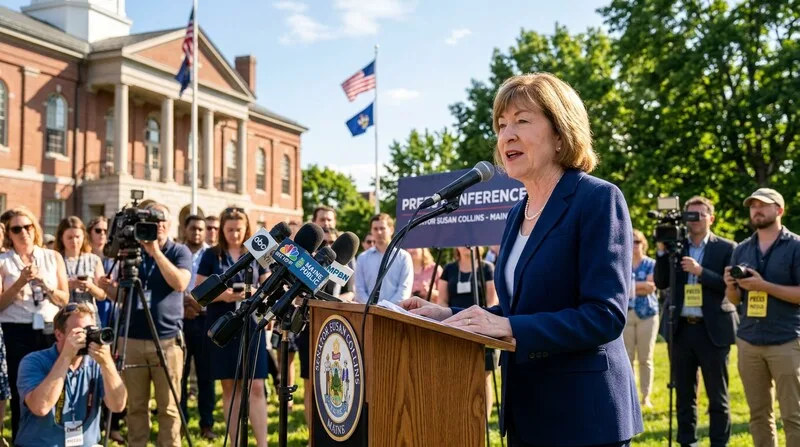
- Republican tightrope: In competitive suburban seats, candidates must balance NRA base expectations against moderates who support background checks and red flag laws. The 18 Republican senators who voted for the Bipartisan Safer Communities Act generally did not face serious primary blowback, suggesting the political calculus is shifting at the margins. Susan Collins of Maine used that vote as a moderating signal to independents.
- Unpredictable salience: A major mass shooting in September or October 2026 could instantly elevate gun control as the dominant issue, disrupting campaign messaging and forcing positions in competitive races. Campaigns routinely game out rapid-response scenarios for this contingency. See Maine and Ohio for Senate races where gun policy is a live issue.
- Senate map context: On the broader 2026 Senate map, gun policy factors most significantly where Republican incumbents represent suburban-heavy states. Republican candidates defending seats in those states face the same dilemma as they did before the Bipartisan Safer Communities Act: alienate the base or alienate suburban swing voters.
Frequently Asked Questions
Why is it so hard to pass gun control in the US?
The Senate filibuster requires 60 votes for most legislation, requiring bipartisan support that proves structurally impossible. The Supreme Court's Heller (2008) and Bruen (2022) rulings limit regulatory options. The NRA's weakened but still-relevant primary influence deters Republican senators in rural states. Result: 67% public support for background checks cannot translate into legislation without 7 Republican votes in the Senate.
What gun laws were passed after Uvalde?
The Bipartisan Safer Communities Act (June 2022) was the first major federal gun legislation in 28 years. It enhanced background checks for under-21 buyers, closed the "boyfriend loophole," funded state red flag programs, and clarified federally licensed dealer definitions. It did not implement universal background checks, ban assault weapons, or address high-capacity magazines.
How has gun polling changed since Uvalde?
After Uvalde in May 2022, support for stricter gun laws surged to 72% in Gallup polling — a near-three-decade high. By 2026, that figure had settled to 63% — still a clear majority but reflecting the pattern where post-shooting urgency fades without further legislative action. Support for specific measures like red flag laws (77%) and background checks (67%) has remained more stable than the "stricter laws" overall measure.
How does gun control polling break down by party?
The partisan split on gun policy is dramatic. Democrats support universal background checks at 92% and red flag laws at 88%. Republicans support background checks at 77% — a surprisingly high number that reveals the gap between Republican base opinion and Republican Senate voting. Only 31% of Republicans support an assault weapons ban, compared to 79% of Democrats. independent voters tend to align closer to Democrats on specific measures while being skeptical of broad restrictions.
Which 2026 Senate races will gun control affect most?
Gun policy will factor most significantly in suburban-heavy competitive Senate races. Maine's Susan Collins used her Bipartisan Safer Communities vote as a moderating credential. In Ohio, Bernie Moreno has aligned closely with the NRA, which could be a vulnerability with suburban Columbus and Cincinnati voters. Any major mass shooting before November 2026 would instantly elevate gun control as a defining issue in all competitive races.