- Michigan has flipped presidential margins three consecutive cycles: Trump +0.2 (2016), Biden +2.8 (2020), Trump +1.5 (2024) — the most genuinely competitive large state in the country.
- Whitmer's 2022 re-election margin of 10.6 points was a personal brand achievement — her successor will not inherit that premium in an open-seat race.
- Approximately 18% of Michigan's workforce is tied to auto manufacturing or related industries, making tariff policy and Big Three employment central to every candidate's economic message.
- UAW endorsement will be the clearest signal of which candidate has credibility with working-class voters — the decisive swing bloc in this state across all recent cycles.
Michigan's Political Geography: Why This Race Is Truly Open
Michigan has undergone one of the most dramatic electoral swings in the country over the past decade. Trump won the state by 0.2 points in 2016, Biden won it back by 2.8 in 2020, then Trump recaptured it by 1.5 in 2024. That three-cycle back-and-forth — decided in each case by less than 3 points — defines Michigan as perhaps the most genuinely competitive large state in the country at the presidential level.
Gretchen Whitmer's success as a two-term governor was built on a coalition that significantly outperformed the presidential baseline. She won by 10.6 points in 2022 at the same time Democrats were struggling nationally. That performance reflected strong personal approval ratings, particularly in suburban Detroit and mid-sized cities like Grand Rapids and Lansing, along with dominant margins from the Arab-American community in Wayne County before the Gaza-related 2024 backlash.
Michigan 2026 Governor: Candidate Field and Landscape
| Candidate | Party | Current Role | Strengths | Vulnerabilities | Outlook |
|---|---|---|---|---|---|
| Garlin Gilchrist | D | Lt. Governor (Whitmer) | Statewide name ID, Whitmer backing, Detroit base | Lower national profile, unclear independent appeal | D Primary frontrunner |
| Mike Duggan | D | Detroit Mayor | Strong Detroit record, business credibility | Detroit-only profile, labor tensions | D Primary challenger |
| Peter Meijer | R | Former Congressman (MI-3) | Moderate brand, Trump impeachment vote (appeal to suburbs) | Lost primary 2022 over impeachment vote, Trump opposition | Possible R Primary contender |
| Mike Rogers | R | Former Congressman / 2024 Senate candidate | Name recognition, Senate race infrastructure | Lost 2024 Senate race to Slotkin by 1.5pts | R Primary contender |
| Matt Hall | R | State House Speaker | Insider credentials, Lansing relationships | Low statewide name ID outside politics | Watch list |
The Auto Economy Wildcard
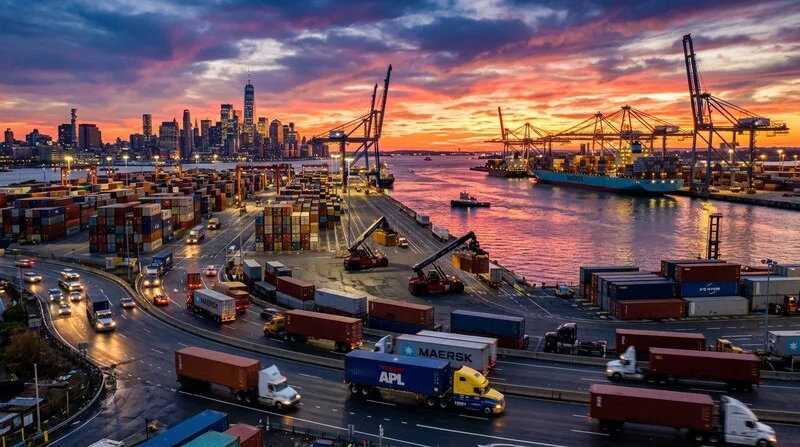
No state governor races in 2026 will be more directly shaped by trade and tariff policy than Michigan. The state's identity is inseparable from auto manufacturing — Ford, General Motors, and Stellantis maintain major production and R&D facilities across the state, and the UAW represents tens of thousands of members whose livelihoods depend on auto sector health. Trump's tariff regime complicates the picture in ways both parties must navigate carefully.
Steel tariffs benefit domestic steelmakers and some Michigan workers. But auto parts tariffs — targeting components imported from Canada, Mexico, and Asian suppliers — increase per-vehicle costs, threaten to suppress demand, and could reduce production at Michigan plants. The Big Three have publicly warned investors about tariff headwinds. UAW endorsement in this governor races will carry unusual weight: if the union backs a Democrat despite having supported Trump's trade instincts, it signals that auto workers believe Democratic governance better protects their specific economic interests than Republican-aligned trade policy.
Hold metro Detroit and Ann Arbor, win mid-size cities, recover Arab-American support damaged in 2024, and peel off suburban moderates who split from Trump.
Dominate rural and exurban MI, keep margins close in Oakland County suburbs, flip blue-collar workers in Macomb and Saginaw who have moved toward the GOP over three cycles.
Arab-American voters in Dearborn, UAW households in Macomb County, college-educated women in Oakland County, and rural small-business owners in western Michigan.
The absence of a Whitmer-like dominant personality on the Democratic side means this race will be decided more by national environment than the past two governor cycles. If the 2026 midterm environment tilts significantly Democratic — as polling now suggests — Michigan follows. If Republicans neutralize the national headwind through strong candidate selection and targeted economic messaging, they reclaim the governorship in a state they last held under Rick Snyder. Either outcome is genuinely plausible.