NATO: The Founding and What It Actually Requires
The North Atlantic Treaty Organization was founded in 1949 with 12 original members: the United States, Canada, the United Kingdom, France, Belgium, the Netherlands, Luxembourg, Denmark, Norway, Iceland, Portugal, and Italy. Its founding logic was straightforward — Western democracies, exhausted from World War II, needed a credible collective deterrent against Soviet expansion. The US nuclear umbrella, backed by forward-deployed troops in Europe, was the cornerstone.
The alliance has grown to 32 members. Finland joined in 2023 and Sweden in 2024 — both abandoning longstanding neutrality policies following Russia's full-scale invasion of Ukraine. Their accessions extended NATO's border with Russia by over 1,300 kilometers, a strategic shift of historic proportions.
Article 5 — the collective defense clause — is the treaty's spine. An attack on one is an attack on all. It has been formally invoked once: after September 11, 2001, when NATO allies supported US operations in Afghanistan. The clause does not require military action; it requires each member to take "such action as it deems necessary." But the political and military expectation of collective defense has been the foundation of European security for 77 years.
The Stakes
US NATO commitments face their biggest test since 1949. Trump questioned Article 5 — would America defend a NATO ally that doesn't pay 2%? 76% of Americans still support NATO membership. But Republican unity is fracturing.
Ukraine: The $175 Billion Commitment
Since Russia's full-scale invasion in February 2022, total US assistance to Ukraine exceeded $175 billion through early 2026. This breaks down roughly as follows: approximately $65 billion in direct military aid including air defense systems, artillery, ammunition, and armored vehicles; $60 billion in economic support including budget assistance to keep the Ukrainian government functioning; and the remainder in humanitarian assistance, loan guarantees, and refugee resettlement support.
Under Biden, this support was framed as essential to European security and as a deterrent against further Russian aggression. The argument was strategic: the cost of stopping Russia in Ukraine was far lower than the cost of confronting Russian aggression against a NATO member later.
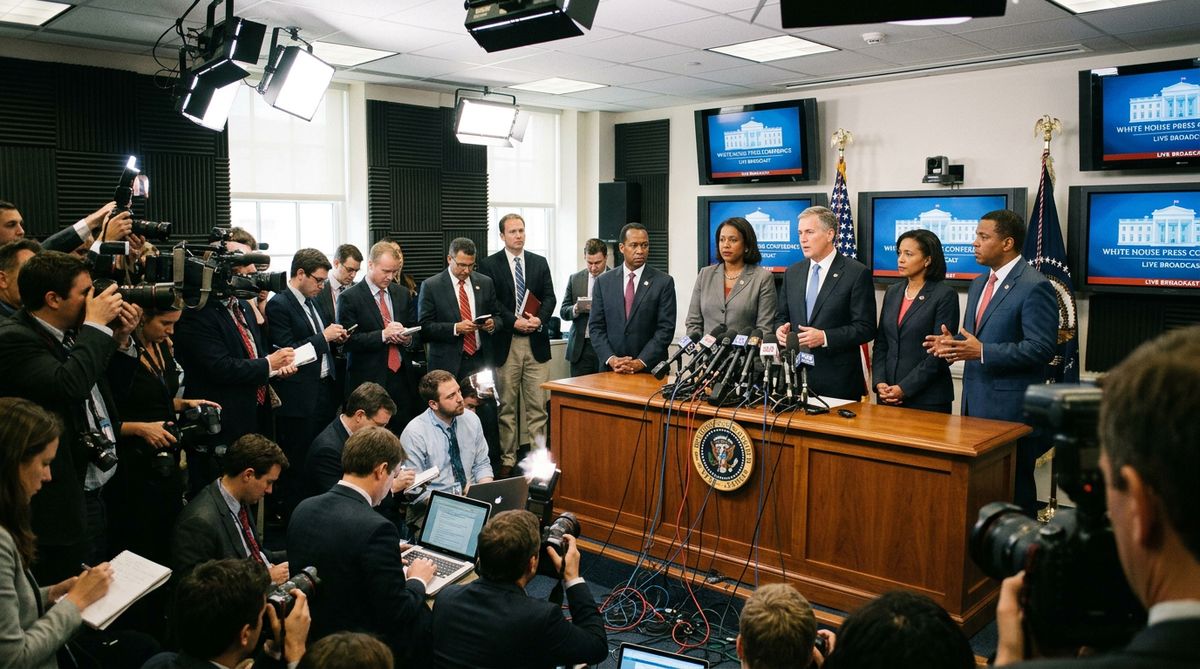
Trump's second term brought a fundamental shift in tone and approach. The administration paused certain military aid deliveries pending policy review. Zelensky was invited to — and famously confronted at — the White House in early 2025, in a meeting that became a defining image of the changed relationship. The administration pushed for ceasefire negotiations on terms that many analysts said would lock in Russian territorial gains, including Crimea and large portions of eastern Ukraine.
Trump's Conditions: The 2% Question and Article 5
Trump's core NATO argument is not new — he raised it in his first term as well. NATO allies agreed in 2014 to reach 2% of GDP in defense spending by 2024. Most failed to meet that target. Trump's second term elevated the condition from a complaint to a potential policy: he suggested that the US might not defend NATO members that did not pay 2%.
The threat was ambiguous by design. No formal declaration altered US treaty obligations under Article 5 — withdrawing from NATO would require Senate action. But the credibility of the US commitment as a deterrent depends not just on formal obligations but on perceived political will. If adversaries believe the US would hesitate, deterrence weakens regardless of treaty text.
European allies responded with urgency. Germany — which had long resisted exceeding 2% — committed to spending above that threshold, reaching approximately 2.1% in 2025 and planning further increases. Poland went further, hitting 4% — the highest of any NATO member. The European Union moved to create its own defense investment fund, accelerating a push for European strategic autonomy that had been building for years.
American Public Opinion: The NATO-Ukraine Split
American public opinion on NATO and Ukraine shows an interesting divergence. NATO itself remains broadly popular. In April 2026 polling, 76% of Americans hold a favorable view of NATO — a number that has remained relatively stable for decades and spans party lines. The alliance retains legitimacy as a concept even as its specific commitments become contested.
Ukraine aid is more contested and has declined in support over time. In early 2022, roughly 65% of Americans supported continued military and economic assistance to Ukraine. By April 2026, that number had dropped to approximately 55%. About 38% favored reducing or ending aid — a figure that skews heavily Republican but also includes a small left-flank that views the spending as misplaced domestic priorities.
The Republican Party's internal division on this question is the defining foreign policy split of the 2026 cycle. The libertarian wing — represented by Rand Paul in the Senate and Thomas Massie in the House — has consistently opposed Ukraine aid as an entanglement in a conflict with no direct American interest. The traditional hawk wing — Graham, Rubio (now at State), and much of the Senate Republican conference — views Ukraine support as essential to deterring further Russian and Chinese adventurism. Trump has navigated between these factions, maintaining conditional support while demanding concessions.
The 2026 Political Implications
NATO and Ukraine are unlikely to be the dominant issues in November 2026 House and Senate races — economic conditions and domestic policy will drive most voters. But in competitive suburban districts in states with large Eastern European diaspora populations — Illinois, Michigan, Pennsylvania, Ohio — the Ukraine question has salience. And for foreign policy voters who are historically low-information but high-turnout, the question of whether America can be trusted as an ally carries weight that transcends individual polling numbers.
Frequently Asked Questions
Has the US continued supporting Ukraine under Trump?
US support became conditional. The administration paused aid deliveries, pushed for ceasefire negotiations, and demanded Ukrainian concessions. Total US assistance to Ukraine since 2022 exceeds $175 billion. Congress retained some authority over aid but faced White House pressure to reduce commitments.
What is Article 5 of NATO?
Article 5 is NATO's collective defense clause — an attack on one member is an attack on all. It has been invoked once, after September 11, 2001. Trump questioned whether the US would honor it for NATO members spending below 2% of GDP on defense, raising credibility concerns among allies.
How much has the US spent on Ukraine since 2022?
Over $175 billion total — roughly $65 billion military aid, $60 billion economic support, and the remainder in humanitarian assistance. This makes the US by far the largest single donor to Ukraine's defense. Public support for continued aid has declined from 65% in 2022 to approximately 55% in 2026.