- Tammy Baldwin has won two Wisconsin Senate races by comfortable margins — 2012 in a favorable Obama wave, 2018 by 11 points — but Wisconsin's partisan landscape has shifted significantly since then, with Trump winning the state in 2016 and again in 2024.
- Her Senate record on consumer protections, pharmaceutical pricing, and Buy American manufacturing positions her strongly with Wisconsin's union-household and working-class base, but the western Wisconsin corridor that sent Democrats to Congress for decades has flipped Republican.
- Eric Hovde, the Republican challenger, brings self-funding capacity and media market reach that most Wisconsin Republicans lack — his ability to compete in Milwaukee and Madison advertising markets without relying on party infrastructure makes him a more dangerous opponent than typical Wisconsin Republican Senate nominees.
- Wisconsin's structural shift — from reliably competitive to Toss-up at the presidential level — means Baldwin's personal incumbency advantage must do more work than in prior cycles; her brand must outperform the partisan baseline by a wider margin to achieve the same win.
- Wisconsin is one of the most consequential Senate races for majority control: a Baldwin loss or a Johnson flip (in a different race) would reshape the Senate battleground math for both parties through the end of the decade.
Baldwin’s Record: Strength and Exposure
Tammy Baldwin has been a Wisconsin political fixture since winning a state assembly seat in 1992. She served eight terms in the U.S. House before winning the Senate race in 2012 — the same year Barack Obama carried Wisconsin comfortably — and then won re-election in 2018 by 11 points against state Senator Leah Vukmir in a year when Democrats swept most of the Upper Midwest. By Wisconsin standards, she has been a durable statewide winner.
Her Senate record emphasizes consumer protections and pharmaceutical pricing. She wrote key provisions of the law requiring drug companies to disclose conflicts of interest in research funding and has been a visible voice on the Senate Health, Education, Labor and Pensions Committee for investigations into opioid manufacturers. On manufacturing, she has championed Buy American provisions and opposed trade deals she argued would send Wisconsin factory jobs overseas. These positions poll well with the working-class base that Democrats need to hold in Green Bay, Wausau, and the Fox Valley.
The exposure is structural, not personal. Wisconsin has shifted. In 2018, when Baldwin won by 11, Democrats also won the governorship and three statewide offices. But 2020 was decided by 20,000 votes, and 2024 saw Trump carry the state for the first time since 2016. The western Wisconsin corridor that sent Democrat Ron Kind to Congress for eleven terms flipped Republican in 2022. The voter coalition Baldwin relied on has narrowed, and a midterm environment without presidential-level enthusiasm is her most dangerous setting.

Wisconsin Polling Trajectory: 2018–2026
| Year / Race | Democrat | Republican | Margin | Context |
|---|---|---|---|---|
| 2018 Senate | Baldwin 55.4% | Vukmir 44.6% | D+10.8 | Blue wave year; D enthusiasm peak |
| 2020 Presidential | Biden 49.6% | Trump 48.9% | D+0.6 | Narrowest Biden win in nation |
| 2022 Senate (Johnson) | Barnes 49.0% | Johnson 50.0% | R+1.0 | R-leaning year; Johnson barely held |
| 2024 Presidential | Harris 49.5% | Trump 49.8% | R+0.3 | State flipped R for first time since 2016 |
| 2026 Senate (polling avg) | Baldwin ~46% | Hovde ~48% | R+2 (±3) | Toss-up; within all MOEs |
Hovde’s Candidacy: Money, Message, and History
Eric Hovde ran in the 2012 Republican primary for the Senate seat Tommy Thompson ultimately won, spending heavily and demonstrating some organizational capacity before falling short. That prior run gives him institutional knowledge of the Wisconsin Republican primary landscape and some donor relationships, but his profile remains largely unknown outside GOP circles. His candidacy in 2026 is premised on three assets: personal wealth that can fund early advertising before party committee money arrives, a business-world contrast with a career politician, and a year when the national environment structurally favors Republicans defending their Senate majority.
Hovde’s message centers on economic stewardship, though he faces a genuine challenge: Wisconsin’s manufacturing and agricultural sectors are directly exposed to the tariff disruptions of the current administration’s trade policy. He has had to carefully calibrate support for the Republican president while acknowledging that abrupt tariff escalation hurts Wisconsin cheese exporters and auto parts manufacturers. That balance is difficult to maintain over the course of a long campaign, and Baldwin has been aggressive in pressing him on it.
The Economic Fault Lines: Manufacturing and Dairy
Auto Parts Manufacturing
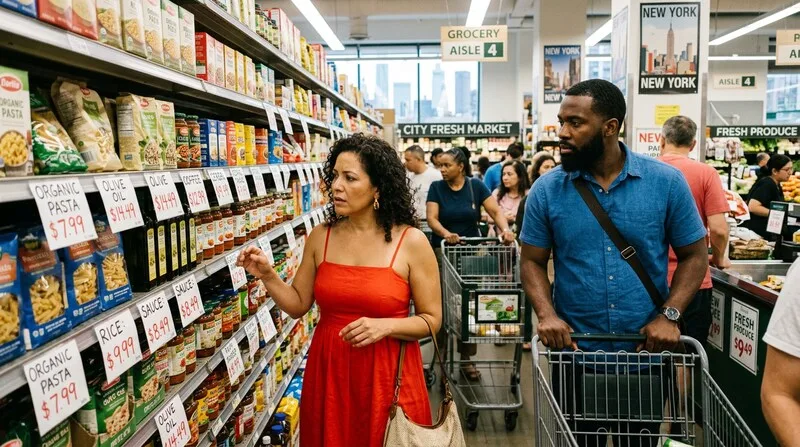
Wisconsin has roughly 80,000 workers in manufacturing jobs that supply the automotive supply chain — engine components, stampings, electrical systems, and precision parts that feed assembly plants in Michigan, Ohio, and internationally. Tariffs on imported steel and aluminum, combined with retaliatory tariffs from Canada and Mexico that raise costs on American-made auto components exported across NAFTA/USMCA borders, have increased cost pressure on these plants. Several supplier closures in the Milwaukee metro and Kenosha areas have given Democrats concrete examples to deploy. Baldwin has made plant visits a consistent part of her schedule throughout 2025 and 2026.
Dairy and Cheese Exports
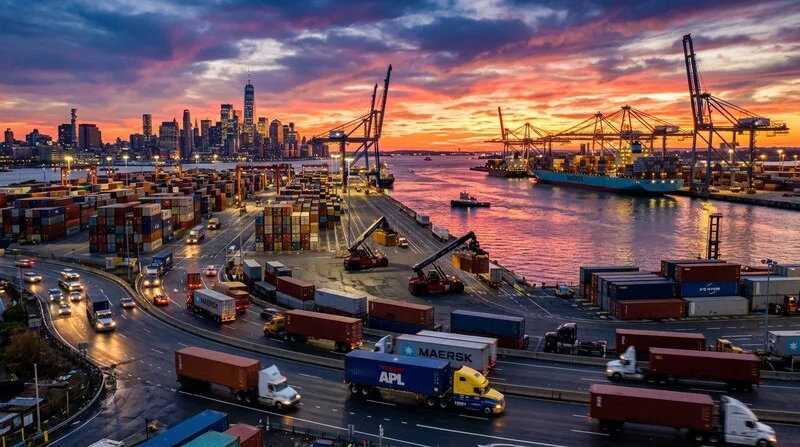
Wisconsin produces more cheese than any other state and is the largest dairy state by volume after California. American dairy exports — particularly cheddar, mozzarella, and whey — flow heavily to Mexico, Canada, and East Asian markets. Trade war disruptions that trigger retaliatory tariffs from Mexico or Canada directly reduce the price Wisconsin dairy farmers receive for their milk. The farm income pressure compounds an already difficult period for small and mid-size dairy operations: 2024 saw a record number of Wisconsin dairy farm closures. Baldwin has consistently tied the farm crisis to trade policy, while Hovde has struggled to defend tariffs to an agricultural constituency that the Republican Party needs to turn out at high rates in central and western Wisconsin.
Medicaid and Rural Hospitals
Wisconsin accepted the Affordable Care Act’s Medicaid expansion in a modified form under Governor Scott Walker and has nearly 1.2 million residents on Medicaid or BadgerCare Plus. Congressional Republican budget proposals that reduce Medicaid funding through per-capita caps or block grants would hit Wisconsin’s rural hospital network, which depends heavily on Medicaid reimbursements to remain solvent. Baldwin has been among the most vocal Senate Democrats on this issue. Rural hospital closures are politically toxic even in Republican-leaning counties — a dynamic that could blunt Hovde’s margins in areas like the Northwoods and central Wisconsin farm belt where Republicans normally dominate.
The Path to Election Night
Both campaigns understand that Wisconsin’s outcome hinges on two geographic battles. The first is turnout in Milwaukee and Dane County (Madison). Baldwin’s 2018 landslide was built on D+39 and D+46 margins in those counties respectively, running up massive margins that buried Republican advantages in the rest of the state. In 2022, Mandela Barnes underperformed those benchmarks in Milwaukee specifically, which cost him critical vote margin in the final tally. If Baldwin runs closer to her 2018 Milwaukee performance, she wins comfortably. If she runs closer to Barnes’ 2022 performance, the race will come down to the suburban WOW counties.
The second battle is the WOW counties (Waukesha, Ozaukee, Washington) northwest of Milwaukee, which have been slowly moving toward Democrats as college-educated suburban voters have shifted the partisan composition of those suburbs. Hovde needs large WOW margins to offset Milwaukee and Madison. Baldwin needs to hold enough of the WOW county suburban vote to keep his totals manageable. Both campaigns are spending heavily on broadcast advertising in the Milwaukee and Green Bay designated market areas, and the race is likely to remain within the margin of error through November.
National context will matter. A recession or acute economic anxiety by fall 2026 benefits either candidate depending on how voters assign blame. Democratic enthusiasm driven by healthcare cuts or Medicaid restructuring could boost Baldwin’s Milwaukee and Madison margins. A late-breaking Republican wave from Trump’s economic record looking stable would push Hovde over the line. Analysts currently rate the race as a true toss-up — the kind of contest where a few thousand votes in two or three counties will determine which party controls the Senate majority.