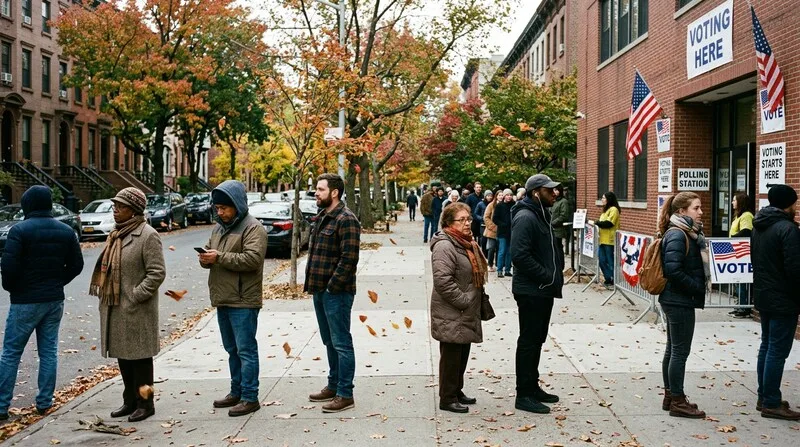
College-educated suburban women are the largest demographic swing group in modern American politics. They swung D+12 from 2016 to 2018, partially returned in 2022, and are now pointing back toward Democrats in 2026 generic ballot polling. The 40+ House districts that sit in suburban rings around major metros are where the majority will be decided.
- Trump's approval in suburban counties has tracked below 40% since late February 2026 — approaching the level that drove the 2018 blue wave, which flipped 40 suburban House seats.
- Generic ballot polling in competitive suburban districts shows Democrats leading by 7–11 points, depending on the pollster — a margin consistent with a net Democratic gain of 20–30 House seats if it holds to November.
- College-educated suburban women are the most mobilized anti-Republican demographic in 2026, activated by tariff-driven price increases, proposed Medicaid cuts, and ongoing abortion restrictions.
- The 2022 correction (crime + inflation drove some suburban seats back to Republicans) appears to have reversed: 2026 suburban polling more closely resembles the 2018 pattern than the 2022 mixed result.
- The most competitive suburban House districts in 2026 are in the Philadelphia suburbs (PA-6, PA-7), Chicago area (IL-6, IL-14), Atlanta exurbs (GA-6, GA-7), and Dallas suburbs (TX-3, TX-24) — all decided by under 5 points in 2022.
The Suburban Flip Pattern: 2018 to 2026
The modern suburban political realignment began accelerating in 2017. Trump's approval in suburban metros — defined as counties containing or adjacent to cities with populations over 250,000 — fell from roughly 48% at his January 2017 inauguration to 38% by the November 2018 midterms. The result was a historically large suburban swing: Democrats flipped 40 House seats, the overwhelming majority in suburban districts around Philadelphia, Chicago, Denver, Dallas, Atlanta, and Washington DC. College-educated white women led the shift, moving from roughly D+2 in 2016 to D+14 in 2018.
In 2022, suburban voters showed a more mixed pattern. Crime and inflation concerns, especially in New York City's suburbs and California's San Gabriel Valley, allowed Republicans to claw back several seats. The net result was a narrow Republican House majority won almost entirely in competitive suburban seats. But the 2022 suburban swing back to Republicans was smaller and more geographically concentrated than the 2018 Democratic sweep — suggesting the long-run realignment of college-educated suburban voters toward Democrats was intact, with a temporary cost-of-living correction overlaid.
By 2026, suburban polling reflects the 2018 pattern more closely than the 2022 correction. Trump's second-term approval in suburban counties has tracked below 40% since late February 2026. Tariff-driven price increases, proposed Medicaid cuts, and abortion restrictions have activated college-educated suburban women as a mobilized opposition bloc. Generic ballot polling in suburban districts shows Democrats leading by 7-11 points depending on the pollster and geographic definition.

Most Competitive Suburban House Districts: 2026 Ratings
| District | Incumbent | Party | 2024 Margin | 2026 Rating | Key Suburb |
|---|---|---|---|---|---|
| NY-17 | Mike Lawler | R | R+2.1 | Lean D | Westchester, Rockland |
| CA-27 | Mike Garcia | R | R+3.4 | Tossup | San Gabriel Valley |
| AZ-06 | Juan Ciscomani | R | R+4.8 | Tossup | Scottsdale, Chandler |
| PA-07 | Susan Wild | D | D+1.2 | Lean D | Lehigh Valley |
| IL-06 | Sean Casten | D | D+6.1 | Likely D | DuPage County |
| CO-08 | Yadira Caraveo | D | D+0.9 | Tossup | Weld County exurbs |
| VA-10 | Open (Wexton ret.) | D | D+8.3 | Likely D | Loudoun, Fairfax |
| TX-32 | Colin Allred* | R held | R+3.7 | Lean R | North Dallas suburbs |
Ratings reflect Cook Political Report and Sabato's Crystal Ball consensus as of early April 2026. Margins are 2024 results. * Allred ran for Senate in 2024; seat flipped R.
The College-Educated Women Factor
The Dobbs Mobilization Persists
The 2022 Dobbs decision overturning Roe v. Wade triggered a measurable suburban mobilization that held through the 2024 cycle. Exit polling consistently showed abortion as a top-two issue for college-educated suburban women, and districts with high concentrations of this demographic performed better for Democrats than districts without them. In 2026, with several states considering additional abortion restrictions and a potential federal 15-week ban under discussion in Congress, the Dobbs mobilization factor shows no signs of fading. Democratic campaigns in suburban districts plan to center abortion alongside Medicaid cuts and tariff prices as their three core persuasion arguments.
Tariff Prices Hit Suburban Households
Suburban households are heavy consumers of the categories most affected by Trump's 2025-2026 tariff regime: imported electronics, furniture, clothing, appliances, and vehicles. Economist estimates put the average suburban household tariff cost at $3,200-$4,800 annually across product categories, substantially above the national average due to higher consumption baskets. Consumer confidence surveys in suburban zip codes have tracked below national averages since the tariff escalation in February 2026. This economic pain point provides Democrats with a kitchen-table argument that does not require suburban voters to adopt a partisan frame — it simply requires them to connect grocery and Amazon prices to a specific policy decision.
School Funding Cuts as a Local Issue
Federal education funding cuts under the DOGE-led budget process have a disproportionate impact on suburban school districts that receive federal Title I and special education funding. While suburban districts are generally better-funded than urban or rural districts through property tax bases, federal supplemental funding for special education services is broadly distributed across income levels. Cuts to the Department of Education have generated significant suburban parent organizing — in focus groups, suburban Republican-leaning voters who did not previously focus on federal education funding have begun identifying it as a personal concern. This dynamic mirrors the 2017-2018 suburban activation period, when school-related issues provided an entry point for voters who did not primarily define themselves as partisans.
Suburban Margin Shift: 2016 to 2026 Generic
| Cycle | College Women (D margin) | College Men (D margin) | Non-College Women | Non-College Men | Suburban Overall |
|---|---|---|---|---|---|
| 2016 | D+3 | R+8 | R+18 | R+28 | R+4 |
| 2018 (midterm) | D+14 | R+4 | R+12 | R+24 | D+6 |
| 2020 | D+16 | D+3 | R+14 | R+26 | D+5 |
| 2022 (midterm) | D+11 | R+2 | R+16 | R+28 | D+2 |
| 2024 | D+13 | R+1 | R+15 | R+29 | D+3 |
| 2026 (polling) | D+18 (est.) | D+2 (est.) | R+13 | R+27 | D+7 (est.) |
2026 figures are estimated from generic ballot polling in suburban districts weighted by demographic composition. Historical figures from national exit polls. Suburban defined as counties in major metro areas with density between 500-3,000 per square mile.