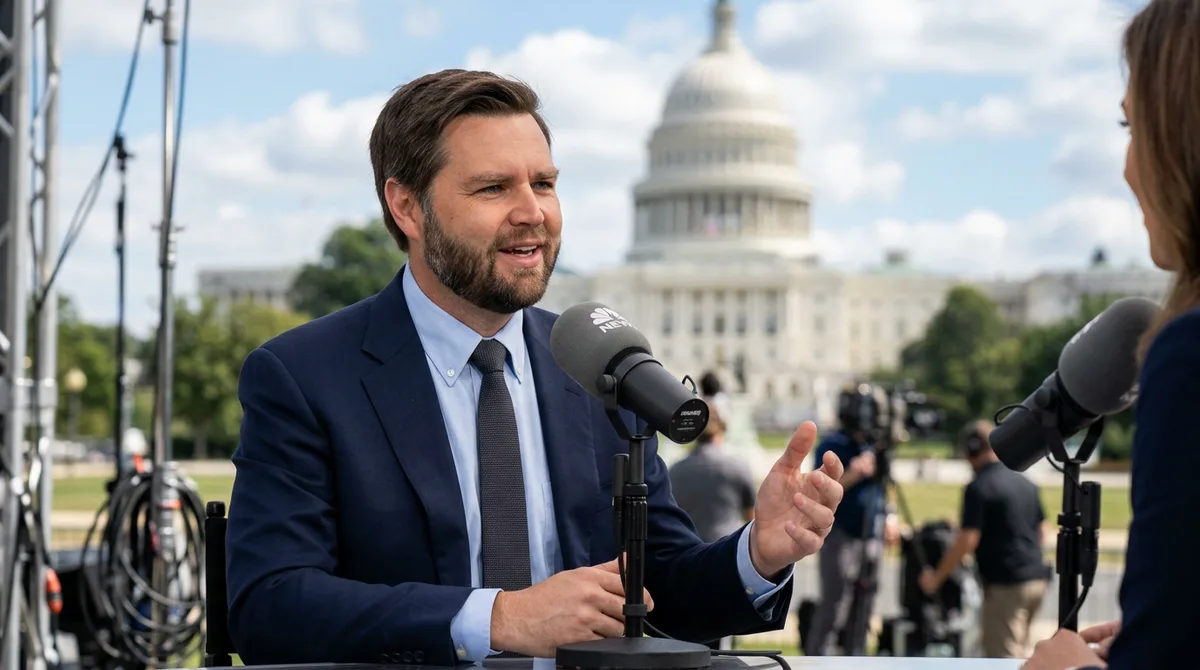
- Tim Ryan (D-OH) lost Ohio's 2022 Senate race to Republican JD Vance by 6 points after raising a record $40 million and campaigning as a working-class Democrat who could win in Trump territory — a result that tested the limits of candidate-over-party strategy.
- Ohio is R+11 — a state that has trended reliably Republican since 2016, and Ryan's loss showed that even a well-funded, disciplined campaign by a moderate Democrat could not overcome the structural Republican lean in a midterm environment.
- He served nine terms in the House (2003-2023) representing the Youngstown-Akron area — one of the most deindustrialized congressional districts in America — and built his political identity around manufacturing jobs, opioid recovery, and mindfulness-based stress reduction.
- Ryan ran for president in 2020 and for House Democratic leadership against Nancy Pelosi in 2016 — building a national profile as a voice for the white working-class voters Democrats lost in the Rust Belt, before his Senate bid became his most high-profile race.
Biography
Timothy John Ryan was born on July 16, 1973, in Niles, Ohio, in the heart of the Mahoning Valley. He grew up in the community defined by the steel industry's rise, peak, and catastrophic decline. Niles, Youngstown, and the surrounding valley experienced some of the most devastating deindustrialization in American history starting in the late 1970s, losing tens of thousands of manufacturing jobs over decades as steel plants closed. This experience forms the intellectual and emotional foundation of Ryan's politics. He attended Bowling Green State University and then Franklin Pierce Law Center in New Hampshire, though he did not become a practicing attorney.
Ryan served as chief of staff to Congressman James Traficant before winning his own congressional seat in 2002 at age 29, representing the 17th (later renumbered 13th) congressional district covering the Mahoning Valley and surrounding northeast Ohio communities. He served in Congress for 20 years, developing a profile as an economic populist focused on domestic manufacturing, trade policy, and working-class economic recovery. He was known as a strong supporter of labor unions, opponent of trade deals he viewed as harmful to manufacturing workers, and advocate for investment in communities affected by deindustrialization.
He challenged Nancy Pelosi for House Democratic Minority Leader in 2016, losing 134 to 63 but making the point that the party needed to do more to speak to working-class economic concerns. He briefly ran for president in 2019, building a campaign around the economic populist message, before dropping out without qualifying for most debates. In 2022, he left his House majority to run for the Ohio Senate majority being vacated by Rob Portman, ultimately losing to Republican JD Vance by 6 points in one of the cycle's most-watched races.
Key Policy Positions
Manufacturing & Trade
Ryan's central policy commitment has been rebuilding American manufacturing and the working-class economic base that was gutted by deindustrialization. He has been a persistent critic of trade agreements that he argues accelerated manufacturing job loss, including NAFTA and the US-China trade relationship that followed China's WTO entry in 2001. He was among the Democrats who supported tariffs as a tool to protect domestic manufacturing — a position that put him closer to economic nationalists than to free-trade mainstream Democrats. He supports significant federal investment in manufacturing competitiveness, reshoring supply chains, and training workers for advanced manufacturing jobs. His 2022 Senate campaign was organized almost entirely around this economic nationalist message.
Labor & Workers' Rights
Ryan has been a consistent pro-labor vote throughout his congressional career, supporting union organizing rights, overtime pay protections, workplace safety standards, and legislation to counteract the long-term decline of private sector union membership. His Mahoning Valley district was organized labor's heartland, and he has maintained strong relationships with the United Steelworkers, United Auto Workers, and other industrial unions. His labor record is one of the most consistent aspects of his political profile — even as he has moderated on some social issues to appeal to non-Democratic voters, his labor record has remained firmly on labor's side of every significant vote.
Mindfulness & Mental Health
One of Ryan's more distinctive public interests is mindfulness and mental health. He wrote a book, "A Mindful Nation," arguing for incorporating mindfulness-based stress reduction practices into schools, hospitals, and workplaces. He has championed funding for mindfulness programs in military veteran care, arguing that meditation and mindfulness offer complementary approaches to treating PTSD alongside traditional therapies. This interest is genuine rather than politically manufactured: Ryan has spoken at length about how mindfulness practices changed his own approach to stress and decision-making. It represents a distinctive dimension of his political identity that sets him apart from other working-class economic populists in his party.
The 2022 Ohio Senate Race
The 2022 Ohio Senate majority between Tim Ryan and JD Vance was one of the most closely watched contests of the election cycle, for multiple reasons. Ohio had shifted significantly Republican since 2012 — Trump carried it by 8 points in 2020 — and Vance was a first-time candidate who had won a competitive Republican base with Trump's endorsement despite earlier having written critically about Trump supporters (the "Hillbilly Elegy" author who became a Trump convert). Democrats believed Ryan's blue-collar economic message and personal story could overcome the state's structural lean.
Ryan ran a campaign almost entirely focused on economic nationalism: domestic manufacturing, China competition, protecting Ohio jobs. He explicitly avoided many Democratic cultural positions, ran ads emphasizing his personal biography and working-class roots, and positioned himself as a political independent willing to break with his own party. He was outspent in the primary but received significant national money in the general election; total spending on both sides exceeded $250 million, making it one of the most expensive Senate races in American history.
| Candidate | Vote % | Party |
|---|---|---|
| JD Vance | 53.3% | Republican |
| Tim Ryan | 46.7% | Democrat |
Ryan's 6-point loss was interpreted as evidence both that Ohio has moved beyond competitive statewide status for Democrats (the party's Senate losses there in 2022 and 2024 suggest a structural problem) and that a sufficiently skilled Democratic candidate with the right message can significantly outperform the generic Democratic baseline. Whether Ryan or another candidate attempts a statewide comeback in 2026 (Ohio now has an open Senate seat after Vance became VP and the appointed successor is up for election) remains one of the more watched questions in state politics.