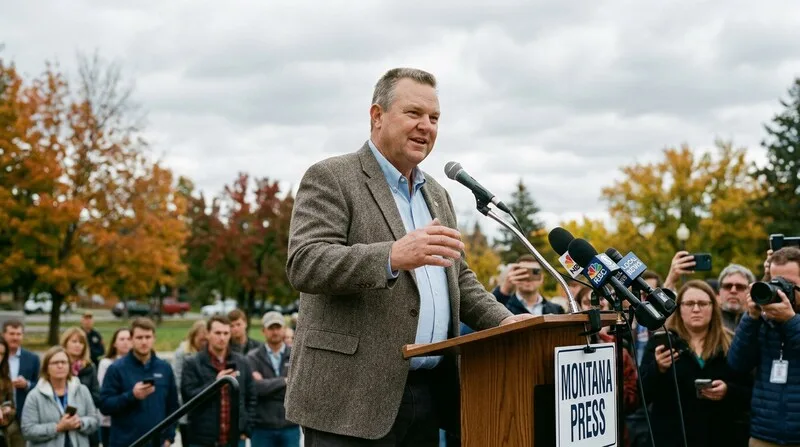
- Tim Sheehy (R-MT) won Montana's Senate seat in 2024 by 6 points over three-term Democrat Jon Tester, a major Republican pickup in a state Trump won by 21 points.
- Montana is R+12 at the presidential level — Sheehy's win ended the longest-serving Democratic senator's career in a state that had been trending Republican for years but retained Tester through personal appeal.
- He is a former Navy SEAL and Montana businessman — the co-founder of Bridger Aerospace, an aerial firefighting company — whose background fits the Western, hardworking self-made narrative that resonates with Montana voters.
- As a freshman senator in 2025-26, Sheehy is building his Senate profile; he is expected to focus on agriculture, public lands, energy production, and veterans' affairs — core Montana issues.
Biography
Timothy Sheehy was born in 1982 and grew up in Minnesota before pursuing a career that took him from elite military service to technology entrepreneurship to Montana ranching. He attended the University of Notre Dame and then served eight years as a Navy SEAL, completing multiple combat deployments and earning the Bronze Star with Valor, among other decorations. His military service gave him both a formidable personal biography and a credential that resonated deeply with Montana voters who prize patriotism and service.
After leaving the military, Sheehy co-founded Ascent Vision Technologies in Bozeman, Montana, a defense technology firm specializing in unmanned aerial systems and persistent surveillance platforms. The company grew significantly under his leadership and was acquired by a defense contractor, generating substantial personal wealth and establishing his credentials as a successful entrepreneur. He also established a cattle ranch in Montana, grounding his political identity in the state's agricultural economy and western land culture.
Sheehy entered the 2024 Senate majority with strong backing from the National Republican Senatorial Committee and an endorsement from Donald Trump, positioning himself as the clear Republican nominee to challenge three-term Democratic incumbent Jon Tester. Montana had been trending sharply Republican for years, with Trump winning the state by increasing margins in 2016, 2020, and 2024, making Tester's continued incumbency increasingly anomalous. In November 2024, Sheehy defeated Tester by approximately 13 percentage points, one of the largest margins of the cycle in a contested Senate race, and was sworn into the Senate in January 2025.
Key Policy Positions
Energy & Public Lands
Sheehy is a strong advocate for Montana's fossil fuel industries — coal, oil, and natural gas — and opposes federal land management policies he argues restrict ranching, mining, and energy production on public lands. He has called for expanding domestic energy production and rolling back Biden-era regulations on the energy sector. His ranching background gives him personal credibility on public lands issues that are central to Montana's rural political economy. He supports the Inflation Reduction Act's rollback and opposes what he describes as federal overreach on land use decisions that affect Montana families.
Border Security & Immigration
Border security was a central theme of Sheehy's 2024 campaign, and he has aligned with the Trump administration's aggressive enforcement posture. He supports completing physical barriers at the southern border, increasing deportations, and ending what he characterizes as catch-and-release policies. He has criticized the Biden administration's border management as a failure and backed the Republican legislation to sharply restrict asylum and accelerate deportation proceedings. His military background informs his view of border security as a national security issue rather than purely an immigration one.
Defense & Veterans Affairs
As a decorated Navy SEAL veteran, Sheehy brings personal credibility to national security issues. He supports increasing defense spending, rebuilding military readiness he argues was eroded under Biden, and maintaining robust support for allies in strategic regions. He has backed the Trump administration's foreign policy framework while emphasizing the importance of military strength as the foundation of American diplomacy. On veterans' affairs, he is positioned as a strong advocate for improving VA services and ensuring benefits for service members who have served in toxic environments, reflecting a constituency he knows personally.
2024 Montana Senate Election
| Candidate | Party | Vote % | Result |
|---|---|---|---|
| Tim Sheehy | Republican | ~56% | Won (+13 pts) |
| Jon Tester | Democrat (incumbent) | ~43% | Lost |
Sheehy's margin was among the largest of any contested Senate majority in 2024. Montana had trended steadily Republican throughout the Trump era, and Tester's ability to win three previous terms despite the state's conservative lean reflected extraordinary personal brand-building that ultimately could not withstand 2024's political environment. Trump carried Montana by approximately 20 points simultaneously, creating a nearly impossible environment for any Democrat at the statewide level.
2030 Re-election Outlook
Sheehy's first Senate term begins in a strongly favorable structural position. Montana is now one of the more reliably Republican states at the federal level, and he enters office with the political wind at his back after a decisive victory. His 2030 re-election will depend substantially on how he performs in the Senate — whether he builds a constituent service record, whether he distinguishes himself on issues important to Montana, and whether the broader political environment in 2030 resembles 2024 or swings back toward Democrats.
His primary challenge may come not from Democrats but from managing the expectations of a Republican base that will want to see active support for the Trump\'s approval alongside demonstrated independence on Montana-specific issues like public lands and agriculture policy. His Navy SEAL and entrepreneur biography gives him durable voter appeal that transcends normal partisan calculation, and barring major political shifts, Montana's deep-red tilt suggests he is positioned as a heavy favorite for re-election in 2030.