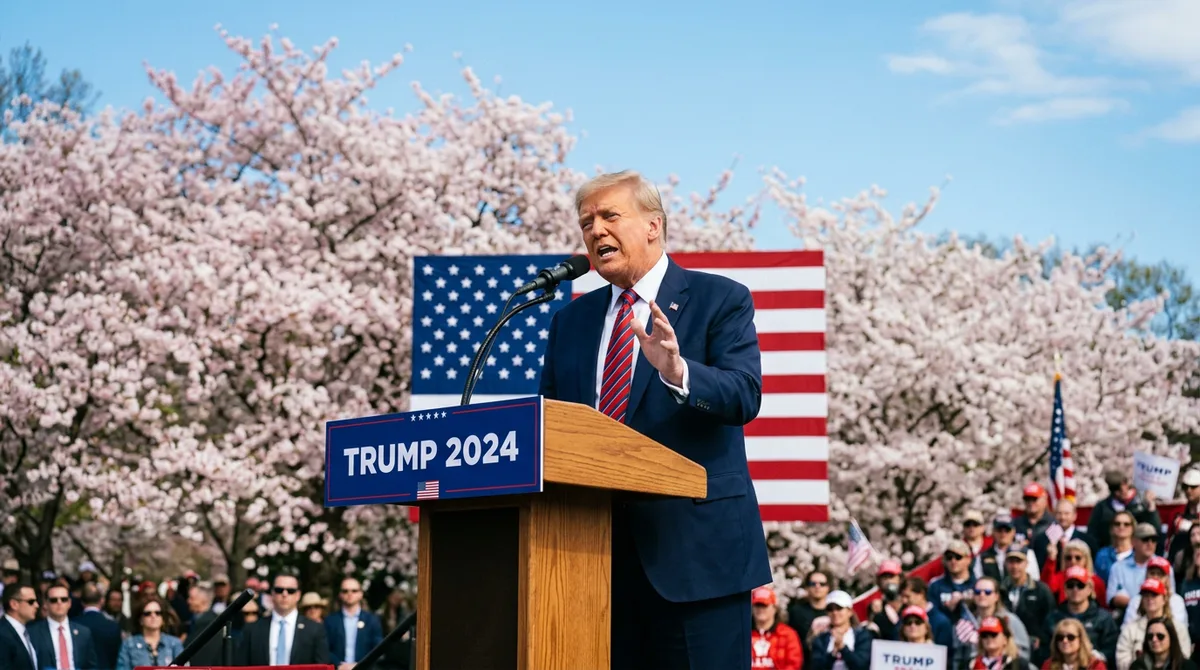
- Republican senators' Trump loyalty scores range from 75% to 98%, with only a handful voting against Trump-endorsed positions more than rarely.
- Senators in swing states face the sharpest tension: high loyalty scores risk general-election vulnerability; low scores invite MAGA primary challenges.
- Trump-aligned PACs have signaled primary campaigns against at least 4-6 incumbents who broke ranks on key procedural or bipartisan votes.
- Incumbency provides a structural ~5-point advantage, but MAGA primary pressure can neutralize it when a challenger locks up early endorsements.
- The 2026 cycle is the first full test of whether Trump's endorsement power can override decades of Senate incumbency protection.
Republican Senators: Trump Loyalty Score vs. Primary Threat Level
Trump loyalty score = % of Trump-endorsed positions voted for in 2025-2026 Congress (per GovTrack/FiveThirtyEight methodology). Primary threat = estimated probability of a serious primary challenger based on MAGA PAC activity.
| Senator | State (PVI) | Trump Loyalty Score | Trump Approval in State | Primary Threat |
|---|---|---|---|---|
| Susan Collins | Maine (D+7) | 54% | 38% | Medium |
| Thom Tillis | North Carolina (R+4) | 71% | 47% | High |
| Mitch McConnell | Kentucky (R+20) | 78% | 62% | Low |
| John Cornyn | Texas (R+15) | 88% | 53% | Low |
| Mike Rounds | South Dakota (R+25) | 82% | 67% | Low |
| Todd Young | Indiana (R+15) | 79% | 56% | Low |
Why the Base Is Still Locked In
Trump's 87% approval among Republican voters reflects a decade-long consolidation of the party around his political identity. The Republican electorate has changed composition since 2016 — it is now significantly more non-college, more rural, and more culturally conservative than it was under Bush or Romney. This is the electorate Trump built, and it remains loyal to him personally. Even Republican members who have voted against Trump priorities maintain that their state's Republican primary electorate strongly approves of Trump, making open opposition strategically unviable.
The Enthusiasm Gap Problem
The 9-point enthusiasm gap favoring Democrats is a significant structural problem for Republicans. In 2022, Republicans held a 6-point enthusiasm advantage — the reverse of today's position — and still only gained 9 House seats in a favorable economic environment. A 9-point Democratic enthusiasm advantage, in an environment where Democrats are already favored on the generic ballot by 6 points, compounds the structural disadvantage. Enthusiasm translates directly to turnout in mid-level elections (state legislature, competitive House races) where mobilization often determines outcomes in close races.
The MAGA Primary Trap
Republican senators in competitive states face a structural dilemma. Tillis in North Carolina must survive a MAGA primary challenge from the right, which may require moving further toward Trump's positions on immigration and budget cuts — exactly the positions that make him vulnerable in a general election in a state with a growing suburban, college-educated population. The tension between primary survival and general election viability is most acute in states like Maine, North Carolina, and Pennsylvania where Republican general election voters are more moderate than Republican primary voters. Senators who win primaries by embracing MAGA positions may damage their November viability.

The 2026 Republican Strategic Calculus
Republican strategists face a paradox heading into 2026. The base is loyal and unified but less enthusiastic about the midterms than Democrats. The party controls the presidency, House, and Senate — which historically produces lower midterm motivation among the governing coalition's supporters who feel they have "won." Meanwhile, the opposition is energized by specific policy grievances that are directly tied to Republican governance decisions.
The traditional Republican response to midterm enthusiasm gaps has been economic messaging. In 2014, Republicans neutralized Democratic base enthusiasm with consistent messaging on Obamacare and economic stagnation. In 2026, the economic environment is more mixed: unemployment remains low, but tariff-driven price increases and federal worker layoffs are creating visible economic anxiety in specific constituencies. Republican strategists are hoping that overall economic indicators (GDP, employment) can counteract sector-specific grievances.
The primary season, running through June 2026, will be the first major test of whether MAGA insurgents can unseat incumbent Republicans. If even one prominent incumbent (Tillis or Collins) falls to a MAGA challenger, it will both shift the competitive landscape for that general election and send a signal about the internal power dynamics of the Republican Party in a post-2024-victory environment.