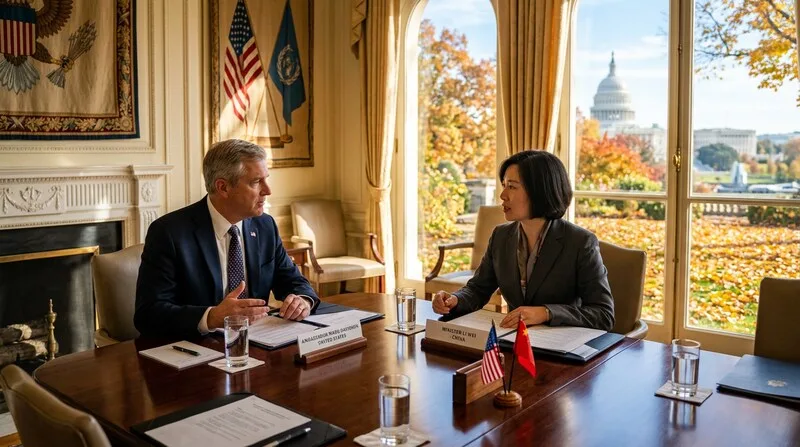
The Senate Foreign Relations Committee has become one of the key arenas where traditional Republican internationalism clashes with the Trump administration's transactional approach to alliances. Ukraine aid, NATO commitments, and arms sales decisions have all produced public disagreements between the committee and the White House — a constitutional friction with direct implications for the 2026 Senate map.
- The Senate Foreign Relations Committee has been the primary venue for bipartisan pushback on Trump foreign policy, particularly regarding Ukraine aid and NATO commitments.
- Republican senators from purple states — Michigan, New Hampshire, Colorado — have the strongest political incentive to demonstrate foreign policy independence from the White House.
- Committee resolutions affirming NATO's Article 5 collective defense obligations have passed with bipartisan margins that implicitly rebuke executive branch ambiguity.
- Ukraine support carries asymmetric risk: an asset in general elections against college-educated suburban voters, but a primary vulnerability in deep-red states.
- The Foreign Relations Committee's 2026 electoral significance lies in how its bipartisan activity shapes individual senators' records ahead of competitive races.
Ukraine Aid: The Bipartisan Friction
The Foreign Relations Committee has been the venue for the most sustained bipartisan foreign policy activity of the 119th Congress. A subset of Republican senators — including those from states with significant defense industry presence and those with hawkish foreign policy records predating the Trump era — have joined with Democrats to push for continued Ukraine security assistance, NATO reassurance legislation, and oversight of the administration's diplomatic approach to a potential ceasefire. The committee's bipartisan resolutions affirming Article 5 commitments have passed with margins that implicitly rebuke White House ambiguity on collective defense obligations.
The political calculation for Republican senators breaking with the administration on Ukraine is nuanced. In general election environments with Republican senators defending in blue or purple states (Michigan, New Hampshire, Colorado), demonstrating foreign policy independence is a net asset among the college-educated suburban voters who have moved toward Democrats since 2016. In more reliably Republican states, the calculation reverses: Ukraine support can become a primary vulnerability if a Trump-aligned challenger emerges.
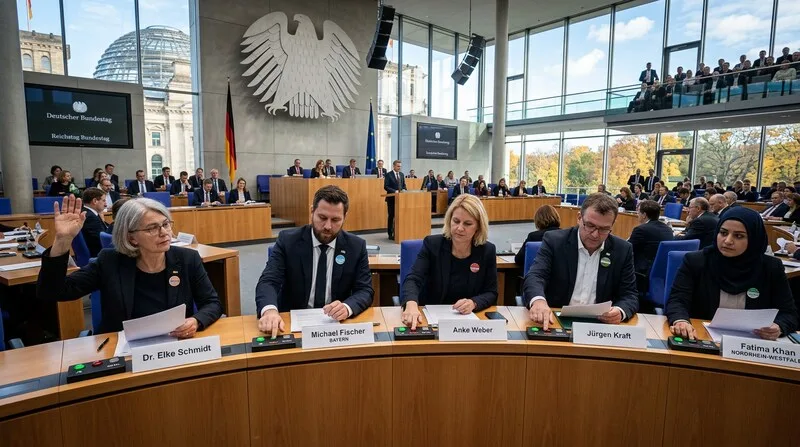
Key Committee Issues and Senate Race Implications
| Issue | Committee Position | WH Position | Electoral Relevance |
|---|---|---|---|
| Ukraine security aid | Bipartisan support for continued funding | Conditional, cease-fire focused | PA, MI, IL swing states |
| NATO Article 5 commitment | Reaffirmation resolutions passed | Ambiguous — conditional on spending | NH, CO, WI — moderate R senators |
| Taiwan arms sales | Support for Taiwan Security Act | Mixed signals on China/Taiwan | CA, WA tech/defense communities |
| Saudi arms sales | Human rights conditions pushed | Unconditional engagement | Low direct electoral salience |
The Polling Context: Do Voters Care?
Foreign policy rarely drives midterm elections in modern American history. The 2006 midterm, driven largely by Iraq War opposition, is the significant exception. In 2026, Ukraine and NATO do not appear to be top-tier voting issues for most Americans — cost of living, healthcare, and the generic direction-of-country question dominate. However, in specific demographic and geographic pockets, foreign policy attitudes correlate with voting behavior in ways that matter on the margins in close Senate races.
College-educated voters — who have shifted sharply toward Democrats since 2016 — are significantly more likely than non-college voters to cite international reliability and alliance management as factors in their vote. A 2026 Pew Research survey found that 71% of college-educated voters rated "maintaining strong alliances" as "very important," versus 44% of non-college voters. In the contested Senate states of Michigan, Pennsylvania, New Hampshire, and Wisconsin, these college-educated voters are the decisive margin in statewide races. For Democratic incumbents in those states, the contrast between Senate institutional defense of alliances and White House transactionalism on NATO is a subtle but real campaign asset embedded in the broader anti-Trump narrative.
Senate Institutional Power and the Treaty Ratification Question
Beyond the specific Ukraine and NATO debates, the Foreign Relations Committee's 2026 role reflects a broader constitutional tension about Senate advice-and-consent authority over foreign policy. The Trump administration has pursued several foreign policy commitments and diplomatic understandings without seeking Senate ratification, relying on executive agreement authorities that bypass the two-thirds treaty vote requirement. A bipartisan group of senators on the committee has pushed back, introducing legislation to require Senate input on major international security arrangements. The outcome of those institutional disputes matters for the long-run balance of executive-legislative power on foreign policy questions that extends well beyond any single president or Senate cycle.
For the 2026 elections, this institutional dimension is largely invisible to most voters but is acutely relevant to the national security and foreign policy community — a constituency that has measurably shifted toward Democrats since 2016. Former national security officials, senior military retirees, and diplomatic veterans have endorsed Democratic candidates in competitive Senate races at historically high rates, providing both credibility signals and donor networks in defense-community states. The Foreign Relations Committee's positioning as the institutional counterweight to White House unilateralism in foreign policy is a central part of that community's rationale for supporting Democratic and independent-minded Republican senators in 2026.
Foreign policy will not drive the 2026 vote for most Americans — but in the competitive Senate states of Pennsylvania, Michigan, Wisconsin, and New Hampshire, the foreign policy contrast between Senate institutionalism and White House transactionalism reinforces the broader anti-Trump narrative that is the central Democratic argument. Republican senators who have used Foreign Relations Committee votes to demonstrate independence from the administration on Ukraine and NATO are using those positions as general election shields in competitive states. The committee's institutional assertiveness also provides a governing contrast: a functional Senate checking executive overreach, versus a House in recurring fiscal dysfunction.