China has become the rare foreign policy issue that unites partisan America. 55% see it as a serious threat, 62% support protective tariffs, and Taiwan military defense is at a record high of 52%. But the trade war's price impact and generational divides on military engagement complicate the simple hawkish consensus.
- 55% of Americans describe China as a serious threat to U.S. national interests — a rare bipartisan consensus shared across both Republican and Democratic voters at near-equal levels.
- 62% support tariffs on Chinese goods to protect U.S. manufacturing, but 58% also say those same tariffs have raised the prices they pay — revealing a public willing to bear costs but feeling the pain.
- Public support for defending Taiwan militarily if China invades has reached a record 52%, up from the mid-30s a decade ago — a generational shift in foreign policy willingness.
- Younger voters (18–34) are notably more skeptical of military engagement with China than older cohorts, creating a generational fault line in the otherwise hawkish bipartisan consensus.
- Despite high threat perception, only 38% of Americans favor decoupling the U.S. economy from China entirely — reflecting awareness that economic interdependence cannot be quickly unwound.
The Bipartisan China Consensus
China threat perception is one of the most bipartisan findings in contemporary American foreign policy polling. Unlike NATO, Ukraine, or Israel — where partisan divides are significant — roughly 55-60% of both Democrats and Republicans describe China as a serious threat. The nature of the threat differs by partisan framing: Republicans emphasize military power projection, technology theft, and fentanyl supply chains; Democrats emphasize trade practices, human rights, and Taiwan. But the elevated threat perception itself is shared.
This consensus has driven a rare area of legislative cooperation: bipartisan semiconductor legislation, expanded export controls on advanced chips, and committee investigations into TikTok and Chinese investment in US farmland have all passed or advanced with significant cross-party support. For 2026, China policy is not expected to be a major campaign wedge issue — both parties compete to appear tough on China — but trade war impacts on consumer prices are directly relevant to the economic anxiety polling that shapes competitive district races.
China Polling Trends: Threat, Trade, Taiwan
The Trade War's Consumer Contradiction
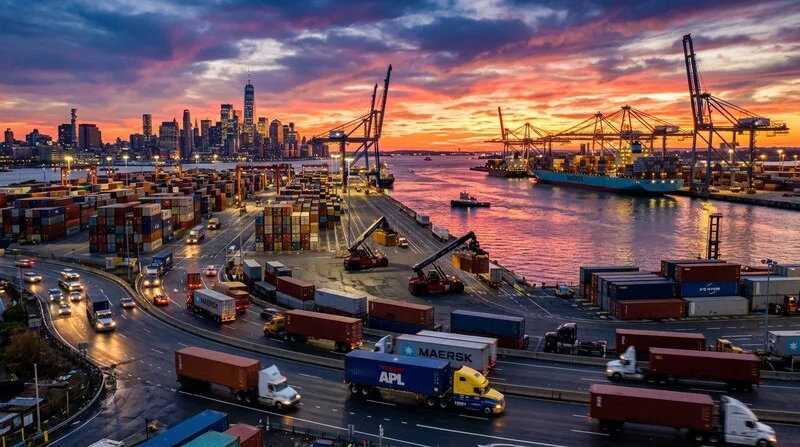
The trade war with China presents a polling paradox: protectionist sentiment is popular in principle but the experienced cost impact is creating backlash. 62% support tariffs on Chinese goods — a record high — but 58% say those same tariffs have raised prices on goods they buy. 44% now say the economic cost outweighs the benefit, up from 31% in 2023.
For 2026 campaigns, this creates a nuanced attack line for Democrats: not opposing protectionism broadly — which would be unpopular — but framing tariffs as a tax on American consumers that has not produced the promised manufacturing jobs. In competitive Midwestern districts with auto industry exposure, this attack has tested well. Republicans counter that the alternative to tariffs is continued Chinese dominance of strategic industries.
Taiwan: A Generational Divide in Foreign Policy
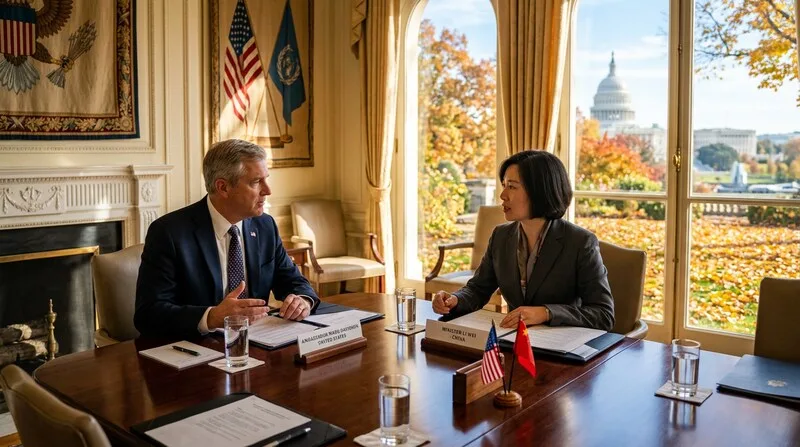
Taiwan military defense polling reveals a stark generational divide. Among voters over 55, 63% support US military intervention if China invades Taiwan. Among voters under 35, only 41% support direct military action. This gap — 22 points between the oldest and youngest cohorts — is one of the largest generational divides in any foreign policy question. It reflects different formative experiences: older voters shaped by Cold War deterrence logic, younger voters skeptical of military commitments and shaped by the post-Iraq/Afghanistan era. For 2026, Taiwan is primarily a hawkish Republican messaging vehicle rather than a genuine campaign issue in most districts. Related: Trump China Policy 2026.
Frequently Asked Questions
What percentage of Americans see China as a threat in 2026?
55% describe China as a serious threat — up from 47% in 2019. An additional 28% call it a concern but not a direct threat. This bipartisan consensus crosses party lines more than almost any other foreign policy topic.
How does the US-China trade war affect voter opinion?
62% support China tariffs in principle — a record — but 58% say tariffs raised their prices and 44% say economic costs outweigh benefits. The protection vs. price increase tension is a live campaign issue in competitive Midwestern districts.
How does the Taiwan issue poll among American voters?
52% support US military defense of Taiwan if China invades — up from 40% in 2020. But a large generational divide exists: 63% of over-55s vs. 41% of under-35s support military intervention.