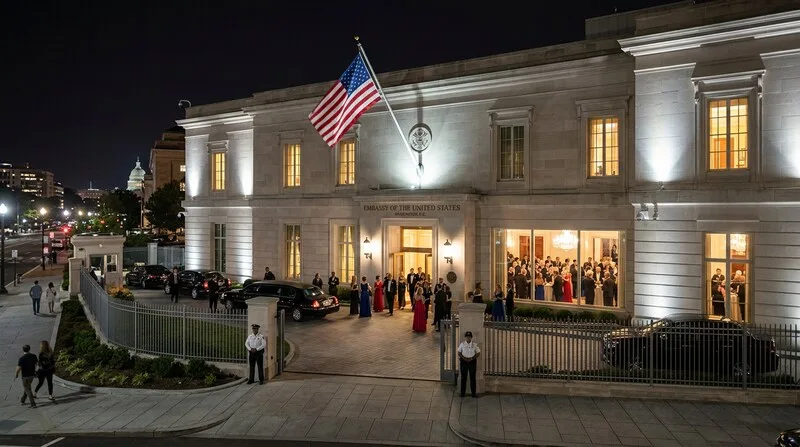
- Greg Casar (D-TX) represents Texas's 35th Congressional District (Austin-San Antonio corridor) — a D+20 safe seat he won in 2022, one of the most progressive members of the Texas delegation.
- TX-35 runs along I-35 connecting Austin and San Antonio — a majority-Latino district created through redistricting that links two of Texas's most Democratic urban cores, giving Casar a reliably safe seat for progressive policy work.
- He served as Austin City Councilman (2015-2023) — passing Austin's $15 minimum wage, tenant protection ordinances, and progressive zoning reforms before his congressional run, building a legislative record that made him a leading progressive voice in Texas.
- Casar chairs the Congressional Progressive Caucus and focuses on labor rights, housing affordability, and immigration reform — issues central to a district that spans Austin's tech economy and San Antonio's working-class Latino communities.
Biography
Greg Casar was born on May 4, 1989, in Houston, Texas, the son of Mexican immigrant parents. He grew up in a working-class household and attended the University of Texas at Austin, where he studied political communication. His early political formation was rooted in labor organizing and community activism: before running for office, he worked for Workers Defense Project, a Texas-based nonprofit that advocates for low-wage construction workers and immigrant workers, an experience that shaped his policy priorities around labor rights, workplace safety, and immigration polling.
Casar was elected to the Austin City Council in 2014, taking office in 2015, at 25 years old. He served four years representing District 4, a North Austin district with a large working-class Latino population, and became one of the most recognizable progressive voices in Austin’s political landscape. On the council he championed paid sick leave ordinances, anti-displacement housing policies, and police reform, establishing a record that aligned with the national progressive movement while staying grounded in locally resonant economic concerns. In 2022, when Congressman Lloyd Doggett shifted to a different district following Texas’s post-census redistricting, Casar entered the open primary for the newly configured TX-35 and won with roughly 60 percent of the primary vote, easily dispatching a crowded field.
Casar arrived in Washington in January 2023 as one of the more prominent new members of the progressive caucus. He joined the Congressional Progressive Caucus and aligned himself with Squad-adjacent members including Alexandria Ocasio-Cortez, Ayanna Pressley, and others. His first term focused on labor protections, housing affordability, and immigration polling, and he staged a thirst strike on the steps of the Capitol in 2023 to draw attention to Texas legislation targeting worker heat protections — a stunt that generated national attention and helped build his national profile within progressive circles.
Key Policy Positions
Labor Rights & Worker Protections
Labor organizing and worker protections are the defining issues of Casar’s career. In Austin, he led the fight for paid sick leave ordinances that would cover gig workers and low-wage earners — policies that were subsequently challenged by the state of Texas under its pre-emption authority. In Congress, he has been a consistent advocate for a $15 federal minimum wage, stronger OSHA enforcement, and protections for workers in dangerous industries including construction and agriculture. His 2023 thirst strike protesting Texas’s rollback of local heat break ordinances for outdoor workers was nationally covered and exemplified his willingness to use direct-action tactics alongside legislative work. He frames labor issues through both economic and racial justice lenses, noting that low-wage workers in Texas are disproportionately Latino and immigrant.
Housing Affordability
Casar entered the housing policy debate during Austin’s rapid expansion in the late 2010s, when rising rents were displacing working-class and Latino residents from neighborhoods they had lived in for generations. On the City Council he backed anti-displacement measures, affordable housing set-asides, and renter protections. In Congress he has supported federal housing production measures, expanded housing vouchers, and policies to limit corporate acquisition of single-family homes. He is one of the younger members of Congress with significant local government experience on housing, and he often connects federal housing policy to the lived experience of constituents in his district facing gentrification and displacement pressures from Austin’s tech-driven economic boom.
Immigration & Immigrant Rights
As the son of Mexican immigrants representing a majority-Latino district that spans Austin and San Antonio, Casar is one of Congress’s most vocal advocates for immigrant rights. He supports a pathway to citizenship for undocumented immigrants, protection and expansion of DACA, and stronger due process protections for immigrants in removal proceedings. He has been a sharp critic of ICE enforcement tactics and the family separation policies of the Trump administration. His district does not include the Texas-Mexico border, but its demographic composition and his personal background make immigration polling central to his political identity. He is fluent in Spanish and regularly communicates with constituents in both languages.
Electoral Record
| Year | Race | Result | Notes |
|---|---|---|---|
| 2014 | Austin City Council District 4 | Won | Elected at 25; youngest council member at the time |
| 2018 | Austin City Council District 4 (re-election) | Won | Re-elected; expanded influence on council |
| 2022 | TX-35 Democratic Primary | Won (~60%) | Dominant primary win in open seat after Doggett redistricted |
| 2022 | TX-35 General Election | Won (~68%) | Safe D district; comfortable general election margin |
| 2024 | TX-35 General Election (re-election) | Won | Re-elected; TX-35 remains safe Democratic |
Progressive Context & National Profile
Greg Casar occupies an interesting position in the House Democratic caucus: he is a firmly progressive member representing a safe seat, but his background in local government and his grounding in bread-and-butter working-class economic issues distinguishes him somewhat from members whose progressivism is more culturally or institutionally oriented. His focus on labor rights, housing, and immigrant protections reflects constituent needs in a district where many residents work in construction, food service, and service industries rather than the tech and professional sectors that dominate much of Austin.
His thirst strike in July 2023 — staged on the Capitol steps to protest Texas’s SB 2127, which pre-empted local governments from enacting worker heat break ordinances — generated substantial national media coverage and positioned him as a direct-action progressive willing to use his body as well as his vote to draw attention to policy issues. It also cemented his relationship with labor organizers and progressive activists nationally who see him as a model for how a progressive can win and hold a majority-Latino district without moderating on core policy commitments.