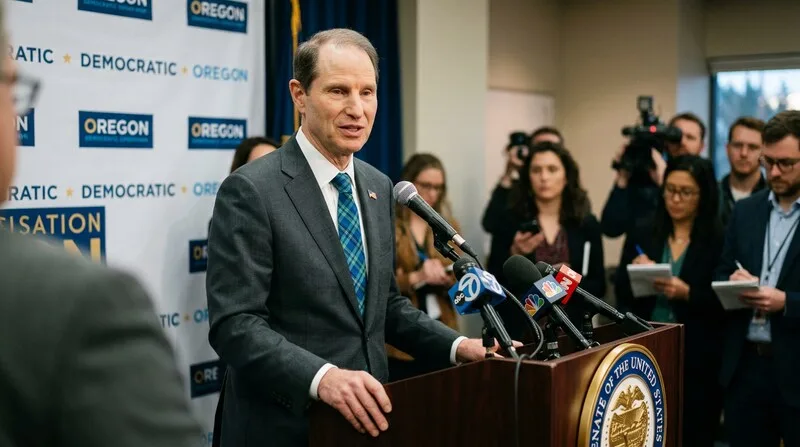
- Peter Welch (D-VT) won Vermont's open Senate seat in 2022 by 40 points, replacing retiring Patrick Leahy and becoming one of the safest Democratic senators in the country.
- Vermont is D+22 — one of the most reliably Democratic states in presidential elections, despite having a popular Republican governor (Phil Scott) who wins easily by running on fiscal issues.
- Welch previously served as Vermont's at-large House member for eight terms (2007-2023), building a reputation as a progressive on healthcare and climate while working across party lines on rural broadband.
- He serves on the Senate Commerce and Intelligence Committees and has focused on healthcare cost transparency, rural broadband access, and oversight of the intelligence community.

From Vermont House Member to Senator
Peter Welch arrived in the US Senate in January 2023 after 16 years representing Vermont's single at-large House district. He was elected to succeed Patrick Leahy, whose 48-year Senate tenure was one of the longest in American history. Welch's transition from House to Senate was straightforward in electoral terms — Vermont is one of the most reliably Democratic states for statewide offices, and no Republican had won a Senate majority there in decades — but it marked a significant generational transition for a state that prizes its political independence.
Welch came to national politics after a career in Vermont state government. He served in the Vermont State Senate beginning in 1981, was Vermont Senate President Pro Tempore, and ran unsuccessfully for the US Senate in 1992 before focusing on state politics. He won Vermont's at-large House majority in 2006 and built a House career focused on healthcare polling reduction, rural broadband and infrastructure, and foreign policy restraint. In the House, he was known as a careful dealmaker with a moderate progressive profile — progressive enough for Vermont Democrats, pragmatic enough to build cross-aisle coalitions on specific issues.
In the Senate, Welch has continued these priorities. He sits on several major committees including the Commerce, Science and Transportation Committee and the Joint Economic Committee. He is not among the most nationally prominent Senate Democrats — a chamber where Elizabeth Warren, Bernie Sanders, and Chuck Schumer command far more media attention — but represents Vermont's tradition of thoughtful, independent-minded representation that voters in the state expect from their federal officials.
Career Timeline
| Period | Role | Key Highlights |
|---|---|---|
| 1981–2002 | Vermont State Senate | Multiple terms; built state-level legislative career in Vermont |
| 1985–2002 | Vermont Senate President Pro Tempore | Led Vermont's upper chamber; economic and education policy focus |
| 1992 | US Senate Campaign (Unsuccessful) | Lost Democratic primary; focused on state politics afterward |
| 2007–2023 | US House of Representatives (VT-AL) | Vermont's at-large representative for 16 years; 8 terms; Energy & Commerce Committee |
| 2009–2010 | House Oversight Subcommittee | Investigated pharmaceutical pricing; early drug cost reform advocate |
| 2019–2021 | House Select Committee on Climate Crisis | Pushed Green New Deal-aligned climate proposals |
| 2022 | Senate Campaign (Won) | Replaced retiring Patrick Leahy; won general election comfortably |
| January 2023 | Sworn in as Senator | Joined Senate alongside Bernie Sanders (I-VT) caucusing with Democrats |
| 2023–present | Commerce & Joint Economic Committees | Broadband, rural infrastructure, and economic policy work |
Key Policy Areas
Drug Pricing Reform
Welch has been one of the Senate's most consistent advocates for allowing Medicare to negotiate drug prices directly with pharmaceutical companies — a policy that finally passed in the Inflation Reduction Act after years of Democratic efforts. He has pushed for expanded Medicare coverage and opposed proposals to weaken the ACA's consumer protections. healthcare polling reduction is arguably his signature domestic issue.
Restraint & Human Rights
Welch represents the progressive-realist wing of Democratic foreign policy. He pushed hard to end US military support for Saudi Arabia's intervention in Yemen, voted against broad military authorization resolutions, and has been critical of unconditional US support for Israeli military operations in Gaza. He supports Ukraine aid but has asked questions about the scope and accountability of assistance.
Broadband & Agriculture
Vermont is a small, largely rural state, and Welch has consistently prioritized rural broadband expansion, dairy farm support, and rural healthcare polling. He was an early Senate champion of expanded rural broadband funding that ultimately passed in the Infrastructure Investment and Jobs Act. Vermont's dairy industry — politically important despite being economically small — is a consistent area of his agricultural advocacy.
Policy Positions
| Issue | Position | Notes |
|---|---|---|
| Medicare Drug Negotiation | Strong Support | Signature issue; advocated for this for 15+ years before it passed in IRA |
| Medicare for All / Public Option | Support | Progressive on healthcare; has backed public option and Medicare expansion |
| Climate / Clean Energy | Strong Support | Voted for IRA; advocates for rapid transition away from fossil fuels |
| Ukraine Aid | Conditional Support | Supports aid with accountability; asked oversight questions |
| Yemen War / Saudi Aid | Opposition | Consistently voted to end US military support for Saudi coalition in Yemen |
| Gaza / Israel | Critical | Has been publicly critical of civilian casualties; called for ceasefire |
| Rural Broadband | Strong Support | Major champion; helped secure rural broadband funding in Infrastructure Act |
| Gun Control | Support | Consistent votes for background checks, red flag laws, assault weapon restrictions |
| Trade | Progressive | Skeptical of trade deals without strong labor and environment standards |
Electoral History
| Year | Race | Result | Margin |
|---|---|---|---|
| 2022 | Vermont Senate (open seat, replacing Leahy) | Welch 68.3% — Gerald Malloy (R) 27.7% | D +40.6 |
| 2020 | Vermont House (re-election) | Welch 68.0% — (R) 28.7% | D +39.3 |
| 2018 | Vermont House (re-election) | Welch 70.8% — (R) 25.2% | D +45.6 |
| 2016 | Vermont House (re-election) | Welch 89.7% — (no major R) | D +79 |
| 2014 | Vermont House (re-election) | Welch 63.9% — Mark Donka (R) 32.3% | D +31.6 |
| 2012 | Vermont House (re-election) | Welch 71.7% — (R) 25.4% | D +46.3 |
| 2008 | Vermont House (re-election) | Welch 83.2% — (R) 16.8% | D +66.4 |
| 2006 | Vermont House (open seat) | Welch 53.2% — Martha Rainville (R) 46.4% | D +6.8 |
2026 and Beyond: Vermont's Junior Senator
Peter Welch is not up for re-election in 2026 — he won his Senate majority in 2022 and his next election will be in 2028. Vermont remains one of the safest Democratic states in the country for federal office, meaning his re-election prospects are strong unless national political conditions shift dramatically. The more politically interesting question for Vermont is what happens to the Senate seat held by Bernie Sanders, who has periodically signaled he may not seek another term.
In the current Senate, Welch serves as a reliable progressive vote and an occasional independent voice on foreign policy. He is part of the Senate Democratic caucus that is in the minority (Republicans control the Senate with a 53-47 majority as of 2025), meaning his ability to shape legislation is limited to amendment fights, procedural objections, and building coalitions for oversight investigations. His Commerce Committee work on broadband and technology policy represents his main avenue for positive legislative contribution in the current environment.
Welch represents the quieter end of Senate progressive politics — the wing that builds legislative expertise over time rather than pursuing national media attention. Vermont voters have historically rewarded this approach, preferring senators who can deliver federal resources to a small, rural state over senators who prioritize national stardom.
Watch: Senator Peter Welch Vermont Town Hall Closing Message
Senator Peter Welch delivers his closing message during a Vermont Town Hall, outlining his priorities for Vermonters.