Michigan Economy 2026: Auto Industry Under Tariff Fire
The Big Three auto companies anchor Michigan's identity and economy. Tariffs threaten supply chains built across three countries. And Dearborn's UAW autoworkers carry a unique political weight.
Michigan Auto & Economic Snapshot 2026
| Indicator | Michigan | 2019 vs 2026 | Status |
|---|---|---|---|
| Unemployment Rate | ~4.2% | Was 4.0% in 2019 | near avg |
| Auto Sector Employment (direct) | ~170,000 | Down from ~185,000 (2019) | declining |
| Auto-adjacent Jobs (suppliers, dealers) | ~600,000+ | Stable but pressured | at risk |
| EV Manufacturing Investment | Billions committed | — | subsidy at risk |
| Steel/Aluminum Tariff Exposure | High — auto inputs | — | cost pressure |
| Canadian Parts Tariff Exposure | Very high — USMCA disruption | — | supply chain risk |
| Dearborn Arab-Am. Population | ~40,000 (city) | — | political variable |
| UAW Membership (statewide) | ~160,000+ | Down from ~200K (2000) | shrinking |
| Detroit Unemployment (city) | ~8-9% | Above state avg | structural |
Sources: BLS, Michigan Economic Development Corporation, UAW, Ford and GM public filings. Data as of early 2026.
Three Economic Fault Lines
Big Three Supply Chains: Cross-Border and Vulnerable
A modern American vehicle contains components from dozens of countries. Under the USMCA framework (successor to NAFTA), the US-Canada-Mexico auto industry operates as an integrated supply chain: an engine block may cross the border three times before the finished vehicle rolls off the assembly line. This efficiency is the foundation of the Big Three's cost structure.
Tariffs on Canadian and Mexican auto parts fundamentally threaten this model. Ford estimated publicly that its annual tariff exposure could reach $1.5 billion or more. General Motors has flagged similar risks. When input costs rise, automakers face a choice: raise vehicle prices (reducing demand), absorb losses (reducing profit), or cut jobs (reducing production). All three paths have negative Michigan employment effects.
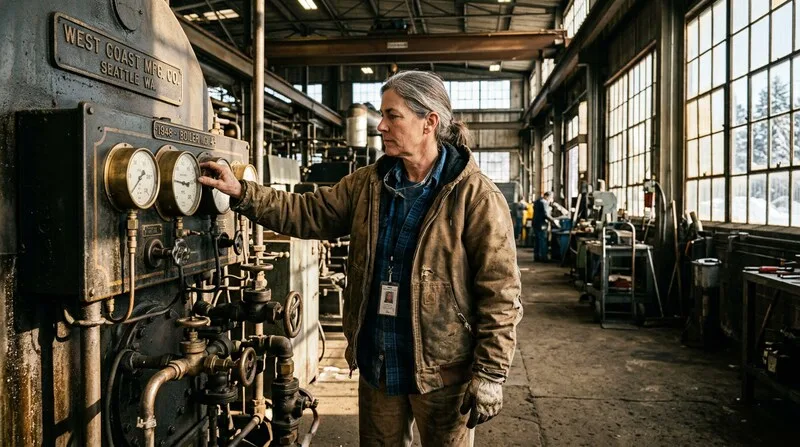
From 2019 to 2026, direct auto employment has declined from approximately 185,000 to 170,000 — a trend driven partly by automation and partly by production shifts. Tariff-driven cost increases accelerate this decline and threaten the Michigan manufacturing identity that both parties claim to defend.
Michigan Leads EV, But Subsidies Are at Risk
Michigan has attracted billions in EV manufacturing investment since 2021, driven by the Inflation Reduction Act's battery and EV tax credits. Ford's BlueOval Michigan complex, GM's Ultium battery facilities, and Stellantis EV programs have all committed significant Michigan employment tied to the IRA framework.
The Trump administration has signaled intent to reduce or eliminate IRA EV tax credits, which would undermine the demand-side economics that justify this investment. If consumer EV demand falls without the $7,500 federal credit, automakers face pressure to scale back production plans — directly threatening the new Michigan auto jobs the IRA was designed to create.
This creates an unusual political tension: Michigan's economic future depends on federal EV policy continuity, but many of the rural Michigan voters who support Trump are skeptical of the EV transition. Democratic candidates can use this tension — "Republicans are taking your auto jobs" — but must navigate UAW members' own mixed views on the EV transition timeline.
Arab-American Autoworkers: Auto + Gaza + Politics
Dearborn, Michigan has the largest Arab-American community per capita in the United States, with approximately 40,000 Arab-Americans in the city of 100,000 and a broader metro-Detroit community of over 300,000. Many are Lebanese-American and Yemeni-American, and a significant share work in the auto industry as UAW members.
In the 2024 Democratic primary, the "Uncommitted" movement — organized around opposition to Biden's Gaza policy — won over 100,000 Michigan votes. In a state where Biden's 2020 margin was 154,000, this represented a significant erosion of the Democratic base that ultimately contributed to Michigan's 2024 rightward shift.
For 2026 Democrats, winning back this community requires a combination of economic messaging (auto jobs, IRA EV credits, tariff protection) and foreign policy positioning that doesn't alienate them. The intersection of economic anxiety and foreign policy grievance in one of Michigan's largest demographic blocs makes Dearborn one of the most politically complex precincts in American politics.
Auto Sector: 2019 vs. 2026 Employment Comparison
Estimates based on BLS QCEW data, Michigan EGLE reports, and Big Three public workforce disclosures. EV figures include announced commitments with confirmed hiring as of early 2026.