

What Is Early Voting? 47 States, 100 Million Ballots, and the Fight Over Access
More Americans vote before Election Day than on it. Early voting has transformed how campaigns plan their turnout operations andht);font-size:1rem;max-width:640px;margin:0 0 8px;"> More Americans vote before Election Day than on it. Early voting has transformed how campaigns plan their turnout operations and reshaped the partisan battle over election rules.
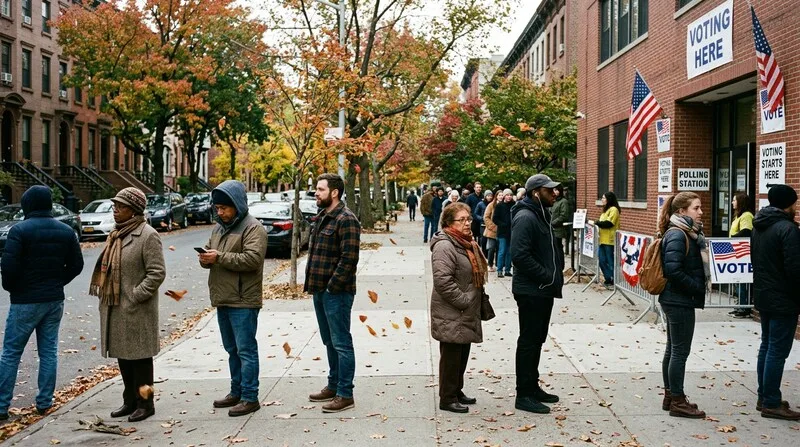
- Early voting is available in 48 states and DC — with most states allowing in-person early voting for 1-4 weeks before Election Day.
- 45% of ballots in the 2020 election were cast by mail — a historic high driven by COVID-19; the share has moderated since but remains well above pre-pandemic levels.
- Early voting has been restricted in several red states since 2020 — including Georgia, Texas, and Iowa — limiting hours and drop-box availability in ways that critics argue disproportionately affect Democratic voters.
- Democratic voters disproportionately use early and mail voting while Republican voters have been encouraged to vote on Election Day — creating partisan 'red shifts' in election results as Election Day votes are counted last.
Early Voting Windows by State Category
| Category | Days Before Election | Example States | Notes |
|---|---|---|---|
| Extended Window | 21–46 days | Minnesota, Vermont, Illinois, Indiana | Higher early share; campaigns start GOTV earlier |
| Standard Window | 10–20 days | Pennsylvania, Michigan, Wisconsin, Arizona | Most competitive states fall here |
| Short Window | 4–9 days | Georgia, South Carolina, Tennessee, Iowa | Some reduced from longer windows post-2020 |
| No In-Person Early | N/A | Alabama, Mississippi, New Hampshire | Absentee mail voting still available in all three |

Early Voting and Campaign Strategy
For years, Democrats built their GOTV strategy around early voting: "bank" reliable votes before Election Day to reduce the pressure of turnout on a single day. Organized labor, Black church networks ("Souls to the Polls" drives), and campus organizing made early voting a Democratic structural advantage in swing states. In 2020, Biden won Pennsylvania primarily on early votes; Trump won Election Day votes by a large margin but lost the state.
After Trump's 2020 attacks on mail voting caused many Republicans to skip early voting entirely (a self-inflicted disadvantage), the GOP spent 2022-2024 reversing course. Republican state parties, led by the RNC's "Bank Your Vote" program, invested heavily in early vote turnout operations. By 2024, in many Sun Belt states Republicans matched or exceeded Democratic early vote totals — showing that early voting can be a Republican tool when the party chooses to use it.
In some states, early ballots are counted first; in others, they are counted last. Pennsylvania law did not allow early ballot processing until Election Day morning — producing a dramatic "blue shift" as early (Democratic) ballots were added after Election Day votes were reported. States that allow pre-canvassing of mail ballots (Florida, Arizona) produce faster, more complete results. The counting order debate has become politically charged because it affects the narrative arc of election night reporting.
Frequently Asked Questions
Does early voting increase overall turnout?
The research is mixed. Most studies find early voting shifts when votes are cast rather than significantly expanding who votes. The most comprehensive review (Gronke et al.) found early voting increases turnout by roughly 2-4 points in low-salience elections (primaries, off-year local races) but has a smaller or negligible effect in high-salience presidential elections where motivated voters would have voted anyway. The exception is same-day registration paired with early voting, which consistently shows larger turnout gains by removing registration as a barrier.
Can you change your vote after casting an early ballot?
In most states, no. Once an early ballot is cast, it is locked. A small number of states — including Wisconsin, Michigan, and Minnesota — allow voters who have submitted an absentee ballot to withdraw it and vote in person instead, but the rules and deadlines vary. In-person early votes are generally treated identically to Election Day votes and cannot be revoked. Voters who change their minds after early voting should contact their county election office immediately to understand their options, if any.
What is the difference between early voting and absentee voting?
Early voting refers to casting a ballot in person at an official polling location before Election Day. Absentee voting (also called mail voting or vote-by-mail) involves receiving a ballot by mail, completing it at home, and returning it by mail or at a drop box. In states with "no-excuse" absentee voting, any registered voters can request a mail ballot without giving a reason. Some states use "absentee" to describe both processes, which creates confusion. Both methods allow voting before Election Day, but they involve different processes, deadlines, and administrative procedures.



Stay ahead of the polls
Weekly updates: Generic Ballot, Trump Approval, 2026 race forecasts. No spam, unsubscribe anytime.
Double opt-in. GDPR-compliant. Unsubscribe any time.
We use cookies for analytics and functionality. Learn more