- CPI hit 3.4% in March 2026, up from 2.9% in January — a resumption of inflation after the post-pandemic decline, driven primarily by tariff pass-through accelerating across goods categories.
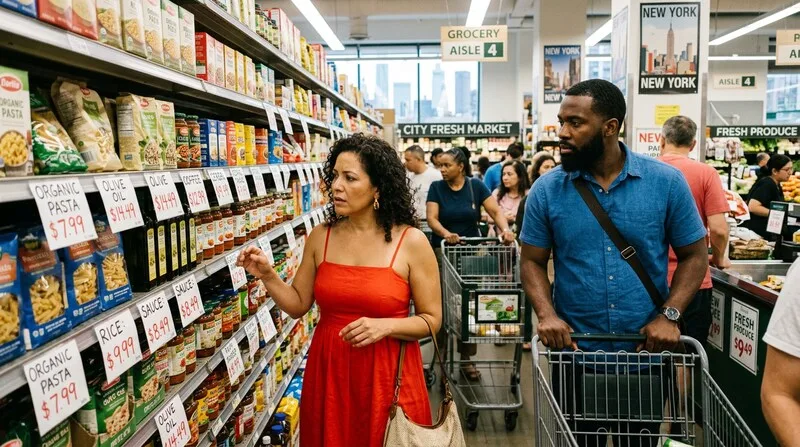
- Grocery prices at +8.2% are the most politically dangerous number: voters experience grocery prices every week, making them the single highest-salience cost signal in economic approval polling — research shows grocery inflation generates disproportionate political blame relative to its CPI weight.
- The Fed faces a stagflation dilemma: GDP at 0.4% argues for rate cuts, but 3.4% CPI argues for holding rates high — this trap removes the monetary policy escape valve normally available during economic slowdowns approaching elections.
- Tariff exposure is concentrated in goods: apparel +9.4%, household appliances +14.3%, electronics +11.8% — all driven by China's 145% tariff rate, while shelter (+4.1%) and energy (~flat) remain at different levels for different reasons.
CPI Component Breakdown: March 2026
| CPI Category | Weight in CPI | Mar 2026 YoY Change | Jan 2026 YoY Change | Primary Driver |
|---|---|---|---|---|
| Food at Home (Groceries) | 8.5% | +8.2% | +5.1% | Import tariffs + packaging/input costs |
| Food Away from Home | 5.2% | +4.8% | +3.9% | Input costs, labor |
| Energy (Fuel) | 7.0% | +0.3% | -0.5% | Global supply stable; domestic drilling |
| Apparel | 2.5% | +9.4% | +4.2% | China 145% tariff (most apparel is imported) |
| New Vehicles | 4.3% | +7.1% | +2.8% | Canada/Mexico auto parts tariff |
| Household Appliances | 1.2% | +14.3% | +6.1% | China tariff (most appliances) |
| Shelter (rent + owners equiv.) | 36.2% | +4.1% | +4.4% | Housing supply shortage; mortgage pass-through |
| Medical Care | 6.8% | +2.9% | +2.7% | Services inflation, drug pricing |
| Electronics/Computers | 2.3% | +11.8% | +3.2% | China 145% tariff (most electronics) |
Bureau of Labor Statistics CPI data through March 2026. Tariff attribution estimates from BLS import price index and Yale Budget Lab analysis. Component weights reflect current BLS basket. Shelter is the largest single weight and remains elevated; tariff impacts are concentrated in goods categories. Actual tariff pass-through timing varies by retailer and import contract structure.
From 2.9% to 3.4%: The Tariff Pass-Through Acceleration
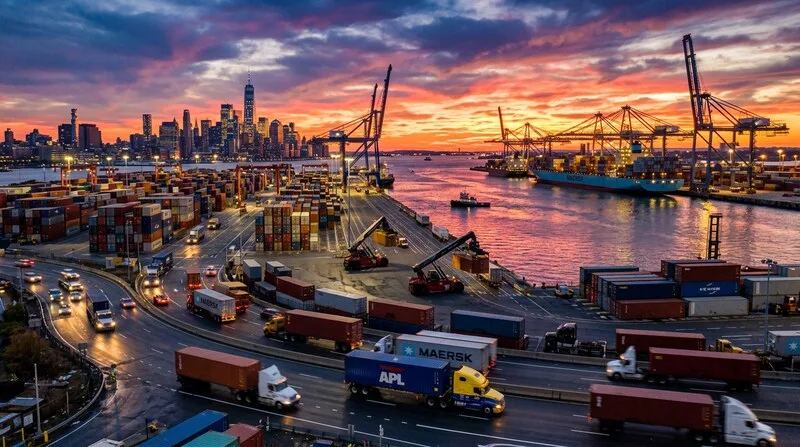
The CPI acceleration from 2.9% in January 2026 to 3.4% in March is not random noise — it precisely tracks the timing of major tariff announcements. The February 1 Canada/Mexico tariff (25%) began passing through in food prices as Mexican fresh produce, Canadian lumber (reflected in shelter costs), and Canadian auto parts (reflected in vehicle prices) all repriced. The April 2 "Liberation Day" 20% universal tariff will take several more months to fully pass through retail prices because of existing inventory and long-term supply contracts, meaning the March 3.4% reading may still not capture the full tariff inflation impact.
Economists distinguish between the "first-order" tariff impact (the direct price increase on imported goods) and "second-order" effects (domestic competitors raising prices in the shelter of higher import costs, and supply chain cost increases across domestically produced goods that use imported inputs). The first-order effects are already visible in apparel (+9.4%) and appliances (+14.3%). The second-order effects take longer but are likely to push total CPI higher through mid-2026 even if no additional tariffs are imposed. Goldman Sachs estimates cumulative tariff-driven CPI impact will reach 2.0-2.5 percentage points by the end of 2026, potentially pushing headline CPI above 4%.
Political Attribution: Inflation as an Electoral Issue
8.2%: The Visible Pain
Grocery price increases are the most politically salient form of inflation because they are experienced weekly at a price-transparent environment (grocery receipts). Democrats ran effectively against Republican grocery inflation framing in 2022; now the inflation resurgence is being attributed to Republican tariff policy in 2026. Internal polling by both parties shows "the tariff tax on groceries" is among the most effective Democratic attack lines in swing districts.
The One Positive
Flat fuel prices are the one component working in Republicans' favor. Trump's "drill baby drill" policy has maintained domestic production near record levels, helping to keep gasoline prices in the $3.20-$3.50 range nationally — lower than the 2022 peaks that devastated Biden's approval ratings. Republicans are leaning heavily on the gas price comparison in their economic messaging, attempting to localize the positive signal.
"Tariff Tax" vs. "Investment"
Democrats are attempting to brand tariff-driven inflation as a "tariff tax on American families" — a framing that polls well because it assigns agency and causation to a specific policy decision. Republicans argue tariffs are a temporary investment in domestic production that will eventually lower prices when US factories come back online. Voter research consistently shows that the "temporary pain" argument performs poorly against visible, present-tense price increases.