- China's 125% retaliatory tariff on US soybeans (and 80% on pork) directly targets the agricultural heartland — Iowa, Illinois, Minnesota, South Dakota — that voted heavily for Trump
- China's total retaliatory tariffs on US agricultural goods exceed $100 billion, redirecting US exports to lower-value markets at a significant price discount
- The clearest winners are domestic steelmakers (Nucor, Cleveland-Cliffs): US steel prices rose 15-20% as tariff-elevated import costs allowed domestic producers to charge more
- The Federal Reserve estimates aggregate consumer price increases of 1.5-2% from tariff pass-throughs — a tax that hits lower-income households hardest as a share of income
- The trade war's political paradox: the states most economically harmed (agricultural, manufacturing) are also the most reliably Republican — creating a growing tension within the coalition
The Winners: Protected Industries and Domestic Producers
The economic logic of protective tariffs is straightforward: by making imported goods more expensive, domestic producers of equivalent goods can charge more without losing market share. That logic works most cleanly in industries with significant domestic production capacity and clear import competition. Steel is the prototype.
Nucor Corporation and Cleveland-Cliffs — the two largest American steelmakers — have been among the most explicit beneficiaries of Trump tariff policy. Steel tariffs of 25 percent on imported steel have allowed domestic producers to raise their prices toward the tariff-elevated import price ceiling. Both companies have seen improved margins. Both companies' executives have been vocal supporters of the tariff program. Employment at domestic steel facilities has increased modestly.
Some domestic manufacturers who compete directly with Chinese imports in specific categories — solar panel assembly, electric vehicle components, consumer electronics in targeted categories — have also gained. The domestic solar panel manufacturing industry, in particular, has received a significant tailwind from tariffs that have made Chinese solar panels substantially more expensive. Similarly, domestic aluminum producers have seen price improvements.
Coal is a special case. Tariffs have provided short-term relief to metallurgical coal producers by reducing competition from imported coking coal. But coal's structural challenges — competition from natural gas, accelerating renewable energy deployment, declining steel plant demand for metallurgical coal — mean tariff benefits are unlikely to produce a sustained reversal of the industry's long-term trajectory. The short-term boost is real; the structural decline continues.
The Losers: Agriculture, Auto, Retail, and the Consumer
Agricultural exporters are the clearest losers, and the political irony is acute: the communities that voted most strongly for Trump's tariff agenda are the communities most directly damaged by it. The mechanism — retaliatory Chinese tariffs on American farm exports — is by now familiar from the first-term trade war, but the second-term scale and duration are greater, and there is no equivalent of the 2018-2019 Market Facilitation Program direct payment backstop to cushion the blow.
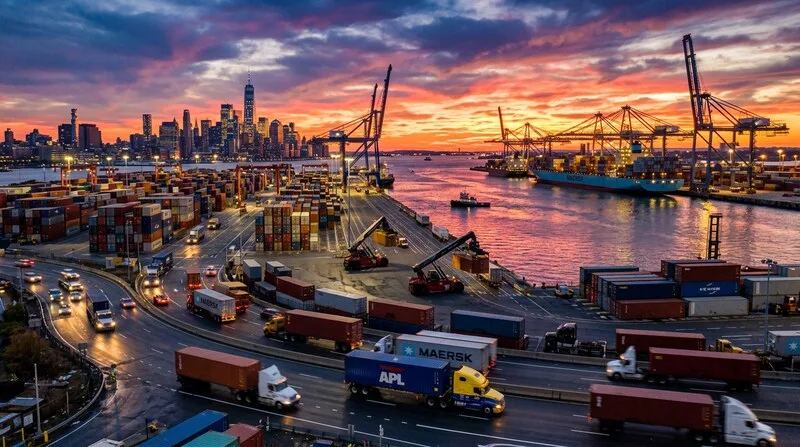
China has imposed a 125 percent retaliatory tariff on US soybeans — a figure that essentially closes the Chinese market to American soybean exports for any transaction that does not involve a massive Chinese government subsidy program. The total package of Chinese retaliatory tariffs on American agricultural goods amounts to approximately $100 billion in targeted product value. Brazil, Argentina, and Australia have benefited from the US market share they have captured in China while American exports are tariffed out of competition.
The automotive industry presents a different but equally significant loss category. A typical American automobile contains components sourced from dozens of countries. Steel tariffs raise the cost of the steel in the vehicle. Tariffs on aluminum raise the cost of aluminum components. Tariffs on imported parts from Mexico, Canada, China, Japan, and Korea — all countries facing various tariff regimes — raise the cost of electronics, transmissions, glass, and dozens of other components. Ford and General Motors have each estimated additional annual costs in the range of $1-2 billion from tariff-related supply chain cost increases. Those costs are partially absorbed by the companies and partially passed through to consumers.
Walmart — the largest retailer in the world by revenue — issued explicit price increase warnings to investors and consumers in 2025, citing tariff cost pass-throughs that it could not fully absorb. The consumer electronics, clothing, furniture, and home goods that Walmart sells are disproportionately sourced from China and other countries facing elevated tariffs. The Federal Reserve has estimated aggregate consumer price increases of 1.5 to 2 percent from tariff pass-throughs across the economy — a meaningful contribution to the persistent inflation that has driven economic dissatisfaction polling.
"China's 125% soybean tariff has essentially closed the Chinese market to US exports. Brazil and Argentina are capturing the market share. US farmers who supported tariffs are watching their largest customer disappear — and there is no Market Facilitation Program this time to paper over the loss."
USDA trade data | Chinese Ministry of Commerce | Peterson Institute for International Economics — Q1 2026
China's retaliatory tariffs on $100 billion in US agricultural goods are the most strategically targeted element of Beijing's trade war response. By concentrating retaliation on agricultural exports — the economic lifeblood of Republican-leaning rural states — China is maximizing political pressure on the administration's own base. The 125% soybean tariff is not an accident; it is a precisely calibrated political instrument.
The Federal Reserve estimates that tariff pass-throughs have added 1.5-2 percent to consumer prices — a meaningful contribution to the persistent inflation that has driven economic dissatisfaction. Walmart explicitly warned of price increases in 2025. For American households already stretched by post-pandemic inflation, tariff-driven price increases are a concrete and daily-experienced consequence of the trade war policy.
Iowa, Minnesota, South Dakota, North Dakota — agricultural export states that voted Republican in 2024 — are among the hardest-hit by Chinese retaliatory tariffs. Michigan and Ohio — swing states with large automotive industries — face higher parts costs. The trade war's economic geography maps inversely to its political geography: losses are concentrated where Republican support is strongest.

The State-Level Political Map
The state-level political impact of the trade war creates specific pressure points in 2026 competitive races. Iowa — where the Senate seat left open by Chuck Grassley's retirement is a top-tier competitive race — faces both soybean and pork export impacts. The Republican candidate in Iowa will be asked, repeatedly, about tariffs and farm income. There is no easy answer: defending the tariff program means defending policy that is demonstrably hurting Iowa farm families; opposing it means breaking with the president.
Michigan and Ohio are the most politically consequential automotive-impact states. Both are swing states with competitive Senate and House races. The Detroit metro area, where automotive industry employment is concentrated, includes competitive suburban House districts. Auto workers who benefited from Union contracts negotiated under strong labor market conditions are now watching their employers absorb billions in additional costs that create downward pressure on future contract negotiations.
California and Washington face the technology import cost dimension. Apple, which manufactures in China, has faced significant tariff cost exposure on iPhones and other products assembled in tariffed countries. The tech sector's political impact in California is concentrated in Silicon Valley, which is not competitive Republican territory. But the consumer price impact of tech hardware cost increases is national.
The macro-level assessment of the trade war's political impact in 2026 is that it is a net negative for Republicans — not because any single industry's pain is decisive, but because the aggregate consumer price effect, the agricultural export collapse, and the supply chain cost increases to manufacturing have contributed to the economic dissatisfaction that is driving the wrong-track numbers that underlie the Democratic advantage in generic ballot polling. The trade war is not the only cause of Republican headwinds in 2026, but it is a significant contributing factor — and notably one of the few current political liabilities that the administration imposed on itself by deliberate policy choice.
Frequently Asked Questions
Which industries benefit from Trump tariffs?
Domestic steel (Nucor, Cleveland-Cliffs), aluminum producers, some domestic manufacturers competing directly with Chinese imports (solar panels, certain EVs), and short-term coal. Steel and aluminum have seen the clearest margin improvements from the tariff-elevated price ceiling on imported equivalents.
Which industries are most hurt by Trump tariffs?
Soybean and agricultural exporters (China's 125% retaliatory tariff), automotive manufacturers ($1-2B additional annual costs per major OEM from imported parts), retailers facing China-sourced goods price increases (Walmart's explicit price warnings), and ultimately consumers facing an estimated 1.5-2% aggregate price increase from pass-throughs.
How have tariffs affected different US states politically?
Iowa/MN/SD/ND face severe agricultural export impacts — all red or purple states. Michigan and Ohio face automotive industry cost increases — key swing states. CA and WA face tech import costs but are not competitive Republican territory. The trade war's losses are paradoxically concentrated in the most Republican-leaning states, creating political pressure within the GOP's own base coalition.