
- The "41% independent" label misleads: approximately 85-90% are stable partisan leaners who vote their party consistently; only 10-15% are genuinely persuadable.
- Independents shifted from R+6 (2022 cycle) to approximately D+9 (sustained Q1 2026) — one of the fastest swings in independent sentiment recorded outside a direct economic crisis.
- The driver is economic performance evaluation, not partisan realignment: tariffs, DOGE cuts, and service reductions are reconsidered by 2024 Trump crossover voters on economic grounds.
- Geographic concentration: suburban, college-educated voters in PA, MI, WI, AZ, and NV define this shift — the same states that decided both 2020 and 2024.
The 41 Percent Illusion
The phrase "independent voters" obscures more than it reveals. When Gallup and other pollsters ask Americans to identify as Democrat, Republican, or Independent, the independent category consistently draws around 41 percent — the largest single group, larger than either party. That number feeds a persistent media narrative about a vast middle of the electorate waiting to be courted. The reality is considerably more constrained.
Roughly 70 percent of self-identified independents, when pressed, acknowledge that they lean toward one party or the other — and their actual vote behavior is essentially indistinguishable from weak partisans. A Democrat-leaning independent in suburban Philadelphia votes Democratic in roughly 90 percent of elections. A Republican-leaning independent in rural Ohio votes Republican at similar rates. These are not persuadable voters in any practical sense.
True swing independents — those who have genuinely crossed party lines in multiple recent elections, who lack a party lean even when probed, and whose vote intentions show high undecided rates well into election season — constitute roughly 15 percent of the electorate. That is still a decisive group. National elections are typically decided within 2-5 percentage points of the two-party vote. A 9-point shift among 15 percent of the electorate, if it holds, is the difference between a swing districts and a wave.
Historical Context: From R+6 to D+9
The historical swing independent pattern is a near-perfect barometer for midterm history elections. In 2010, Republicans held swing independents by roughly 6 points — and won the House by 63 seats in the largest midterm wave since 1938. In 2014, Republicans held a smaller but still meaningful independent advantage — and gained 13 Senate seats. In 2018, Democrats held swing independents by approximately 1 point — a much narrower advantage that nonetheless produced a 40-seat House gain in a strong Democratic year.
In 2026, the current D+9 among swing independents exceeds the 2018 Democratic independent advantage by 8 points. It is closer to the R+6 of the 2010 wave, but in the opposite direction. That comparison does not mean Democrats will gain 63 seats — seat exposure, incumbency protection, and geographic clustering all constrain outcomes. But it does mean that the independent environment in 2026 is structurally consistent with a significant Democratic wave rather than a competitive cycle.
"Independents were R+6 in 2010 and Republicans gained 63 House seats. In 2026, independents are D+9. That comparison does not predict seat totals — but it defines the category of election we are likely in."
Generic ballot independent crosstabs — aggregated polling averages, March-April 2026
What Is Driving Independents Left
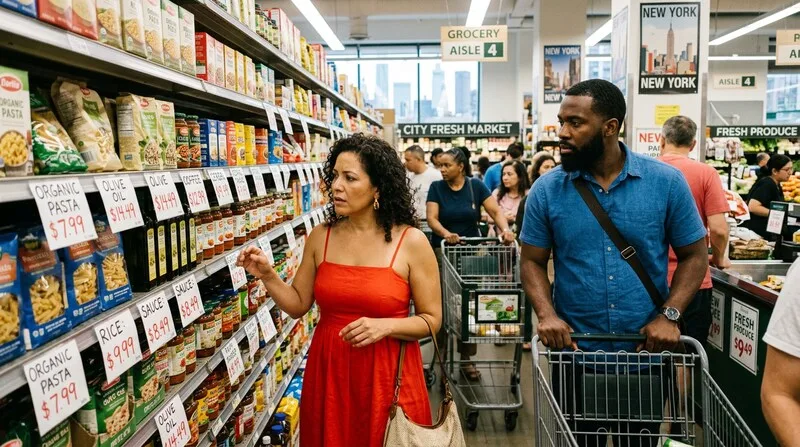
Three issue clusters dominate the independent shift. First and most powerful is economic direction. Sixty-nine percent of swing independents say the economy is on the wrong track — a number that has climbed since January as tariff-driven price increases have shown up in consumer goods and the threat of recession has moved from Wall Street forecasts to Main Street anxiety. Independent voters without strong partisan identity are more likely to evaluate the economy on lived experience than partisan narrative.
Second is tariff opposition. Sixty-seven percent of swing independents oppose the broad tariff impact — a number that substantially exceeds even the national opposition average of 55 percent. This makes intuitive sense: partisan Republicans support the tariffs as part of their team identity; partisan Democrats oppose them as partisan opposition. Independents, lacking either loyalty frame, evaluate tariffs on their economic merits — and in 2026, the merits include higher consumer prices, retaliatory pressure on agricultural exports, and recession warnings from most major forecasters.
Third is healthcare cost anxiety. Independents rank healthcare costs as a top-three priority at higher rates than either partisan group — reflecting the cross-pressured nature of their political identity. They often hold views that split between parties: concerned about both government overreach and lack of coverage, skeptical of both party extremes. In 2026, the Republican reconciliation bill's proposed Medicaid reductions and threats to Medicare drug pricing negotiations have activated healthcare as a Democratic advantage issue at precisely the moment when independents are most economically anxious.
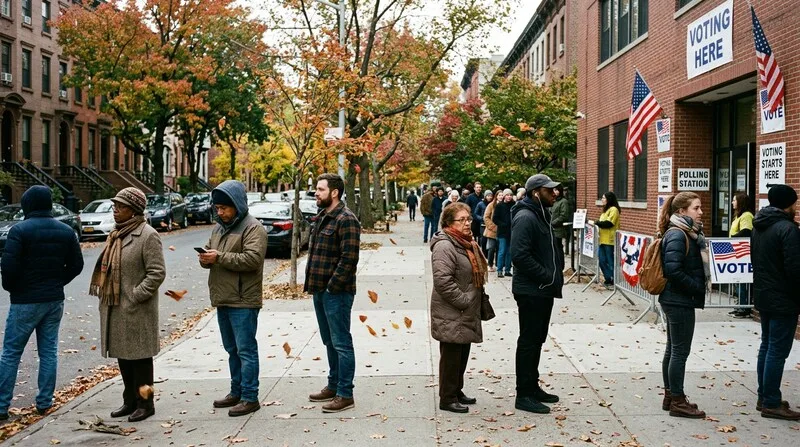
Suburban swing independents are the most anti-Republican segment in 2026. They overlap with the college-educated suburban shift that began in 2016 and has deepened each cycle. In swing suburban districts from Philadelphia to Phoenix, independent voters are the decisive margin group.
When more than two-thirds of independents say the country is on the wrong economic track, history suggests that incumbent party candidates face a severe headwind. That number has moved steadily upward since the tariff announcements of early 2025 began affecting consumer prices.
True swing independents are approximately 15% of the electorate — smaller than the 41% "independent" label implies, but large enough to determine outcomes in a system where national elections turn on 2-5 points. A D+9 advantage in this group is historically consistent with wave conditions.
The Geography of Independent Influence
Independent voters are not uniformly distributed. They are concentrated in suburban and exurban areas — the exact geographic zones where 2026 House competition is most intense. Suburban Philadelphia (PA-6, PA-7), suburban Denver (CO-8), suburban Atlanta (GA-7), suburban Chicago (IL-6, IL-14), suburban Phoenix (AZ-1, AZ-6) — these districts have large independent voter pools and Republican incumbents who won in 2024 partly on the strength of right-of-center independents who have since moved.
The same pattern holds in Senate races. New Hampshire, Maine, Pennsylvania, Michigan, and Arizona all have large independent voter pools that will be decisive in Senate outcomes. If swing independents are running D+9 in those states as well as nationally, Democratic candidates in those races are structurally favored — though individual candidate quality and local dynamics always modulate what the structural numbers predict.
Frequently Asked Questions
What share of the electorate are true swing independents?
While 41 percent self-identify as independent, roughly 70 percent of those lean consistently toward one party. True swing independents — genuinely persuadable — represent approximately 15 percent of the electorate. Small in absolute terms but decisive in close elections.
How do independents currently break in 2026 polling?
True swing independents favor Democrats by 9 points on the 2026 generic congressional ballot — approximately 41% Democrat to 32% Republican. This D+9 advantage compares to R+6 in the 2010 Republican wave, making 2026 independents historically consistent with a Democratic wave environment.
What issues are driving independents away from Republicans in 2026?
Three issues dominate: economic wrong-track sentiment (69% of independents), tariff opposition (67%), and healthcare cost anxiety. Suburban independents — concentrated in the most competitive House districts — are the most sharply anti-Republican segment of the independent category.