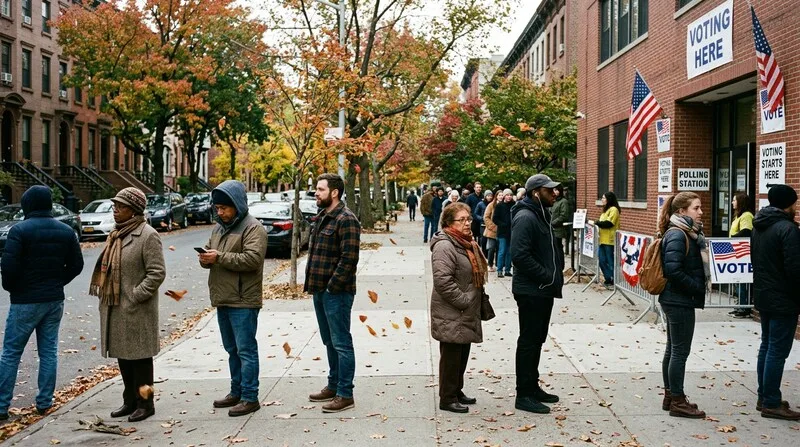
- The RNC has rebuilt its data and ground-game operation after 2022, with a new voter registration drive targeting 6-8 key battleground states.
- The rebuilt RNC data operation now integrates real-time voter file updates, social media micro-targeting, and early vote tracking — capabilities that lagged Democrats in 2022.
- Protecting the 222-213 (effective) majority math means the RNC must maintain near-perfect candidate recruitment to avoid repeating the 2022 Senate candidate-quality problem.
- RNC's minority outreach initiative is focused specifically on Black and Hispanic male voters, where Trump's 2024 gains were most pronounced and potentially repeatable.
- The RNC has shifted resources from direct mail to digital and streaming advertising, reflecting the changing media consumption patterns of lower-propensity Republican voters.
RNC 2026 Target State Voter Registration Drive
| State | 2024 GOP Reg. Adv. | 2026 Target | Current Gap | Priority |
|---|---|---|---|---|
| Pennsylvania | +180K | +250K | +70K | Tier 1 |
| Georgia | +320K | +400K | +80K | Tier 1 |
| Arizona | +210K | +280K | +70K | Tier 1 |
| Wisconsin | +90K | +150K | +60K | Tier 1 |
| Nevada | +130K | +180K | +50K | Tier 2 |
| Michigan | +210K | +270K | +60K | Tier 2 |
| North Carolina | +480K | +520K | +40K | Tier 3 |
| Florida | +620K | +680K | +60K | Tier 3 |

The Rebuilt RNC Data Operation: What Changed After 2022
The Republican National Committee entered 2026 with a fundamentally different data infrastructure than it deployed in 2022, when Democrats outperformed polling in state after state partly by leveraging superior voter contact operations. Under new RNC leadership installed after the 2024 presidential victory, the committee rebuilt its voter file, integrated advanced targeting models, and dramatically expanded its paid field operation. The 2026 investment plan allocates approximately 81% of field spending to turnout operations — mobilizing reliable Republicans — rather than persuasion of swing voters. This reflects a clear lesson from 2022: the Republican base was sufficiently large to win many competitive races but was not fully mobilized in suburban and exurban districts where the party underperformed. The RNC has identified approximately 4 million low-propensity Republican voters in competitive congressional districts and has assigned field staff to each identified cluster. Voter registration has been a parallel priority: the party claims approximately 2.1 million new Republican registrations since November 2024, targeting recent college graduates, recently naturalized citizens who trend conservative on economic issues, and rural areas with historically low registration rates. Polling tests conducted by the NRCC show that economic messaging — particularly around grocery prices, housing costs, and small business concerns — is more persuasive with low-propensity Republicans than culture-war issues, which already motivate the hard base but do not add incremental voters at the margin.
Protecting a Thin Majority: The 222-213 Math Problem
Republicans hold a 222-213 majority in the House heading into 2026, meaning Democrats need to flip just five seats net to take control. Historically, the party out of power gains an average of 26 seats in the first midterm after a presidential election, and the out-party has gained seats in 19 of the past 22 midterm cycles. Democrats have consistently outperformed polling in special elections since 2022, suggesting an enthusiasm and mobilization edge that traditional polling may undercount. The RNC strategy for protecting the majority rests on three pillars: aggressive candidate recruitment to avoid the Trump-aligned chaos candidates who underperformed in 2022 swing districts, redistricting advantages in states where Republican legislatures drew favorable maps after the 2020 census, and base mobilization in safe red seats to ensure strong statewide turnout numbers that can lift competitive-district candidates. The candidate recruitment effort has been notably active: Speaker Johnson and the NRCC have intervened in at least seven primaries to block candidates viewed as unelectable in general elections. However, this has created tension with the MAGA wing, which views any party interference as establishment betrayal. The RNC’s internal modeling identifies 14 Republican-held seats as genuinely competitive, meaning Democrats need to convert roughly one-third of those targets to flip the chamber. Given historical midterm patterns and a D+6 generic ballot environment, most independent forecasters assess Democratic takeover as the more likely outcome.
What This Means for 2026
The RNC enters 2026 better organized than 2022 but defending a historically narrow majority against structural headwinds. Republicans need either a significant national security or economic reversal to shift the environment, or an unusually disciplined candidate operation in 14 swing districts. Most independent forecasters give Democrats a slight edge to flip the House, with the final outcome likely depending on turnout differentials in 8-10 true toss-up seats.