- Agricultural states face retaliatory tariffs from China, Canada, and the EU targeting specific US commodity exports — Iowa soybeans, Missouri corn, Georgia peanuts — disproportionately hurting Republican-leaning rural communities that endorsed the underlying trade policy.
- Manufacturing states (Michigan, Ohio, Pennsylvania) face direct tariff exposure through input cost increases on steel, aluminum, and imported auto parts — with pass-through costs raising vehicle prices and reducing domestic production competitiveness.
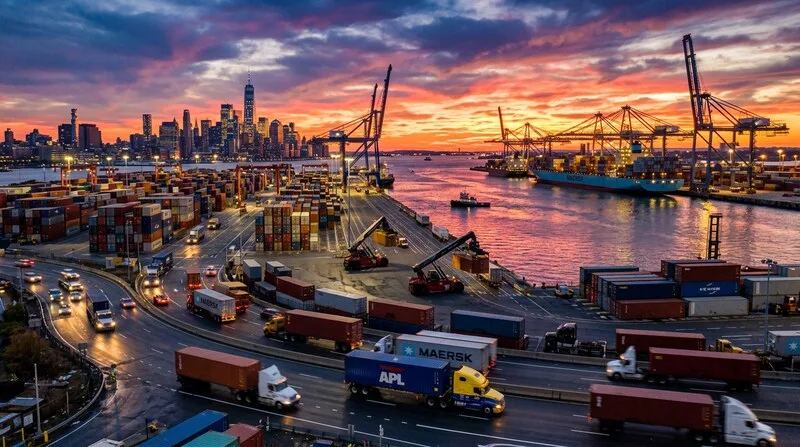
- Port and consumer states face import cost surges as consumer electronics, apparel, and household goods prices rise — affecting California, New York, and Texas consumers who purchase high volumes of tariffed goods.
- The electoral map of tariff pain is politically paradoxical: the highest-exposure states (farm belt, industrial Midwest) are also the states where trade protectionism had the strongest political support — creating constituent-level tension between policy preference and lived economic consequence.
- Tariff burdens are regressive across all state categories: lower-income households spend a higher share of income on physical goods subject to tariffs, meaning the distributional impact falls hardest on the working-class voters who are the primary constituency for the policy.
Agriculture States: Retaliation Risk
Agricultural producers face retaliatory tariffs from China, Canada, and the EU targeting specific US commodity exports. These states are predominantly Republican-leaning but farm income pressure creates cross-partisan economic anxiety.
| State | Main Tariff Exposure | Retaliatory Target | Est. Annual Farm Hit | 2024 Pres. |
|---|---|---|---|---|
| Iowa | Soybeans, corn, pork | China (pork 25%, soy 25%) | ~$2.1B | R+12 |
| Wisconsin | Dairy, soybeans, corn | Canada/EU dairy retaliation | ~$1.4B | R+0.3 |
| Illinois | Soybeans, corn, wheat | China soybean retaliation | ~$3.2B | D+12 |
| Kansas | Wheat, cattle, sorghum | China/Mexico wheat retaliation | ~$1.8B | R+20 |
| Minnesota | Corn, soybeans, dairy | China/Canada retaliation | ~$1.6B | D+2 |
| Nebraska | Cattle, corn, soybeans | China beef/corn retaliation | ~$2.0B | R+20 |
| North Dakota | Wheat, soybeans, canola | EU/China wheat retaliation | ~$1.1B | R+33 |

Manufacturing States: Input Costs and Supply Chain Pressure
Steel (25%), aluminum (25%), and auto part tariffs cascade through supply chains. Manufacturing states face both higher input costs and retaliatory barriers to their finished goods exports.
| State | Main Tariff Exposure | Jobs at Risk | Est. Economic Hit | 2026 Race |
|---|---|---|---|---|
| Michigan | Auto parts, auto assembly, steel | ~85,000 | ~$12B GDP impact | Senate (open) + Governor (open) |
| Ohio | Steel, manufacturing, auto parts | ~60,000 | ~$9B GDP impact | Senate (Moreno, Toss-up) |
| Indiana | Auto supply chain, steel | ~45,000 | ~$7B GDP impact | Senate (Young, Likely R) |
| Pennsylvania | Steel, manufacturing, chemicals | ~38,000 | ~$6B GDP impact | Senate (McCormick, Toss-up) |
| Kentucky | Auto assembly, aluminum | ~28,000 | ~$4B GDP impact | Senate (McConnell seat, Safe R) |
| Tennessee | Auto assembly, manufacturing | ~25,000 | ~$3.5B GDP impact | Senate (Blackburn, Likely R) |
Port and Consumer States: Import Cost Surge
California
Handles 40% of US containerized imports. Tariffs on Chinese goods at 145% have caused shipping volumes to drop significantly while retail prices for electronics, clothing, furniture, and appliances rise. California consumers face the highest absolute tariff impact burden of any state. The tech sector faces higher component costs. Competitive House races in Orange County and the Central Valley feel consumer pressure.
Texas
Texas-Mexico trade represents over $300B annually, making the 25% Mexico tariff especially painful. Laredo is the largest US-Mexico land port of entry. Auto parts supply chains crossing the border multiple times face compounding tariff impacts. The Rio Grande Valley economy is heavily integrated with Mexico. Houston’s energy export sector faces retaliatory barriers from trading partners.
New Jersey
Port Newark/Elizabeth handles the second-largest container volume on the East Coast. Pharmaceutical and chemical imports critical to NJ’s large healthcare industry face supply uncertainty. Competitive Senate and House races in the northern suburbs are sensitive to consumer price inflation on everyday goods. New Jersey has one of the highest household spending rates in the country.
Washington State
Washington faces a dual exposure: Boeing faces retaliatory measures from China (which had been a massive aircraft buyer) while Washington agriculture — apples, cherries, wheat, hops — faces Chinese and Canadian retaliation. The Port of Seattle/Tacoma handles significant Pacific trade. Washington’s economy is unusually trade-dependent at roughly 25% of GDP versus the national average of about 11%.
The Electoral Map of Tariff Pain
tariff impact does not map cleanly onto Democratic or Republican electoral advantage because the affected states span both partisan coalitions. The strategic question for 2026 is which affected voters translate economic harm into changed voting behavior.
- Agriculture states (IA, KS, NE, ND): Heavily Republican. Farm groups have expressed concern but rural partisan loyalty is extremely strong. These states are not competitive in 2026 but farm income pressure affects Republican donors and enthusiasm more than vote totals.
- Manufacturing swing states (MI, OH, PA, WI): These are the electoral battlegrounds. Manufacturing workers in these states delivered Trump his 2016 victory with “tariff protection” framing. In 2026, the question is whether tariffs on inputs — raising the cost of American-made goods — shifts that framing toward the Democrats’ “tariffs are a tax” message.
- Consumer states (FL, NC, GA, NV): Retail price inflation is broadly felt. In Sun Belt states with large populations of fixed-income retirees and working-class households, a $1,900 annual household cost increase is politically significant if Democrats successfully attribute it to the tariff regime.
Current polling shows 67% of voters oppose broad tariffs and 54% can identify tariffs as a driver of inflation. The political salience is established. The 2026 question is whether Democrats can close the attribution gap — connecting household price increases to specific policy decisions — before economic conditions shift.
Related Analysis
Tariffs: The Polling Impact
67% oppose broad tariffs. Full polling breakdown by party and demographics.
Trump’s Tariff Trade War
The full scope of the 2025 tariff structure and international retaliation.
Recession Risk 2026
How tariff-driven inflation and supply chain disruption affect recession probability.