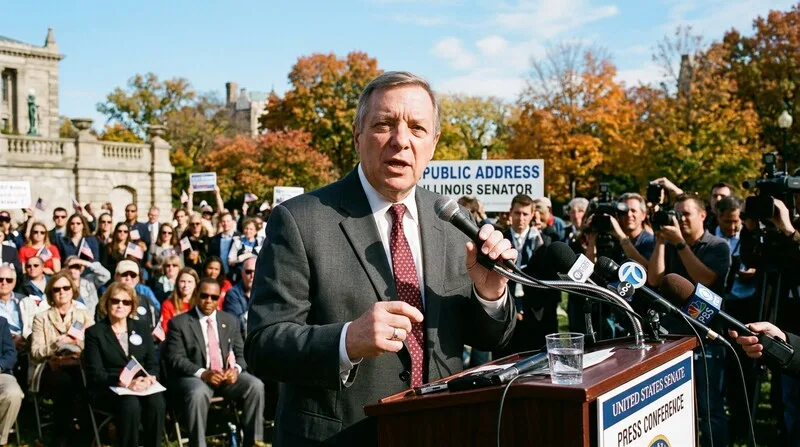

A 55-Year Career in Elected Office
Ben Cardin is one of the longest-serving elected officials in modern American history. He first won election to the Maryland House of Delegates in 1966 at age 23, while still in law school, and served there until 1987. He then won election to the US House of Representatives from Maryland's 3rd congressional district, serving from 1987 until 2007 — ten terms covering 20 years. In 2006, when Paul Sarbanes retired from the Senate, Cardin won a competitive Democratic primary and the general election to succeed him, serving in the Senate until January 2025.
His career spans every major political era from Lyndon Johnson's Great Society through the Biden presidency. He voted on legislation ranging from the Vietnam War supplementals of the late 1960s (in the state legislature) to the Inflation Reduction Act of 2022. He served under every president from Nixon through Biden. That kind of institutional continuity — combined with genuine expertise on foreign policy, small business, and environmental issues — defined his Senate legacy. He was not a headline-grabbing senator in the Chuck Schumer or Elizabeth Warren mold, but a meticulous legislator with deep subject-matter knowledge.
Cardin announced his retirement in April 2023, triggering one of the most closely watched 2024 Senate primaries. The race in Maryland pitted well-funded Congressman David Trone against Prince George's County Executive Angela Alsobrooks. Alsobrooks won the primary and then won the general election against former Republican Governor Larry Hogan, preserving the seat for Democrats despite Hogan being the strongest possible Republican candidate in the state.
- Ben Cardin (D-MD) is a retired senator from Maryland who served 17 years in the Senate before retiring in January 2025, succeeded by Democrat Angela Alsobrooks.
- He chaired the Senate Foreign Relations Committee and was one of the most senior members of the Democratic caucus on international affairs, arms control, and human rights.
- Maryland is D+18 — one of the most reliably Democratic states, and Cardin's retirement did not threaten Democratic hold of the seat (Alsobrooks won by 17 points).
- Cardin spent 40 years in public office — 20 in the Maryland House of Delegates, 20 in the US House of Representatives, and 17 in the Senate — one of the longest public service careers in Maryland history.

Career Timeline
| Period | Role | Key Highlights |
|---|---|---|
| 1967–1987 | Maryland House of Delegates | Speaker of the House of Delegates 1979-1987; 20 years total in state legislature |
| 1987–2007 | US House of Representatives (MD-3) | 10 terms; Ways and Means Committee; long-term fiscal policy work |
| 2006 | Senate Campaign | Won Democratic primary; defeated Lt. Gov. Michael Steele (R) in general |
| 2007–2025 | US Senate, Maryland | Foreign Relations Committee; Global Magnitsky Act; Chesapeake Bay protection |
| 2014–2015 | Foreign Relations Committee Chair | Led committee during Ukraine crisis, Iran nuclear negotiations |
| 2016 | Global Magnitsky Act | Co-authored landmark human rights sanctions legislation with Rep. McGovern |
| 2022–2025 | Foreign Relations Committee Ranking Member | Led Democratic response on Ukraine aid, NATO, Russia sanctions |
| April 2023 | Retirement Announcement | Declined to seek 4th Senate term; opened competitive 2024 primary |
| January 2025 | Left Office | Replaced by Angela Alsobrooks; concluded 55+ years in elected office |
Key Policy Areas
Human Rights & Sanctions
Cardin was the Senate's leading voice on targeted human rights sanctions. The Global Magnitsky Act, which he championed alongside House co-sponsors, authorizes the US Treasury to sanction foreign individuals responsible for human rights abuses or corruption. It became a model for EU, UK, and Canadian legislation. He consistently pushed for Ukraine aid and strong NATO support throughout his Senate tenure.
Chesapeake Bay Champion
Maryland's largest environmental asset is the Chesapeake Bay, and Cardin was consistently one of the Senate's strongest advocates for Bay restoration funding, water quality standards, and agricultural runoff controls. He worked across the aisle on these issues given that Virginia and Maryland both have strong interests in Bay health regardless of party.
Small Business Committee
Cardin chaired the Senate Small Business and Entrepreneurship Committee and was a consistent advocate for small business loan programs, SBA funding, and policies that reduce regulatory burdens on small enterprises. This was a less high-profile but consistent area of his legislative work spanning both his House and Senate careers.
Policy Positions
| Issue | Position | Notes |
|---|---|---|
| Ukraine Aid | Strong Support | Consistent advocate; led Senate efforts to accelerate and expand assistance |
| NATO / Alliances | Strong Support | Opposed any weakening of Article 5 commitments; criticized Trump-era NATO ambivalence |
| Russia Sanctions | Author | Co-authored Magnitsky Act; pushed for expanded sanctions after 2022 invasion |
| Climate | Support | Voted for IRA climate provisions; Chesapeake Bay environmental champion |
| Gun Control | Support | Consistent votes for background checks, assault weapons restrictions |
| Healthcare | Support | ACA supporter; voted for Medicare expansion provisions |
| Trade | Moderate | Generally supported free trade but with labor and environment standards |
| Israel | Support | Longtime strong supporter of US-Israel relationship; occasionally critical of settlement policy |
Electoral History
| Year | Race | Result | Margin |
|---|---|---|---|
| 2018 | Maryland Senate (re-election) | Cardin 65.4% — Tony Campbell (R) 30.8% | D +34.6 |
| 2012 | Maryland Senate (re-election) | Cardin 55.9% — Dan Bongino (R) 26.1% | D +29.8 |
| 2006 | Maryland Senate (open) | Cardin 54.2% — Michael Steele (R) 44.2% | D +10 |
| 2004 | Maryland House (re-election) | Cardin 74.5% — (R) 25.5% | D +49 |
| 1994 | Maryland House (re-election) | Cardin won | D held |
The Global Magnitsky Act: His Most Lasting Legacy
The Global Magnitsky Human Rights Accountability Act, signed into law in December 2016, is Ben Cardin's most significant legislative achievement and the piece of legislation most closely associated with his Senate career. The law authorizes the US President to impose sanctions — asset freezes and visa bans — on foreign nationals responsible for extrajudicial killings, torture, or serious human rights abuses, regardless of whether they are Russian nationals (the original Magnitsky Act, named for Russian lawyer Sergei Magnitsky who died in Russian detention, was Russia-specific).
The Global Magnitsky Act transformed US foreign policy tools. It gave administrations of both parties a way to target individual human rights abusers without imposing broad country-level sanctions that harm civilian populations. The law has been used to sanction officials in Saudi Arabia (in connection with the murder of journalist Jamal Khashoggi), Myanmar, China (Xinjiang), Guatemala, Nicaragua, and dozens of other countries. The EU, UK, and Canada subsequently passed their own Magnitsky-style legislation, creating a coordinated Western human rights sanctions regime that Cardin helped inspire.
2026 Relevance: What His Departure Meant
Cardin's retirement and Angela Alsobrooks's election represent a generational transition in Maryland Democratic politics. Alsobrooks — younger, Black, a county executive with a different political profile than the Jewish congressman-turned-senator Cardin — brings different constituent priorities and a different style to Maryland's Senate majority. The 2024 race also tested whether former Republican Governor Larry Hogan could win back a Senate seat for Maryland Republicans; he could not, though he ran a more competitive race than most Maryland Republicans in recent memory.
For the Senate Democratic caucus, Cardin's departure removed one of its most consistent foreign policy voices at a particularly fraught moment — just as the Trump administration was signaling reduced US support for Ukraine, weakened commitment to NATO, and a general withdrawal from the liberal international order that Cardin spent decades building. His absence from the Senate Foreign Relations Committee left a gap in institutional knowledge and relationships with foreign counterparts that takes years to replace.
Watch: Ben Cardin Farewell Speech to the Senate
Senator Ben Cardin delivers his farewell speech to the US Senate in 2025 after 55+ years in elected office, reflecting on his career and legacy.