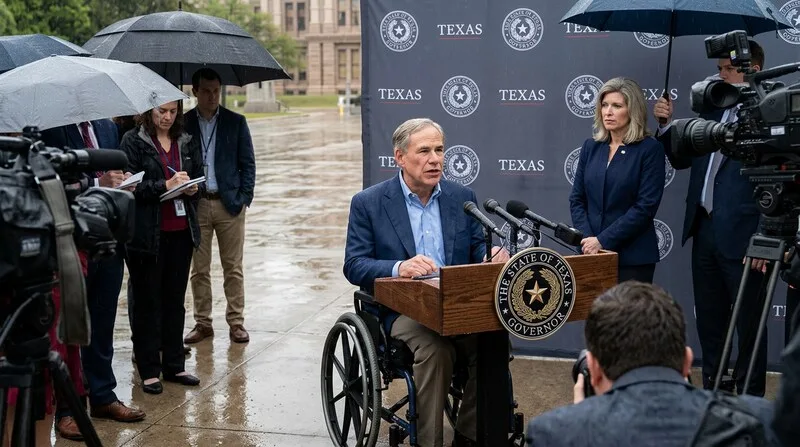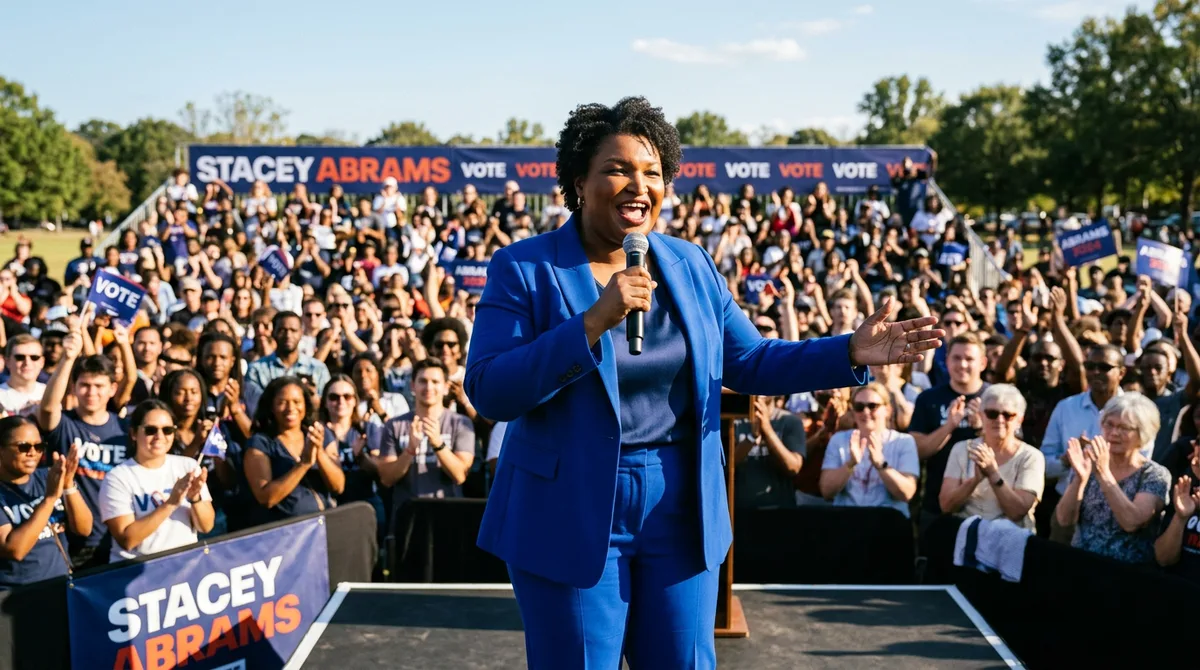
- Beto O'Rourke (D-TX) lost the 2022 Texas governor's race to Greg Abbott by 11 points after raising over $70 million — his third electoral loss in Texas after a 2018 Senate race loss by 2.6 points and a failed 2020 presidential primary run.
- Texas is R+11 — despite his massive fundraising and organizing infrastructure, O'Rourke was unable to overcome the structural Republican advantage in a state where every statewide office has been held by Republicans since 1994.
- He first became nationally prominent in the 2018 Texas Senate race against Ted Cruz — his 2.6-point loss despite losing was seen as the closest any Democrat had come to winning a Texas Senate seat in decades and made him a 2020 presidential contender.
- O'Rourke previously served three terms in the House (2013-2019) representing El Paso (TX-16) — a border district where his bilingual fluency and focus on immigration reform defined his early career before his statewide races transformed him into a national figure.
Biography
Robert Francis O'Rourke was born on September 26, 1972, in El Paso, Texas. He grew up in El Paso, attended Woodberry Forest School in Virginia, and earned his undergraduate degree from Columbia University in 1995. He returned to El Paso and became involved in the city's music scene and tech startup community before entering local politics. He served on the El Paso City Council from 2005 to 2011, then won election to Congress in 2012, defeating eight-term incumbent Silvestre Reyes in the Democratic primary for Texas's 16th congressional district (El Paso). His primary victory over an incumbent was itself notable; he ran on a platform of bringing new energy to a safe Democratic seat.
O'Rourke served three terms in Congress (2013–2019), sitting on the House Veterans' Affairs Committee and Armed Services Committee, before declining to seek re-election to challenge Ted Cruz for the Senate in 2018. His Senate campaign became a national phenomenon: he raised $80 million, generated wall-to-wall media coverage, visited all 254 Texas counties, and attracted massive crowds for a Democrat in Texas. He lost by 2.6 points — the closest any Democrat had come to winning statewide in Texas in a quarter century. The near-miss made him an immediate national political star and set up his 2020 presidential campaign.
His presidential run ended in November 2019 before a single primary vote was cast. His most memorable campaign moment — "Hell yes, we're going to take your AR-15" — was both a fundraising boon and a political liability that Republicans used against Democrats nationally for years. He returned to Texas politics for the 2022 governor's race against Greg Abbott, raising another massive sum but losing by 11 points. His three consecutive losing campaigns left him as a significant but diminished political figure — a man of great political gifts who has yet to convert them into electoral success at the higher levels he has sought.
Key Policy Positions
Gun Control
gun polling became O'Rourke's defining national issue, catalyzed by two mass shootings: the 2019 El Paso Walmart shooting that killed 23 people and targeted Latinos (the shooter cited anti-immigrant ideology) and which occurred in his hometown, and the 2022 Uvalde, Texas elementary school shooting that killed 19 children and 2 teachers. He confronted Texas Governor Greg Abbott publicly at a Uvalde press conference in 2022. His 2019 debate declaration that he would mandate buybacks of AR-15s and AK-47s went further than any other major Democratic candidate and became the defining line Republicans used to attack Democratic gun polling positions. He has argued for universal background checks, red flag laws, and assault weapons regulation.
Immigration & Border
As an El Paso native and border congressman, O'Rourke has a distinctive perspective on immigration that emphasizes the economic and cultural integration of border communities and rejects securitization-focused approaches. He opposes the border wall and has been a consistent voice for comprehensive immigration polling with a pathway to citizenship. His border background gave him credibility on the issue that other Democrats lack, but his positions — including calling for the repeal of federal laws that make illegal entry a crime — have been used by Republicans to paint him and Democrats broadly as open-borders advocates. The El Paso shooting's connection to anti-immigrant rhetoric deepened his commitment to immigrant rights.
Climate & Economic Justice
O'Rourke has been a consistent advocate for aggressive climate polling, co-sponsoring a Green New Deal resolution in the House and supporting major federal investment in clean energy transition. He has framed climate polling as both an environmental and economic justice issue, noting that communities of color in Texas and the Southwest face disproportionate impacts from extreme heat and climate disruption. He has also been a vocal critic of wealth inequality and has supported progressive economic measures including expanded healthcare polling, minimum wage increases, and education funding. His economic positions are broadly mainstream progressive without the ideological edge of the Democratic Socialist wing.
Electoral History
| Year | Race | Opponent | O'Rourke % | Margin | Result |
|---|---|---|---|---|---|
| 2012 | TX-16 Congress (1st) | Silvestre Reyes (D, primary) | 50.5% | +1.0 | Won (Primary) |
| 2014, 2016 | TX-16 Congress (re-elections) | Various (R) | 67–85% | Comfortable | Won |
| 2018 | Texas Senate | Ted Cruz (R, incumbent) | 48.3% | −2.6 | Lost |
| 2020 | Presidential Primary | Crowded field; Biden won | ~1% | — | Withdrew Nov 2019 |
| 2022 | Texas Governor | Greg Abbott (R, incumbent) | 43.8% | −11.0 | Lost |
O'Rourke's electoral record reflects both his exceptional retail political talent (raising $80M, mobilizing unprecedented turnout) and an inability to overcome Texas's structural Republican lean in statewide races. His 2022 gubernatorial loss by 11 points after raising over $70 million against Abbott was a significant setback that has prompted questions about whether he represents the ceiling of Democratic competitiveness in Texas or a unique candidate mismatch.
Legacy & Political Future
Beto O'Rourke's political legacy is genuinely ambiguous. He demonstrated in 2018 that a Democrat could come within 2.6 points of winning a Texas Senate majority in the Trump era — a result that shifted national thinking about Texas competitiveness and triggered significant investment in Texas Democratic infrastructure. His 2018 campaign built the largest field organization in Texas Democratic history and registered hundreds of thousands of new voters. That infrastructure contributed to John Cornyn holding his Senate seat more narrowly in 2020 than expected and to Biden's better-than-expected Texas performance in 2020.
At the same time, his three consecutive statewide losses, including a double-digit loss in the 2022 governor's race after massive spending, have raised questions about whether his 2018 performance reflected his exceptional individual talent or a Democratic ceiling that could not be sustained. His "Hell yes" AR-15 moment became one of the most-cited examples of a Democratic candidate self-inflicting a national political wound. He continues to work through Powered by People on voter registration in Texas, positioning himself as a long-term infrastructure builder rather than a candidate.
Watch: Beto O'Rourke Confronts Gov. Abbott on Gun Control at Uvalde
Beto O'Rourke confronts Texas Governor Greg Abbott at a press conference in Uvalde, Texas, following the May 2022 mass shooting at Robb Elementary School.