
What Is Inflation? A Voter’s Guide to CPI, the Fed, and Tariff-Driven Prices
Inflation peaked at 9.1% in June 2022 — a 40-year high — and is now around 3.8%. But voters still feel it. New tariff-light);font-size:1rem;max-width:640px;margin:0 0 8px;"> Inflation peaked at 9.1% in June 2022 — a 40-year high — and is now around 3.8%. But voters still feel it. New tariff-driven inflation is adding costs through a different mechanism that the Federal Reserve can’t easily fight with interest rates. Here is what inflation is, how it is measured, and why it is politically so powerful.
- Inflation peaked at 9.1% in June 2022 — a 40-year high — and fell to around 3.8% by early 2026; voters still feel it because prices don't fall when inflation slows, they just stop rising as fast
- Tariff-driven inflation (supply-side cost push from import duties) is fundamentally different from demand-driven inflation — the Fed's interest rate tool works against demand but cannot reduce prices caused by tariffs
- Trump's 2025 tariffs add an estimated $1,900/year in household costs (Tax Foundation) — a new inflation driver layered on top of still-elevated post-pandemic prices
- Behavioral economics shows voters blame incumbents for inflation disproportionately — the 2022 Democratic losses and Biden's 2024 exit are both partly attributable to persistent inflation perception even as rates were falling
How Inflation Is Measured: CPI vs. PCE
Two primary measures are used to track US inflation, and they often diverge by 0.5-1 percentage point, which matters significantly when policymakers are deciding whether to raise or lower interest rates.
Consumer Price Index (CPI)
Published monthly by the Bureau of Labor Statistics. Measures price changes for a fixed “basket” of goods and services that urban consumers typically buy: housing, food, transportation, healthcare, clothing, energy, and recreation. The basket is updated periodically but not continuously. CPI is the most widely reported inflation measure and is used to adjust Social Security benefits, federal tax brackets, and many contracts.
PCE Price Index
Published monthly by the Bureau of Economic Analysis. Broader than CPI, covering all spending by Americans on consumption goods — including healthcare paid by employers and governments, not just out-of-pocket. Uses chain-weighting (adjusts for consumer substitution when prices rise, unlike CPI’s fixed basket). The Federal Reserve targets PCE, not CPI — typically runs 0.3-0.5 points below CPI.
Two Kinds of Inflation: Demand-Driven vs. Tariff-Driven
The 2021-2022 inflation surge was primarily demand-driven: pandemic stimulus payments flooded the economy with money while supply chains were disrupted and production capacity was constrained. Too much money was chasing too few goods. The Federal Reserve’s response — raising the federal funds rate from near zero in March 2022 to 5.25-5.5% by mid-2023 — was appropriate for demand-driven inflation. Higher rates cool borrowing, reduce consumer spending, and bring demand back into balance with supply.
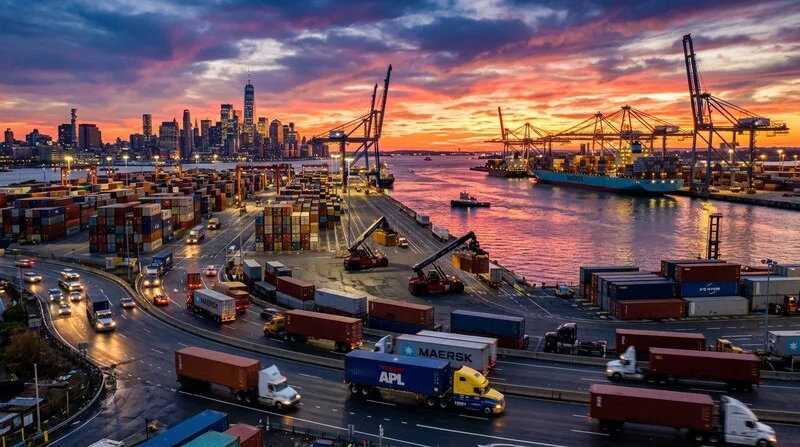
The inflation threat in 2026 has a different primary driver: tariffs. Import tariffs of 145% on Chinese goods, 25% on Canadian and Mexican goods, and broad sector-specific duties directly raise the cost of imported goods and components. This is cost-push inflation, not demand-pull inflation. The Fed’s interest rate tool is less effective against cost-push inflation because the price increases flow from supply-side policy changes, not from excessive demand. Raising interest rates cannot lower the tariff-driven price of a washing machine, smartphone, or steel beam.
This creates a difficult policy dilemma: if the Fed raises rates to combat tariff-driven inflation, it risks pushing the economy into recession by cooling demand when the underlying problem is a supply-side price shock. If it holds rates steady, inflation may persist above the 2% target. Fed Chair Jerome Powell has acknowledged this tension explicitly in public statements in early 2026.
| Period | Peak CPI | Primary Driver | Fed Response | Political Impact |
|---|---|---|---|---|
| 1979–1980 | 13.5% | Oil shock + expansionary fiscal policy | Volcker raised rates to 20% | Carter lost to Reagan; inflation was voters' top issue |
| 1983 | 3.2% (falling) | Volcker disinflation; deep 1981-82 recession | Rates cut after inflation broke | Reagan 49-state landslide; "Morning in America" |
| 2008 | 5.6% | Oil/commodity spike; then financial crisis | Emergency rate cuts to near-zero | Context for Obama's election; recession overrode inflation |
| 2021 (Dec) | 7.0% | Pandemic demand surge; supply chain collapse; stimulus | Fed held near-zero — called it "transitory" | Biden approval began slide; inflation framing dominated |
| Jun 2022 | 9.1% | Russia/Ukraine energy; persistent supply issues | Rate hikes 0% → 5.25% (fastest since 1980s) | Dems lost House; "vibecession" gap between data and sentiment |
| 2023 | ~3.4% | Disinflation; rate hikes taking effect | Rates held at 5.25-5.5% | Voters still felt high price levels; cumulative damage persisted |
| 2026 | ~3.8% | Tariff-driven cost-push (China 145%, Canada/Mexico 25%) | Dilemma: hike risks recession; hold risks embedded inflation | Midterm environment negative; Tax Foundation estimates +$1,900/household |
Why Voters Hate Inflation: The Loss Aversion Psychology
The Economics of Anger
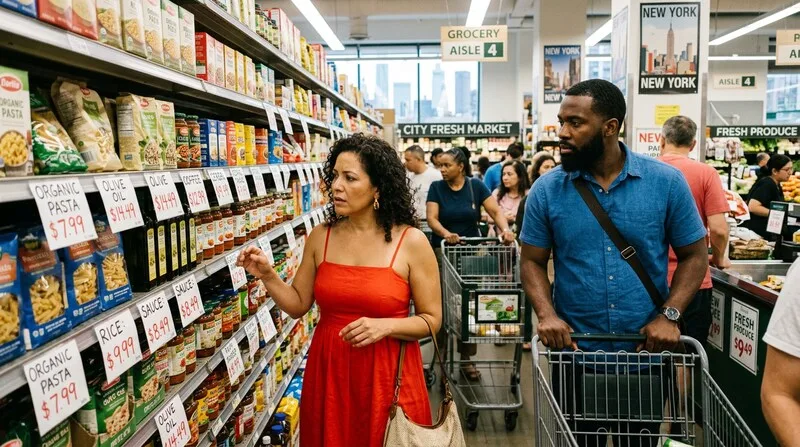
Behavioral economics research consistently finds that losses are psychologically experienced roughly twice as intensely as equivalent gains. When the grocery bill rises from $150 to $175 per week, voters feel it viscerally. When wages increase by an equivalent amount, the psychological registration is less intense. This asymmetry means inflation creates stronger negative political responses than equivalent wage gains create positive ones. The party in power during an inflationary period takes disproportionate blame, even if it did not cause the inflation and even if inflation is declining.
The Level vs. Rate Problem
Economists and politicians often cite the fact that inflation has come down from 9.1% to 3.8% as good news. Voters experience it differently: they compare current prices to prices from three or four years ago, not to the rate of price increase. Cumulative inflation since January 2021 has raised the price of a typical grocery basket by over 25%. Even at 3.8%, prices are still rising from an already elevated base. Voters who feel squeezed are responding to the cumulative price level, not the rate of change — a distinction that makes political communication about inflation success genuinely difficult.
Related Analysis
Consumer Confidence 2026
How consumer confidence and economic sentiment are shaping the midterms.
Tariffs & Voters 2026
How voter perception of tariff costs is shaping the midterm environment.
What Is the National Debt?
The national debt explained: what it is, why it matters, and whether it should worry voters.




Stay ahead of the polls
Weekly updates: Generic Ballot, Trump Approval, 2026 race forecasts. No spam, unsubscribe anytime.
Double opt-in. GDPR-compliant. Unsubscribe any time.
We use cookies for analytics and functionality. Learn more