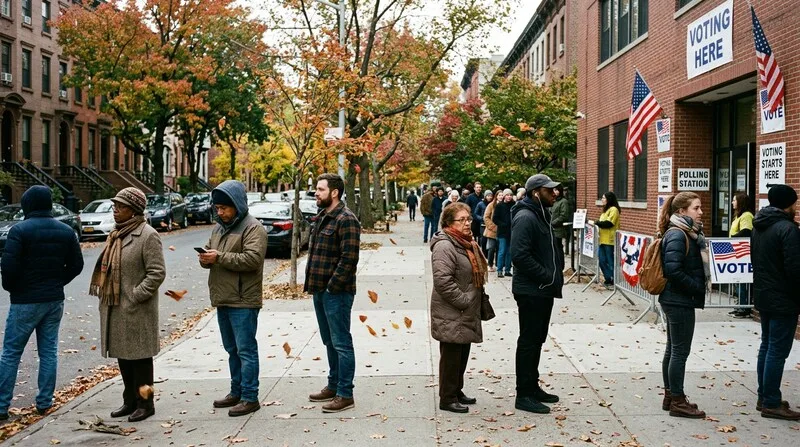
- DNC's three-pillar strategy: candidate quality (the 2018 suburban recruitment playbook), economic contrast on tariff damage, and Blue Wall infrastructure investment
- The president's party loses an average of -27 House seats in midterms; in a D+6 generic ballot environment that historical trend reverses — Democrats gain rather than lose
- Messaging tension: left flank wants aggressive progressive agenda; center wants fiscal reassurance — internal disagreements give the Republican "radical and ineffective" frame its oxygen
- Economic anxiety is the fuel; translating it into votes requires avoiding the coalition-split messaging that dominated the 2022 cycle and suppressed D performance
The Three-Pillar Strategy
DNC leadership has articulated a strategy built around three priorities. First, candidate quality: the 2018 wave was built on unusually strong candidate recruitment in suburban districts — veterans, doctors, teachers, business owners with local credibility rather than national celebrity profiles. The same recruitment playbook is being applied in 2026, especially in suburban districts where Trump approval has declined. Second, economic contrast: as tariff-driven price increases reach consumers, Democrats are positioning themselves as the party protecting household budgets. The tariff economic impact data gives campaigns specific dollar figures to cite. Third, infrastructure investment in states that underperformed in 2024, particularly in the Blue Wall.
The messaging challenge is translating economic anxiety into votes while managing internal coalition tensions. The generic ballot shows Democrats with a modest edge — but history warns that structural advantages evaporate when internal disagreements dominate the news cycle. The party’s left flank wants a more aggressive progressive economic agenda; the center wants reassurance on fiscal responsibility. Historically the Republican attack frame brands Democratic proposals as both radical and ineffective, and internal disagreements give that frame oxygen.
| Strategic Element | Approach | Polling Support |
|---|---|---|
| Tariff cost messaging | Trump tariffs = tax on families; grocery prices, auto costs | 63% say tariffs raise consumer prices |
| Healthcare protection | Medicaid, ACA, Medicare — defend from cuts | D+14 on healthcare trust |
| Abortion rights | Ballot measure strategy + federal protection message | 59% support abortion access |
| Candidate recruitment | Local profiles, district-fit over national celebrity | 2018 model: net +40 House seats |
| Small donor fundraising | ActBlue surge, first-time donors, recurring monthly | +34% vs. 2021 comparable period |
| Coalition repair | Arab-American, youth, Hispanic outreach programs | Key in MI, PA, NV swing states |
Priority House Targets: The 2026 Pickup Map
Democrats need a net gain of approximately 10-12 seats to retake the House majority. The House 2026 Tracker identifies 25-35 competitive districts. The top-tier targets share a common profile: Republican incumbents who won by under 5 points in 2024, in districts where Biden either won or came within 3 points, now voting for tariff-driven price increases and Medicaid cuts that poll badly locally.
| District | 2024 R Margin | Vulnerable Vote | D Candidate Status | Cook Rating |
|---|---|---|---|---|
| CA-13 (Duarte) | +0.4% | Medicaid cuts, farm tariffs | Recruited — strong local | Toss-up |
| NY-22 (Williams) | +2.1% | Healthcare, rural hospital cuts | Filed — competitive | Lean R |
| VA-7 (Spanberger seat) | +3.8% | Suburban women, education | Recruited | Toss-up |
| NJ-3 (Kim seat) | +4.2% | Property taxes, healthcare | Filed — multiple primary | Lean R |
| PA-7 (Wild seat) | +4.9% | Manufacturing tariffs, IRA jobs | Recruited — local union ties | Toss-up |
| AZ-1 (Schweikert) | +0.6% | Social Security, Medicare | Filed — 2024 runner-up returning | Toss-up |
| TX-34 (Gonzalez) | +2.3% | Border economy, healthcare | Strong Hispanic D candidate | Lean R |
Source: Cook Political Report, USPollingData House Tracker, FEC filings Q1 2026.
Coalition Repair: The Key Demographic Challenges
Arab & Muslim Americans
Concentrated in swing-state Michigan. Voted 59% Biden in 2020; significant defection in 2024. The DNC must address Gaza policy concerns without fully alienating Jewish-American donors. A genuine coalition management challenge with no clean solution.
Young Voters (18-29)
Voted Democratic at 65% in 2020, fell to 58% in 2024. Key issues: student debt relief (incomplete), climate, Gaza. DNC is investing in campus organizing programs and Gen Z-specific digital communication. ActBlue first-time donor surge includes high Gen Z share.
Hispanic Voters
Biden won Hispanic voters 65%-32% in 2020; margin tightened significantly in 2024, particularly among non-college Hispanic men. Economic messaging and immigration enforcement framing need calibration. Local candidate recruitment in Hispanic-heavy districts is essential.