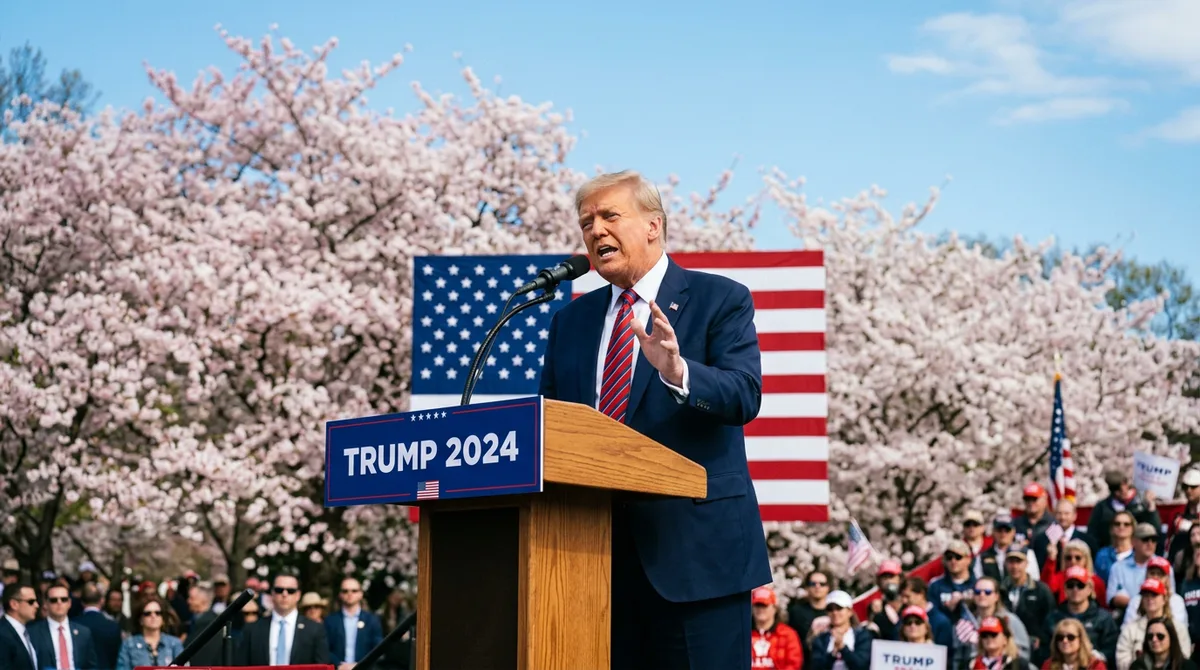
- Trump escalated NATO defense spending demands to 5% of GDP — nearly 2.5x the existing 2% target that most allies had still not met
- European trust in the US as a reliable partner dropped by 40 percentage points (German Marshall Fund 2026) — in Germany, only 28% now view the US as reliable, down from 70% in 2024
- Despite the pressure, 23 of 32 NATO members now meet the 2% target (up from 11 in 2021), with average European spending rising to 2.2% of GDP
- Trump's Article 5 ambiguity comments — "encourage Russia to do whatever the hell they want" — drove the trust collapse before any formal policy change
- Germany's defense spending turnaround — from 1.4% to 2.1% GDP in under 5 years — represents the fastest European defense buildup since the Cold War
NATO Defense Spending by Major Member (2026)
| Country | Defense Spend (% GDP) | 2021 Level | Meets 2% Target |
|---|---|---|---|
| United States | 3.5% | 3.5% | Well above |
| Poland | 4.1% | 2.2% | Far exceeds |
| Estonia / Latvia / Lithuania | 2.8-3.2% | 2.1-2.4% | Exceeds |
| United Kingdom | 2.3% | 2.3% | Meets |
| Germany | 2.1% | 1.4% | Meets (2025 turnaround) |
| France | 2.0% | 1.9% | Barely meets |
| Italy | 1.6% | 1.5% | Below target |
| Spain | 1.4% | 1.0% | Below target |

The Article 5 Ambiguity Problem
Article 5 of the NATO Treaty — the mutual defense clause that an attack on one member is an attack on all — has been the bedrock of transatlantic security for 75 years. Its deterrence value depends entirely on adversary belief in its reliability. Trump's February 2024 comments suggesting he would not defend spending-delinquent allies introduced deliberate ambiguity that NATO doctrine specifically counsels against.
After taking office, the Trump\'s approval refused to issue the standard presidential statement reaffirming unconditional Article 5 commitment for several weeks. Under congressional pressure — a bipartisan resolution passed 97-1 in the Senate — the administration eventually signed statements supporting Article 5. However, Secretary of Defense Pete Hegseth's early comments about European security and Trump's continued transactional framing of the alliance have left allied militaries and governments uncertain about U.S. reliability in an actual crisis scenario.
Arctic Strategy and Greenland Pressure
Trump's renewed interest in acquiring Greenland — a Danish autonomous territory and NATO polling — created perhaps the most jarring diplomatic rupture in modern alliance history. Trump refused to rule out military or economic coercion to acquire Greenland, citing Arctic security and rare earth mineral access. Denmark, which formally rejected any sale, and other European allies treated the statements as a fundamental challenge to the principle of territorial integrity that underpins the entire rules-based international order NATO exists to defend.
The Arctic dimension of Trump's NATO policy reflects genuine strategic competition: Russia and China have both increased Arctic military presence, and the U.S. military has legitimate interest in expanding Arctic capabilities. However, the method of coercive territorial acquisition toward a treaty ally has further eroded the trust metrics that show a 40-point collapse in European confidence in U.S. reliability as a partner.
Trump applied steel and aluminum tariffs to EU, UK, and Canadian goods — all NATO allies — framing trade and security as entirely separate issues. Allies' retaliatory tariffs on U.S. goods (bourbon, Harley-Davidson, agricultural products) were targeted at politically sensitive Republican districts. The intertwining of economic coercion with security relationships is structurally novel for the alliance.
Trump's pressure has accelerated European defense integration. The EU is developing a joint procurement framework, a defense industrial base, and Franco-German proposals for a European nuclear deterrent. Macron's call for "strategic autonomy" has moved from fringe to mainstream debate. Some analysts argue Trump has paradoxically strengthened European defense by forcing overdue spending and integration.
Pew Research (Jan 2026): 66% of Americans say NATO membership is good for the U.S., including 52% of Republicans — down from 73% Republican support in 2021 but still a majority. 71% of Democrats and 64% of independents support NATO. The alliance retains broader public support than its present political treatment suggests.