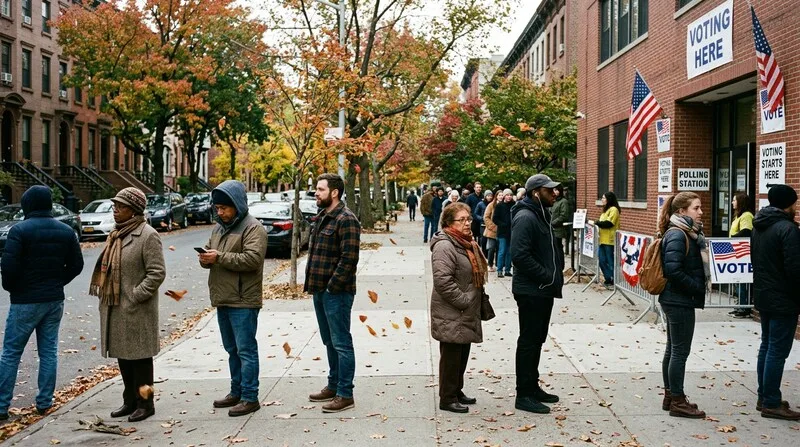
- The 2022 Dobbs decision triggered a nationwide voter registration surge: Pennsylvania alone saw 400,000+ net Democratic registrations between 2022 and 2024.
- Over 20 states have implemented automatic voter registration, creating a structural pipeline of new voters — particularly young people who are registered at the DMV without opting in.
- Florida is the key counter-trend: Republicans now lead total voter registration in Florida for the first time in the state's modern history, a warning sign for Democratic party-building in high-growth Sun Belt states.
- The post-Dobbs registration surge was concentrated among women and suburban voters — the same groups that drove Democratic overperformance in 2022 and 2024.
- Registration trends favor Democrats in Rust Belt battlegrounds but favor Republicans in fast-growing Sun Belt states, creating a diverging electoral geography that will define the 2026 competitive map.
Post-Dobbs: The Registration Surge That Changed the Baseline
The Supreme Court polling's June 24, 2022 Dobbs decision did not just change abortion law — it changed who was registered to vote. Within weeks of the ruling, Democratic organizations launched the largest coordinated voter registration drives since 2008. The targets were specific: young women, first-time registrants, and college-area precincts in competitive states. The results were measurable within months.
In Kansas, which held a state constitutional amendment vote on abortion in August 2022 just six weeks after Dobbs, new registrations in the weeks before the vote were 40% above the comparable 2018 period. The amendment failed by 18 points — dramatically outperforming pre-election expectations in a state Trump carried by 14 points. The Kansas result became a national model: when abortion is on the ballot, or even adjacent to the ballot, registration and turnout among Democratic-leaning groups increases in ways that standard partisan models fail to capture.
The effect persisted through 2023 and 2024. In Pennsylvania, Democrats added over 400,000 net new registrations in the two-year period from November 2022 to November 2024 — a meaningful number in a state where presidential races are decided by 70,000–150,000 votes. In Wisconsin, the gap between Democratic and Republican registration, which had narrowed in 2020, widened again toward Democrats. In Georgia, Democrats maintained the registration advantages built by Stacey Abrams' years-long organizing effort.

Swing State D/R Registration Change: 2022–2025
| State | D Change (2022–2025) | R Change (2022–2025) | Net D Advantage | Key Driver |
|---|---|---|---|---|
| Pennsylvania | +420,000 | +180,000 | D +240,000 | Post-Dobbs drives, Philly suburbs |
| Wisconsin | +95,000 | +60,000 | D +35,000 | Madison/Milwaukee young voters |
| Georgia | +180,000 | +155,000 | D +25,000 | Atlanta suburbs, AVR implementation |
| Arizona | +85,000 | +70,000 | D +15,000 | Maricopa County, college-age voters |
| Michigan | +110,000 | +75,000 | D +35,000 | Ann Arbor, Detroit suburbs, AVR |
| Nevada | +55,000 | +48,000 | D +7,000 | Clark County (Las Vegas) youth |
| Florida | +90,000 | +310,000 | R +220,000 | R drives among Hispanics, seniors |
| Texas | +185,000 | +260,000 | R +75,000 | Suburban D gains offset by R-Hispanic drives |
Figures are approximate estimates based on state voter registration data and Brennan Center research. Not all states use party-coded registration; independent/unaffiliated registrants excluded from this table.
The Automation Effect: AVR and the Young Voter Pipeline
Automatic voter registration has quietly reshaped the electorate in more than 20 states. Under AVR, eligible citizens are registered when they obtain a driver's license, enroll in Medicaid, or interact with other government services — unless they actively opt out. The policy targets precisely the groups least likely to proactively register: 18–24 year olds getting their first driver's license, newly eligible citizens interacting with social services, and low-income renters who move frequently and fall off registration rolls.
All three groups skew Democratic in voting behavior. Eighteen-to-24-year-olds voted for Biden over Trump by 25+ points in 2020 and continue to trend Democratic on issues like climate, student debt, and abortion polling. Low-income voters support Democrats by roughly 2:1 margins. AVR states in the competitive tier — including Pennsylvania (implemented 2020), Michigan (2018), Wisconsin (2016), and Georgia (2020) — have seen measurable registration rate increases, particularly in urban and college-adjacent precincts.
Three Key Dynamics Shaping 2026 Registration
Women aged 18-29 are registering at rates not seen since 2008. They vote Democratic by 30+ points. Their turnout in 2026 midterms, typically low for young voters, is the key variable in Democratic overperformance scenarios.
Republican Hispanic registration gains are real but geographically concentrated in states already safe for Republicans. In competitive swing states (PA, WI, MI), Hispanic populations are smaller and the gains less decisive.
Midterm turnout historically skews older and Republican. A Democratic registration advantage becomes decisive only if 2026 turnout patterns resemble 2018 (high youth/women turnout) rather than 2022 (lower than expected D turnout despite Dobbs).
The Counter-Trend: Florida's Warning Sign
Florida offers Democrats a cautionary data point. In 2008, Democrats had a 700,000-voter registration advantage in Florida. By 2024, Republicans had reversed that gap and achieved a lead — the first time Republicans led Florida registration in modern state history. The reversal reflects years of systematic Republican registration drives in the Hispanic communities of Miami-Dade and Broward counties, combined with a net outmigration of younger Democrats from high-cost-of-living Florida to other states.
The Florida model illustrates that registration advantages are not permanent and not automatic. They require sustained organizing. Democrats' post-Dobbs gains in Pennsylvania, Wisconsin, and Georgia reflect real organizing work — but maintaining those advantages through 2026 requires continued investment. Republicans are not passive observers. Their national infrastructure has shifted resources toward registration operations in competitive states, and the gap between Democratic registration advantages in swing states and Republican gains in the Sun Belt is the central structural story of 2026 pre-election preparation.